

IATA: Visa and entry restrictions put off 43% of travellers as biometric checks and AI gain ground.
Dubai: Travellers are increasingly comfortable with biometric technology and artificial intelligence (AI), but visa restrictions and regional conflicts continue to discourage many from visiting certain destinations. This is according to the 2026 Global Passenger Survey (GPS) by the International Air Transport Association (IATA).
Released on October 28, the report is based on more than 10,000 responses from passengers across more than 200 countries.
The findings come as the Middle East, home to some of the world’s busiest international aviation hubs, works to recover passenger traffic affected by regional tensions over much of the year.
Biometrics become increasingly popular
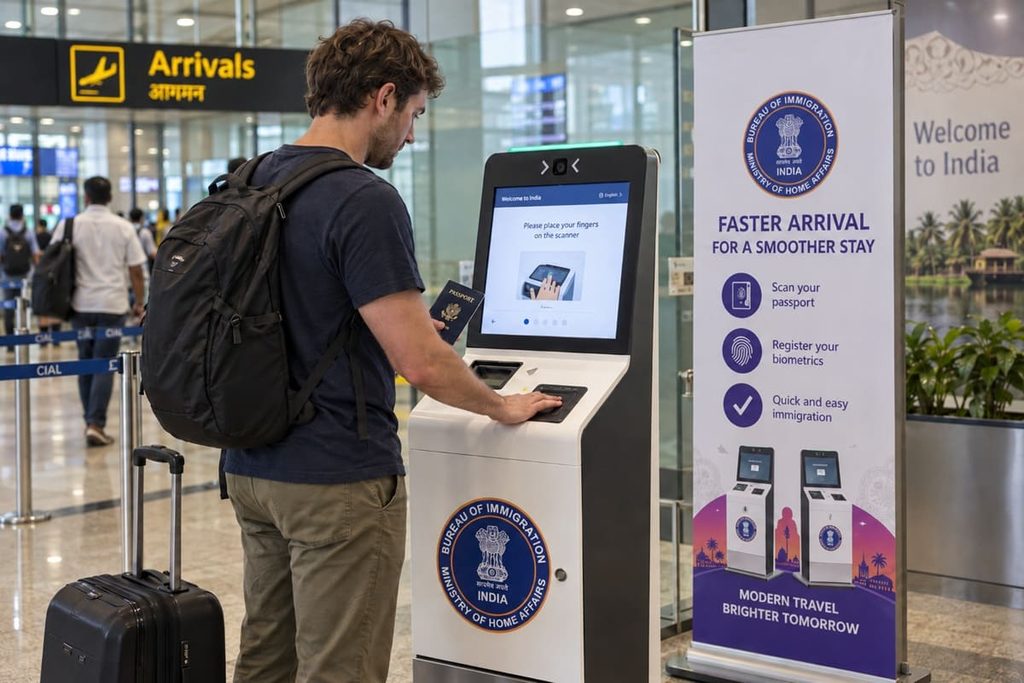
Around 58 per cent of passengers used biometric technology at some point during their airport journey in the past 12 months. This compares with 50 per cent in 2025 and is 24 percentage points higher than the figure recorded in 2022. Satisfaction among passengers who used the technology reached a record 87 per cent.
Interest in biometric travel options extends further. Some 78 per cent of respondents said they would be willing to share their biometric information to avoid repeatedly presenting their passport or boarding pass. Among them, 75 per cent would prefer to register their details in advance, rather than at the airport.
Digital passports are also attracting interest. About 84 per cent of passengers said they would use one for online check-in, while 82 per cent would be willing to share it with an airline after purchasing a ticket.
However, concerns about data security remain. Data breaches worry 59 per cent of passengers, while 49 per cent are concerned that their information could be shared with other organisations. Another 41 per cent said they were unsure how their personal data is handled.
AI gains ground in travel planning
Nearly half of all respondents, or 49 per cent, said they had used AI to plan a trip.
The most common use was searching for flights to a specific destination, reported by 21 per cent of passengers. Finding the lowest fares came next at 19 per cent, while 17 per cent used AI to explore potential destinations.
“Passengers are embracing technology to make travel easier. AI is becoming a mainstream travel planning tool, while biometrics and digital identity are creating a faster and more seamless airport experience,” said Nick Careen, IATA’s Senior Vice President of Operations, Safety and Security.
Visa and immigration requirements discourage travel
Immigration requirements have deterred 43 per cent of passengers from visiting a destination, up from 33 per cent in the previous year’s survey.
Among those discouraged, 53 per cent said the application process was too complicated. Privacy concerns and the cost of obtaining permission to enter a country were each cited by 17 per cent.
Regional conflict is another factor influencing travel decisions. Among passengers deterred by conflict, 72 per cent pointed to safety concerns, while 13 per cent cited uncertainty about whether travel would be possible.
The survey also found a clear preference for digital visa applications. Six in 10 passengers, or 60 per cent, would rather apply for a visa online, compared with 25 per cent who prefer submitting applications through a consulate or embassy.
More than 100 countries currently issue electronic visas (eVisas), but airlines face difficulties verifying them efficiently because governments do not follow consistent checking procedures, IATA said.
“Passengers want to apply for visas online and complete immigration procedures before they reach the airport. eVisas can deliver that, but airlines can only verify them efficiently if governments use common standards. More than 100 countries issue eVisas, yet there is little consistency in how they are checked,” Careen added.
The Middle East leads in digital travel adoption
Travellers in the Middle East are more likely than those in other regions to use AI when planning trips. They also show the strongest interest in digital passports and biometric identification. Passengers using biometrics in the region report the highest satisfaction levels globally.
Among travellers discouraged by entry requirements, the cost of obtaining permission to visit a destination is cited more frequently in the Middle East than in other regions, although complicated procedures remain the leading concern.
These trends align with the UAE’s aviation model. Dubai, Abu Dhabi and Doha rely heavily on transit passengers who need to move quickly through major international hubs. The survey suggests that travellers in the region are already receptive to the digital solutions that could make these connections faster and more convenient.
An aviation sector still recovering
Airspace closures beginning on February 28 disrupted operations at major hubs in Dubai, Abu Dhabi and Doha, prompting several airlines to delay their return to the region. Aviation consultancy IBA recorded a 59 per cent decline in flights to, from and within the region through March 22.
The recovery has remained uneven. IATA figures show that traffic carried by Middle Eastern airlines fell 28.8 per cent in May and 13.9 per cent in June. By September, international passenger demand for these carriers was still 7.5 per cent below the level recorded a year earlier.
Overall demand in the region declined by 8 per cent, while global demand fell by 0.5 per cent. Excluding the Middle East, however, global passenger demand increased by 0.3 per cent.
The Middle East-Asia travel corridor also remained under pressure, contracting by 8.8 per cent in September, compared with a 7.9 per cent decline in August.
Airline capacity utilisation also weakened. Middle Eastern carriers recorded a passenger load factor of 78.3 per cent in September, down 3.6 percentage points from the same month last year.
The financial outlook has also deteriorated. In June, IATA forecast that airlines in the Middle East would move from a combined profit of $7.2 billion in 2025 to a loss of $4.3 billion in 2026.
Higher fuel costs have added to the pressure. With oil prices rising again and concerns mounting over the possibility of renewed US strikes on Iran, uncertainty continues to cloud the region’s aviation recovery.
More efficient digital travel processes could help major hubs attract passengers back. However, restoring confidence in regional security is likely to remain a key factor in determining how quickly the sector recovers.

