

Philippine peso slips versus the dirham amid oil market risks and inflation concerns.
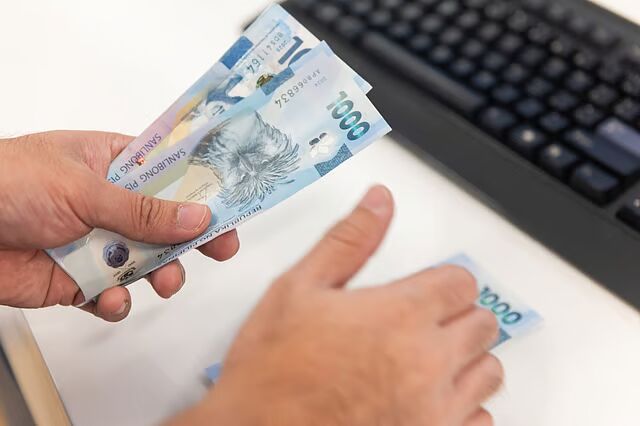
Dubai: Filipino expatriates in the UAE are seeing greater value in their remittances after the Philippine peso fell to one of its weakest levels against the UAE dirham in recent months, with the exchange rate reaching around Dh1 for 16.17 pesos on March 9.
Currency movements over recent weeks show a steady increase in the UAE dirham’s purchasing power against the Philippine peso, boosting the value of remittances for thousands of overseas workers sending money home.
Data indicate that a dirham bought roughly 15.6 pesos in late February, then gradually strengthened through the first week of March. Rates surpassed 15.8 pesos in early March and approached the 16-peso mark within days. By March 7–8, the exchange rate stood around 15.99 pesos, before climbing further to 16.17 pesos on March 9.
Earlier in the period, the dirham remained largely in the mid-15.7 range through mid-February, with several sessions around 15.72 to 15.75 pesos, reflecting a gradual but persistent weakening of the Philippine peso throughout the month.
“It’s possible that at $100 a barrel, we will begin to breach what we call our tolerance range of 4% inflation,” Governor Eli Remolona Jr. said in an interview with Bloomberg Television.
Oil prices have already risen roughly 10% following the escalation of conflict in the Middle East, a level the central bank currently considers manageable. A sharper increase, however, could have broader implications for the Philippine economy, as higher fuel costs quickly feed into transportation, food prices, and imported goods.
“If oil prices rise sharply and persistently, then we have work to do,” Remolona added.
Inflation outlook complicates policy path
Recent economic indicators suggest inflation pressures may be building again after a relatively stable period earlier this year. Consumer prices in the Philippines rose 2.4% in February, marking the fastest pace in over a year. The reading remains within the central bank’s 2%–4% target range, though economists warn that prolonged disruptions to global energy supply could push inflation higher in the coming months.
Economic growth has also softened, with fourth-quarter expansion slowing to roughly 3%, well below the estimated potential growth range of 5.5%–6%. Governor Eli Remolona Jr. described the situation as a “vicious circle,” where weak confidence weighs on growth while slow expansion further erodes sentiment.
The Bangko Sentral ng Pilipinas has already cut its key policy rate by 225 basis points since August 2024, signalling that the easing cycle could soon end if inflation risks intensify.

