

WTI outperforms Brent as Middle East tensions drive traders toward alternative supplies.
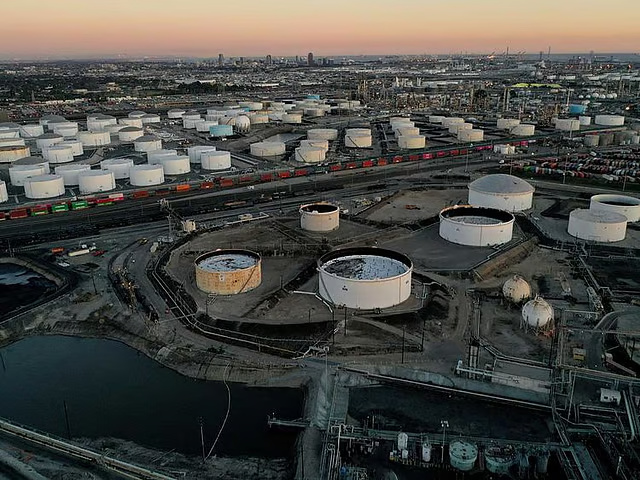
Oil prices held above $100 a barrel on Wednesday, Sept. 16, as traders assessed tightening physical supplies, disruptions affecting Saudi export routes and continued uncertainty over the resumption of normal shipping through the Strait of Hormuz.
During Asian trading, Brent crude stood at around $107.84 a barrel, while US West Texas Intermediate (WTI) traded at approximately $104.89 as of 9:47 a.m. Tokyo time, according to OilPrice figures. Both crude benchmarks had also reached their highest settlement levels since May 19.
The latest surge in oil prices has been fueled by factors beyond concerns over a prolonged disruption in the Strait of Hormuz. Saudi Arabia has suspended oil loadings at its Yanbu port following damage to the East-West pipeline, cutting off a key alternative route used to transport crude to the Red Sea while bypassing Hormuz.
Saudi Arabia has also been cancelling some crude oil shipments to European buyers as supply disruptions persist.
Meanwhile, the Strait of Hormuz continues to be a major source of uncertainty for global oil markets. According to Kpler data cited by Reuters, only four commodity vessels passed through the crucial waterway on Monday, a sharp decline from the pre-war average of roughly 125 vessel transits per day.
Double supply risk
The Strait of Hormuz typically handles around one-fifth of the world’s crude oil and liquefied natural gas (LNG) supplies, making it one of the most critical energy shipping routes globally.
Oil markets are now confronting a two-sided supply threat. Traffic through Hormuz remains severely restricted, while damage to an alternative Saudi export route has further limited available shipping capacity. Analysts say the combination is making it increasingly difficult for Gulf producers to offset delayed or disrupted crude shipments.
The supply pressure persists despite a sizeable increase in US inventories. Data from the American Petroleum Institute showed US crude stocks rising by 7.1 million barrels in the week ending Sept. 11. Gasoline inventories increased by 1.5 million barrels, while distillate stocks climbed by 1.6 million barrels. Reuters reported that the unexpected build in US crude inventories briefly weighed on oil prices on Wednesday.
However, industry analysts caution that rising US inventories may provide only limited relief from the broader physical supply constraints. Because oil is traded globally, the more immediate concern remains reduced Gulf export capacity and the disruption of key shipping routes needed to move supplies to international markets.
The International Energy Agency (IEA) has been closely tracking the disruption, highlighting the exceptional scale of Middle Eastern supply losses and the significant changes the crisis has caused in global oil flows.
Why Murban is different
Murban crude, the UAE’s flagship oil grade, is an important reference for Asian refiners. Its pricing differs from Brent and WTI because Murban represents a particular physical crude stream, while Brent and WTI serve as broader international benchmark contracts.
As a result, the reported Murban price of $123.76 a barrel should not be compared directly with Brent or WTI prices as though they represent identical grades, contracts or delivery conditions.
The widening price differences also demonstrate how supply disruptions are affecting crude grades and markets unevenly. Physical barrels readily available to Asian buyers can attract significant premiums when refiners compete for scarce supplies and limited shipping capacity.
What the market is watching now
- Strait of Hormuz: The pace at which commercial tanker traffic returns to normal remains one of the most important factors influencing oil prices.
- Saudi Arabia: Attention is increasingly focused on how long the East-West pipeline disruption will last and the extent to which it will affect crude exports through Yanbu.
- US inventories: Higher US crude stockpiles provide some buffer for the domestic market, but they offer limited relief from broader international supply constraints.
- Asian refiners: Refiners across Asia are seeking alternative crude supplies as shipments from the Gulf become increasingly uncertain.
- Supply risk premium: Traders are factoring in the possibility that disruptions could persist for longer than initially anticipated. Reuters reported that Brent and WTI had already climbed above $100 a barrel as attacks on tankers intensified.
What’s next
The market’s focus has expanded beyond simply when the Strait of Hormuz will fully reopen. Investors and traders are also assessing how much Gulf crude can physically reach international markets even if traffic through the waterway begins to recover.
Damage to alternative export infrastructure, reduced tanker movements and continuing security concerns could keep global oil supplies constrained, making the speed and scale of any recovery in Gulf exports a key factor for prices in the coming period.

