

Surging crude prices raise concerns over higher fuel costs and delayed interest rate cuts.
Global oil prices surged nearly 10% on Monday, marking their biggest single-day gain in years, after the US intensified military operations against Iran and tightened maritime measures around the Strait of Hormuz, fueling fears of prolonged disruptions to one of the world’s most critical oil supply routes.
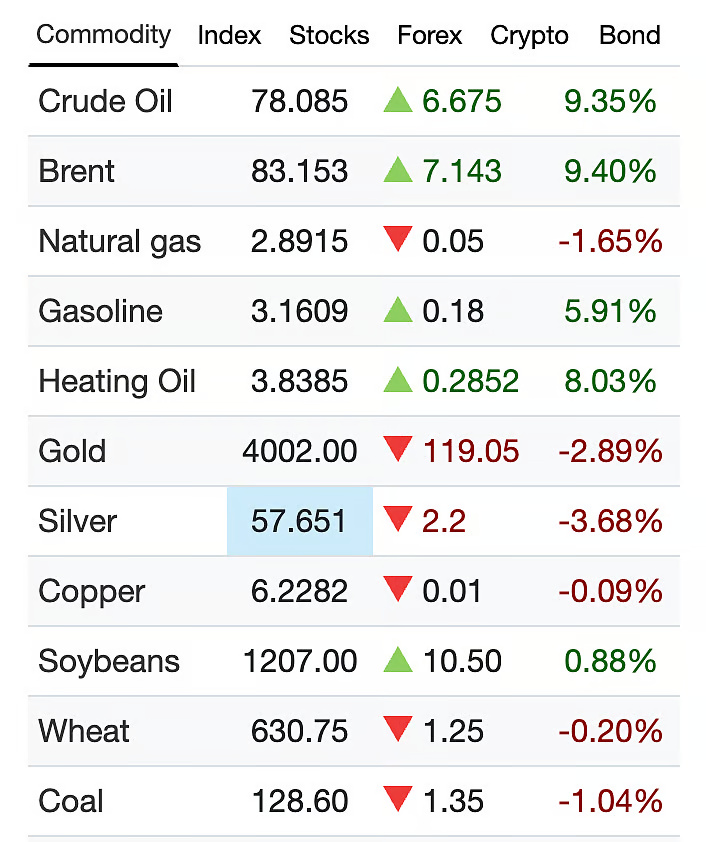
Brent crude, the global benchmark, rose $7.14, or 9.4%, to $83.15 a barrel, while U.S. benchmark West Texas Intermediate (WTI) gained $6.68, or 9.35%, to settle at $78.09 a barrel.
Gasoline futures climbed nearly 6%, while heating oil prices surged more than 8%, signaling expectations of higher fuel costs in the coming weeks.
Meanwhile, investors pared their exposure to precious metals, with gold prices falling 2.9% and silver declining 3.7% as funds shifted toward energy assets.
The market rally followed a sharp escalation in the Gulf after President Donald Trump ordered additional military action against Iran and announced that the US would reinstate a naval blockade targeting Iranian shipping later this week, raising fears of disruptions to global oil supplies.
The renewed confrontation follows a series of US strikes on Iranian military targets and Tehran’s retaliatory attacks on commercial vessels in the Strait of Hormuz, reigniting fears of a wider regional conflict.
The Strait of Hormuz is a critical global energy chokepoint, handling about 20% of the world’s oil consumption and a substantial share of liquefied natural gas (LNG) exports.
Any disruption to shipping through the narrow waterway can send shockwaves across global energy markets, as major oil producers—including Saudi Arabia, Iraq, Kuwait, the United Arab Emirates and Qatar—rely on the route to export crude and LNG to international markets.
Oil prices had eased in recent weeks as optimism over a potential ceasefire reduced concerns about supply disruptions. However, the latest escalation has reversed that trend, with traders once again pricing in heightened geopolitical risks.
Those gains were quickly erased as renewed fighting prompted traders to factor in the risk of lower oil exports, shipping disruptions and higher insurance costs for tankers operating in the Gulf.
Despite Monday’s sharp rally, Brent crude remains well below the nearly $120-a-barrel peak recorded during the height of the 2026 Iran conflict.
Ripple effect
The surge in crude prices also reverberated across global financial markets.
Wall Street stocks ended lower as investors grew concerned that persistently higher energy prices could reignite inflationary pressures, delay expected interest-rate cuts by central banks and weigh on corporate earnings.
Technology stocks led the market decline, while U.S. Treasury yields edged higher as investors reassessed inflation and interest-rate expectations.
Analysts expect oil markets to remain highly volatile in the coming days as traders closely monitor whether the conflict escalates further and whether commercial shipping through the Strait of Hormuz continues without disruption.
Any prolonged interruption to Gulf oil exports could significantly tighten global supplies, driving crude prices higher and adding further upward pressure on fuel costs worldwide.

