

Oil benchmarks Brent and WTI continue their decline as ceasefire conditions calm Gulf supply concerns.

Crude oil prices extended losses in Asian trading on Wednesday (June 24) as easing concerns over supply disruptions in the Middle East outweighed lingering geopolitical tensions. Traders remained optimistic that the fragile ceasefire between Israel and Iran would hold, ensuring continued oil flows through the Strait of Hormuz.
As of 12:58 pm Tokyo time, Brent crude, the global benchmark, fell 79 cents (1.02%) to $76.29 per barrel, while US West Texas Intermediate (WTI) dropped 80 cents (1.09%) to $72.41 per barrel, according to market data.
Other benchmarks also traded lower, reflecting broad weakness across the energy market.
Murban crude fell 1.64% to $69.63, while the OPEC Basket declined 1.89% to $81.59. Russia’s Urals crude dropped 3.24% to $64.42. Natural gas futures also edged lower.
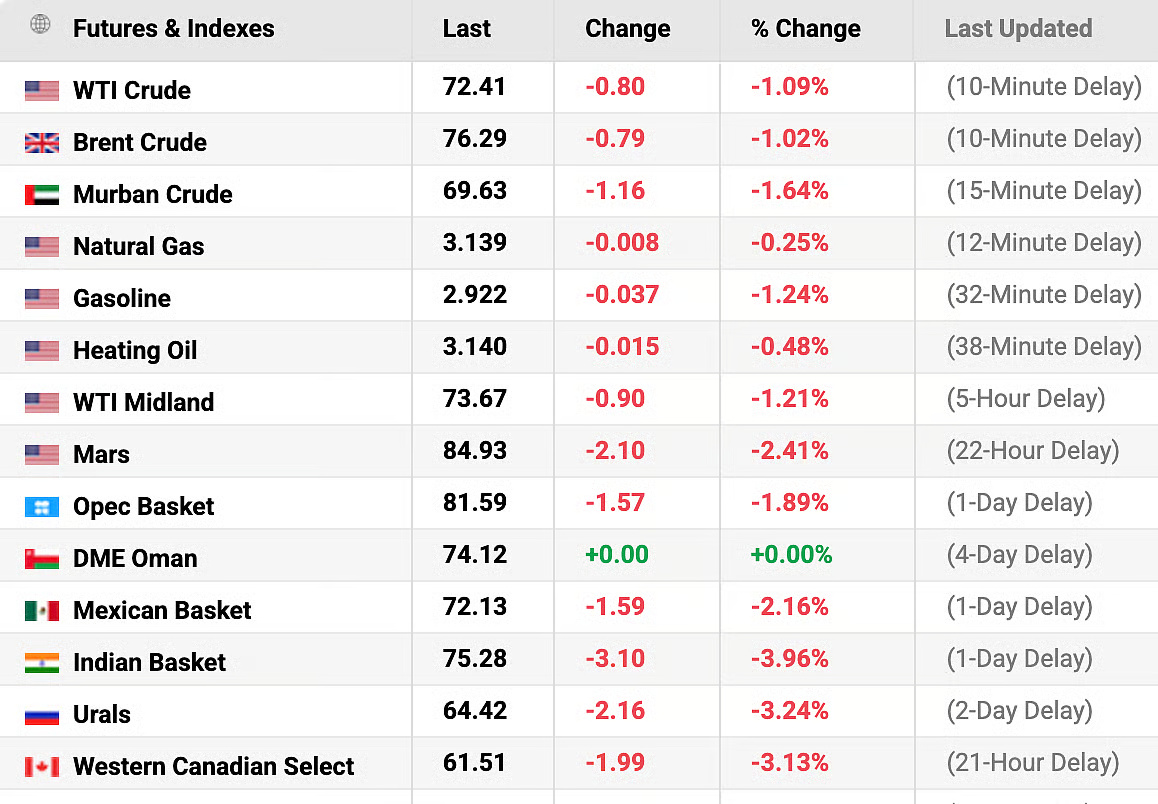
The declines follow Tuesday’s sharp selloff, when oil recorded its largest one-day drop in nearly a year after the US and Iran signed a memorandum of understanding (MoU), easing concerns that the conflict could disrupt exports from the Arabian Gulf.
Market focus has shifted from military tensions to the physical supply outlook.
Iran has continued exporting oil, while shipping through the Strait of Hormuz — a key waterway handling around one-fifth of global oil consumption — has remained steady despite recent increases in military activity.
Analysts said traders are unwinding the “war premium” that briefly pushed Brent crude above $120 per barrel. With no major disruptions to production or tanker movements, investors are reassessing the likelihood of sustained supply flows.
Weaker prices also reflect expectations that major producers, including members of the OPEC+ alliance, will continue to maintain ample supply, while global demand growth remains uneven amid economic uncertainty in China and other major consuming economies.
Despite Wednesday’s decline, analysts warned that oil markets remain highly sensitive to developments in the Middle East.
Any renewed attacks on energy infrastructure, escalation involving Iran, or disruptions to shipping through the Strait of Hormuz could quickly reverse the recent selloff and push prices higher again.

