

Oil Nears $90 as US Inventory Drawdown and Supply Fears Support Prices.
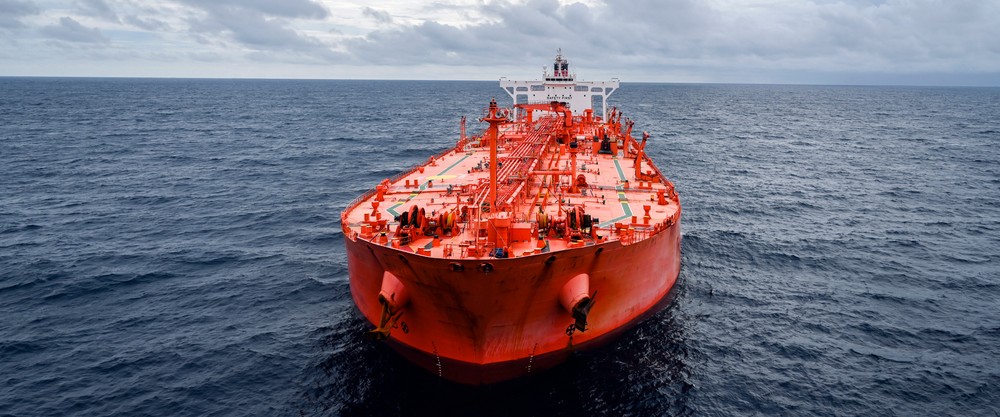
Global oil prices remained elevated but relatively stable on Wednesday after fresh US military strikes on Iran increased tensions in the Middle East, with traders remaining cautious but not yet pricing in a worst-case disruption to global energy supplies.
Brent crude, the international benchmark, traded at $92.05 per barrel, up 0.66%, while US West Texas Intermediate (WTI) crude rose 0.63% to $88.76 per barrel, according to market data as of early Wednesday afternoon in Tokyo.
The authority also said its maritime search and rescue units remain on standby around the clock to respond to emergencies and accidents in Saudi waters.
Crude prices remained below earlier peaks despite the military escalation, suggesting investors still believe oil exports are continuing to flow to global markets through alternative routes and informal or clandestine shipments.
The Strait of Hormuz typically handles around one-fifth of global oil trade. Analysts have cautioned that a full closure of the waterway could trigger a sharp spike in oil prices and potentially reignite global inflationary pressures.
‘Ghost’ crude carriers
Recent research from JPMorgan suggests that visible commercial traffic through the Strait of Hormuz remains well below pre-war levels. However, substantial volumes of oil are still believed to be moving through “ghost” vessels, unofficial channels and alternative export routes, helping to avert a severe supply shock.
Energy markets largely reflected that view on Wednesday.
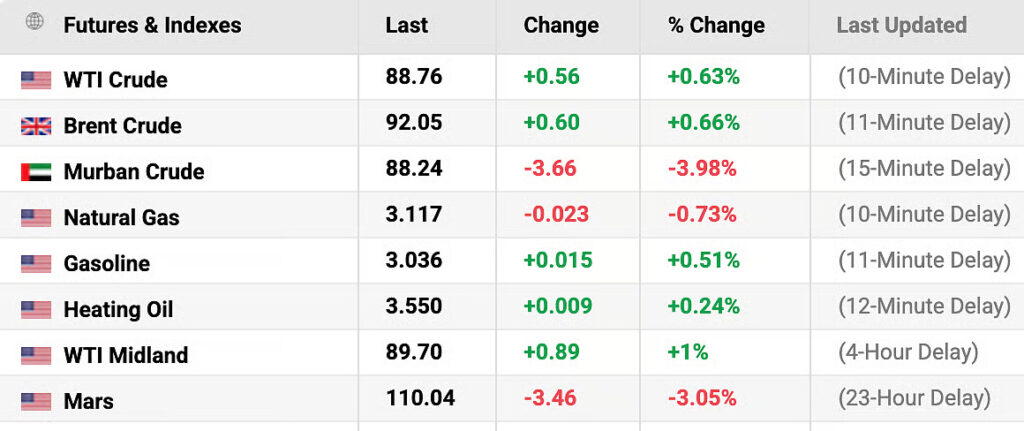
Gasoline futures rose 0.51%, and heating oil gained 0.24%, while US natural gas fell 0.73%.
Among regional crude benchmarks, Murban crude — a key Middle Eastern grade exported from the UAE — declined nearly 4% to $88.24 per barrel. Meanwhile, Mars crude, a major US Gulf Coast benchmark, slipped more than 3% to $110.04.
The divergence suggests traders remain more focused on regional supply dynamics than on the prospect of an immediate collapse in Gulf oil exports.
Why markets aren’t panicking
Despite what analysts describe as one of the most significant oil supply disruptions in decades, market reactions have remained relatively contained.
Three key factors have helped cushion prices:
- Alternative export routes, particularly Saudi Arabia’s East-West Pipeline to the Red Sea
- Clandestine or “ghost” tanker shipments reportedly continuing to move through the Strait of Hormuz despite the conflict
- Reduced Chinese crude imports, as Beijing draws on stockpiles rather than aggressively increasing purchases on international markets
JPMorgan analysts recently noted that these adjustments have helped the global energy system absorb a shock that would typically trigger far sharper price spikes.
What traders are watching next
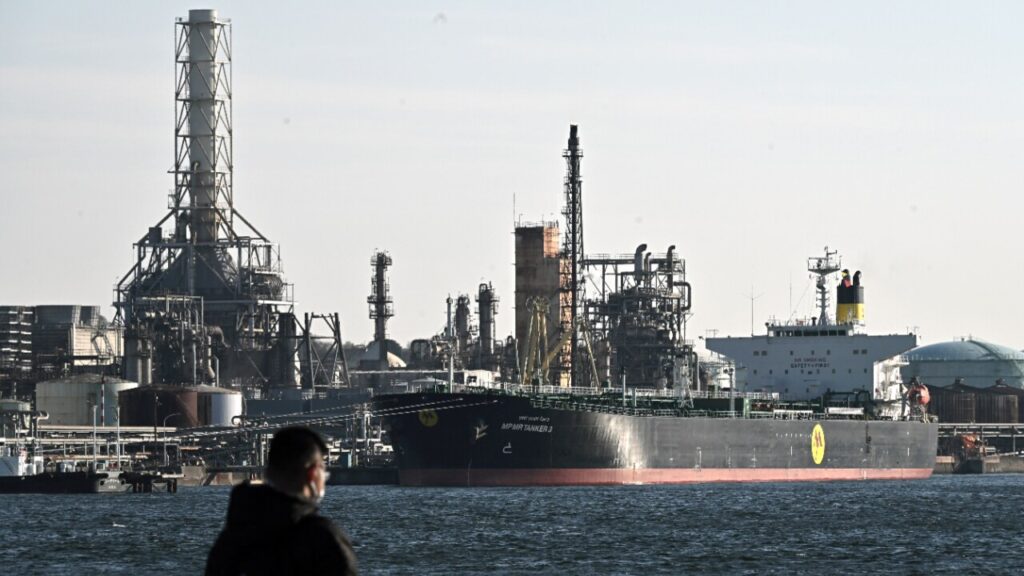
Investors are closely tracking several key risks that could push oil prices higher in the coming days and weeks:
- Further military escalation between the US and Iran
- Any move by Iran to fully close the Strait of Hormuz
- Additional attacks targeting oil infrastructure, tankers, or Gulf shipping lanes
- Sharp declines in global crude inventories
For now, crude trading near $90–$92 suggests markets are pricing in sustained disruption, but not a full breakdown of Middle Eastern oil exports.
The coming days are expected to be crucial as traders assess whether recent US strikes represent a limited response or the start of a wider conflict that could threaten one of the world’s most critical energy corridors.

