

The semiconductor leader moves into complete AI systems as booming demand pushes a trillion-dollar revenue forecast.
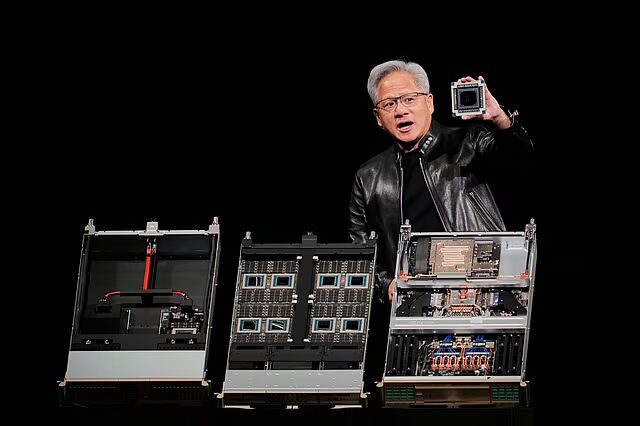
Dubai: Nvidia is transforming from a chip manufacturer into a comprehensive AI systems company, unveiling an ambitious plan that encompasses new processors, integrated computing platforms, and a $1 trillion revenue target driven by AI demand.
At its annual developer conference, CEO Jensen Huang outlined a strategy that extends far beyond graphics processors, highlighting Nvidia’s move to take greater control of the entire AI stack, spanning hardware, infrastructure, and software.
The company projected that its leading AI processors could drive $1 trillion in cumulative sales by 2027, fueled by robust demand for its next-generation Blackwell and Rubin platforms. This forecast is intended to reassure investors amid questions about the sustainability of the current AI spending boom.
Demand Surge Reshapes Strategy
Huang highlighted an extraordinary surge in computing demand, fueled by the rapid adoption of AI across industries. “I believe that computing demand has increased by 1 million times in the last two years,” he said, illustrating the scale of transformation redefining the sector.
Expanding Beyond Chips
The surge in demand is driving Nvidia to broaden its role, entering areas traditionally dominated by other chipmakers. The company is strengthening its footprint in central processing units—a market long led by Intel—while rolling out new semiconductor designs built on recently acquired technology.
Full Systems and New Markets
A major shift is Nvidia’s push to offer complete computing systems, integrating processors, networking, and software into unified platforms. These systems can function independently or alongside existing infrastructure, giving customers greater flexibility in deploying AI workloads.
The company is also exploring cutting-edge markets, including chips for data centers in space, reflecting the scale of its ambitions. Simultaneously, it continues to expand partnerships across technology, software, and mobility sectors to embed its AI capabilities into practical, real-world applications.
Expanding Competition Across the Stack
Nvidia’s broader strategy puts it in more direct competition with established players—and even some of its own customers, many of whom are developing in-house chips to reduce dependence on external suppliers. Rival chipmakers are also intensifying efforts to capture a share of the booming AI market.
Despite this, Nvidia is wagering that its integrated approach will give it an edge, especially as demand shifts from standalone components to complete AI solutions.
AI Becomes Core Infrastructure
The company’s vision underscores a broader shift in how AI is perceived, evolving from a mere software tool into a fundamental layer of modern economies.
“AI is one of the most powerful forces shaping the world today. It is not a clever app or a single model; it is essential infrastructure, like electricity and the internet,” Huang said.

