

Why comedian Maz Jobrani believes better jokes, not censorship, are the answer.
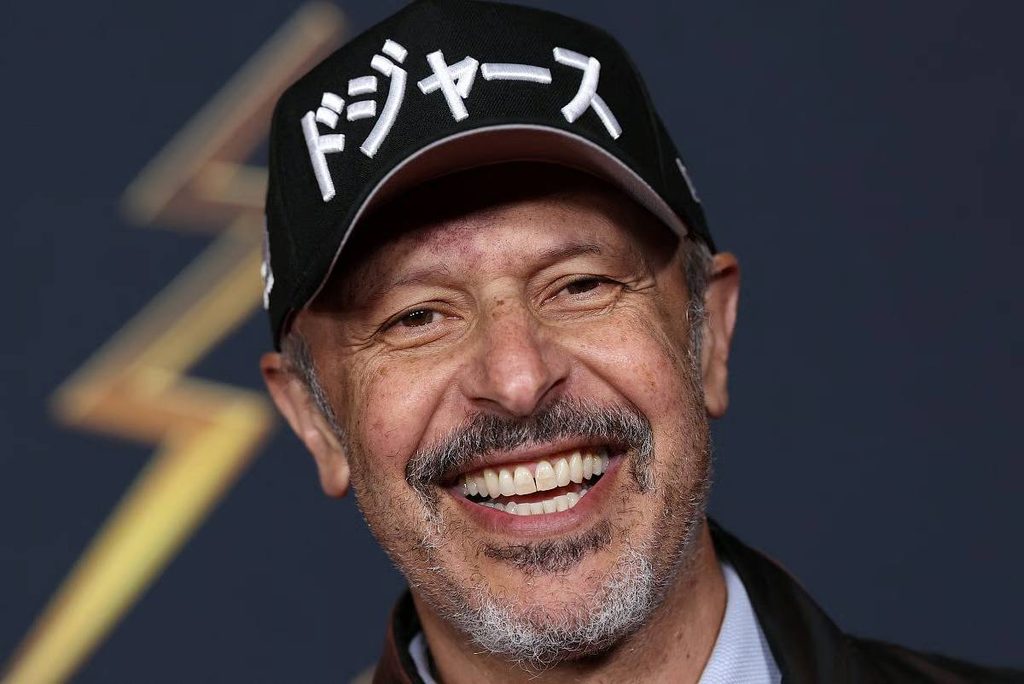
Dubai: Iranian-American comedian has little patience for comedians who claim cancel culture is destroying their careers. His response?
“Listen, you’re not being cancelled. You’re just lazy. You haven’t written new jokes,” Jobrani tells in a virtual interview ahead of his return to Abu Dhabi on November 7 at Etihad Arena.
It’s a refreshingly blunt assessment from a comedian who has spent nearly two decades using humour to challenge stereotypes, take aim at political leaders and remind audiences that people from the Middle East can laugh at themselves, too.
Jobrani knows what it means to face prejudice. Born in Tehran, he moved with his family to the San Francisco Bay Area at the age of six. Growing up in the US was not always easy. During high school and college, he was subjected to slurs such as “camel jockey”. Then came the September 11 attacks, which profoundly affected the lives of many Middle Easterners living in America.
Rather than let those experiences silence him, Jobrani turned to comedy, transforming the very stereotypes that had been used against him into material for his stand-up routines.
His early love of theatre eventually led to a career spanning stand-up, film and television, with appearances in Life on a Stick, 24, Curb Your Enthusiasm and The Knights of Prosperity.
For Jobrani, comedy has never been about steering clear of uncomfortable subjects. It is about finding smarter, sharper and funnier ways to address them. He believes comedy without a point of view misses an opportunity.
“But you don’t want to become didactic,” he says. “You make sure there’s a punchline. You got to have a punchline.”
Our conversation begins at an ungodly 6.15am Dubai time, but Jobrani is already in fine form. He talks about everything from Donald Trump’s relentless social media activity to the possibility of artificial intelligence replacing human audiences.
There is also a bittersweet revelation: his upcoming Abu Dhabi performance could be his last in the capital for some time. He is preparing to take a break from touring to prioritise his children.
‘I want to punch up’
In an increasingly polarised world, where a comedian’s joke can spark outrage within seconds, Jobrani believes the answer is not necessarily censorship or self-censorship. It is better writing.
He is particularly unimpressed by established comedians who continue recycling material written decades ago, then complain when younger audiences take issue with it.
“Your jokes and your point of view are what they were 20 years ago. Now, 20 years later, our kids see a different world,” he says.
“If I want to stay current and in tune with the times, then I need to adjust my jokes and find a way to make fun of things without using the words I used before.”
It’s a refreshing perspective in an entertainment landscape where accusations of political correctness are often used to explain why certain jokes no longer resonate with audiences.
Jobrani acknowledges that he has unintentionally offended people in the past, but believes that is no excuse for comedians to stop evolving.
“I don’t want to punch down. I want to punch up.”
For him, that means avoiding jokes aimed at people because of physical disabilities or circumstances beyond their control. Politicians, however, remain fair game.
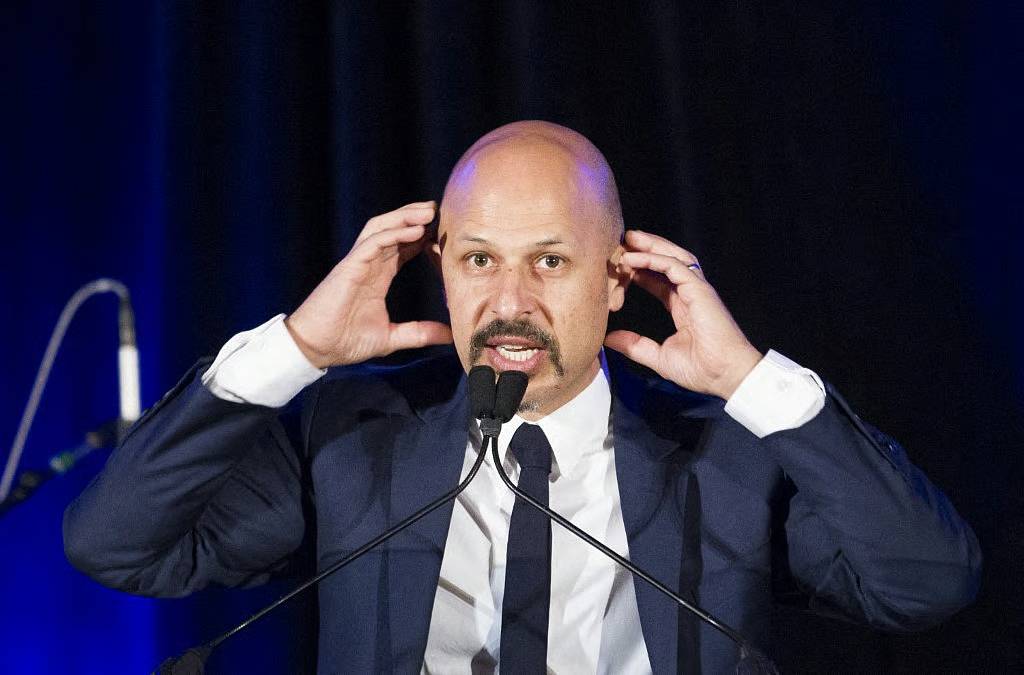
Trump: The gift that keeps exhausting comedians
Few political figures have provided comedians with as much material as US President Donald Trump. But Jobrani is not particularly grateful for it.
“I would give back any money I made from Trump jokes if he would just go away because it’s really hard to keep up,” he says.
The comedian admits that Trump’s constant stream of statements and controversies has become exhausting, even for someone whose livelihood involves finding humour in political absurdity.
“If I tried to make a joke of everything he says every day, I wouldn’t have time to eat or sleep.”
These days, he sometimes switches off from the news altogether, preferring to check the stock market as a rough indicator of what might be happening.
His description of Trump is equally colourful.
“It’s like having a toddler that you can’t control,” he says, imagining a succession of therapists, teachers and preschool staff struggling to manage him.
Beneath the jokes, however, is a serious conviction about democracy and freedom of expression.
Jobrani recalls confronting a pro-Trump heckler who objected to his political material.
“The whole point of America is we can make fun of our leaders, right?” he says.
“Whether it’s Trump or Biden or Obama, I don’t care who it is, but that’s the whole point.”
How Abu Dhabi’s comedy scene has changed
Jobrani’s relationship with the UAE stretches back nearly 20 years, to when he toured with the groundbreaking Axis of Evil Comedy Tour.
He remembers a much more restrictive environment for stand-up comedy at the time.
“When I first came there with the Axis of Evil almost 20 years ago, the promoters would say, ‘No sex, no religion, no politics.’”
His response to those instructions was immediate.
“So you’re like, well, hello and goodbye or salaam alaikum, alaikum salaam.”
But he believes the region has undergone a remarkable transformation.
During his most recent Abu Dhabi appearance, he says he performed essentially the same material he was taking to audiences in Western countries without encountering objections.
“I was able to do the show I was doing in America and Australia and Europe in Abu Dhabi, and nobody batted an eye.”
For someone who witnessed the region’s comedy scene in its early days, that evolution has been particularly striking.
“And I was like, wow, the society has moved forward,” he says.
The UAE’s multicultural audiences are another reason he enjoys performing here. Having appeared twice at Etihad Arena, he describes Abu Dhabi as one of his favourite places to perform.
But his next visit carries a more emotional significance.
“This time’s actually going to be my last time there because I’m going to step back and spend some time with my family because my son just went to college, my daughter’s just a couple of years away.”
He wants to slow down, spend more time with his children and, as he puts it, “smell the roses”.
Can AI replace comedians?
Artificial intelligence may be challenging journalists, writers and performers, but Jobrani has already conducted his own entertaining experiment with the technology.
He asked AI to write jokes in his style. The results were underwhelming.
Then he tried something more ambitious: getting AI to impersonate an audience member so he could practise his crowd work.
The imaginary spectator introduced himself as Joe, complete with hesitant responses and an invented backstory.
The experiment left Jobrani contemplating an absurd possibility.
“And I realised maybe in the future we won’t need audiences. I just do a show to AI.”
Jokes aside, he supports regulation while recognising AI’s potential benefits, particularly in medical research. He also reveals that he has recently been dealing with a health issue, although he does not elaborate.
Comedy as a weapon against prejudice
Perhaps the most compelling aspect of Jobrani’s career is his belief that laughter can challenge deeply rooted prejudice.
When the Axis of Evil comedians performed in the US following the September 11 attacks, their mission went beyond entertainment.
They wanted American audiences to see people of Iranian, Indian, Arab and other backgrounds as ordinary human beings who could laugh, tell jokes and share common experiences.
“One guy said, ‘I never knew these people laughed,’” Jobrani recalls.
Another viewer reportedly wrote to the comedians, admitting that their performances had challenged his prejudices following the attacks.
Even the audience shots in their comedy special carried a message: Americans were seeing people of Middle Eastern backgrounds laughing together.
“I think comedy can make a difference and make a little bit of a push forward,” he says.
He remains modest about his own contribution.
“I’ve made a little bit of difference.”
Why artists should take a stand
Jobrani counts politically conscious performers such as George Carlin and Richard Pryor among his inspirations.
When the conversation turns to musicians taking public positions, including Macklemore, he is equally unequivocal.
“Thank God for Macklemore for standing up, and good for him,” he says.
For Jobrani, having a public profile should not mean staying silent on important issues.
“I think that you should always have an opinion and always use your platform to move things forward.”
It’s a fitting philosophy for a comedian who has spent his career finding humour in uncomfortable truths.
As he prepares for what he describes as his final Abu Dhabi performance before taking a break, Jobrani is not abandoning the political jokes, cultural observations or occasionally awkward encounters with audiences.
He simply wants more time with his family.
And perhaps that’s the most relatable punchline of all: after years of making the world laugh, even a comedian deserves some downtime.
How to buy tickets for Maz Jobrani’s November 7 show at Etihad Arena in Abu Dhabi
Tickets start at Dh275 and are available through Platinumlist.

