

Masterminds implements a 12-student class cap to boost early years development.
Dubai’s education market is expanding rapidly — with new campuses, fresh branding, and bold claims of being “future-ready.” Yet many parents, particularly globally mobile families, are looking beyond glossy prospectuses and inspection reports and asking a simpler question: Will my child be genuinely known and taught in a way that builds real capability, not just superficial performance?
That question lies at the heart of Masterminds Education, established in Dubai in 2016 and recognised for 10 consecutive years across major awards programmes. Most recently, at the UAE Business Awards 2026, Masterminds received the Most Nurturing Early Education Environment 2026 and Child Development Excellence Award 2026.
Yet leadership is clear: awards are not the goal — the operating model is. In early childhood education, outcomes are shaped less by marketing language and far more by time, attention, emotional safety, and the quality of adult-child interactions — every single day.
12 students per class in the next academic year
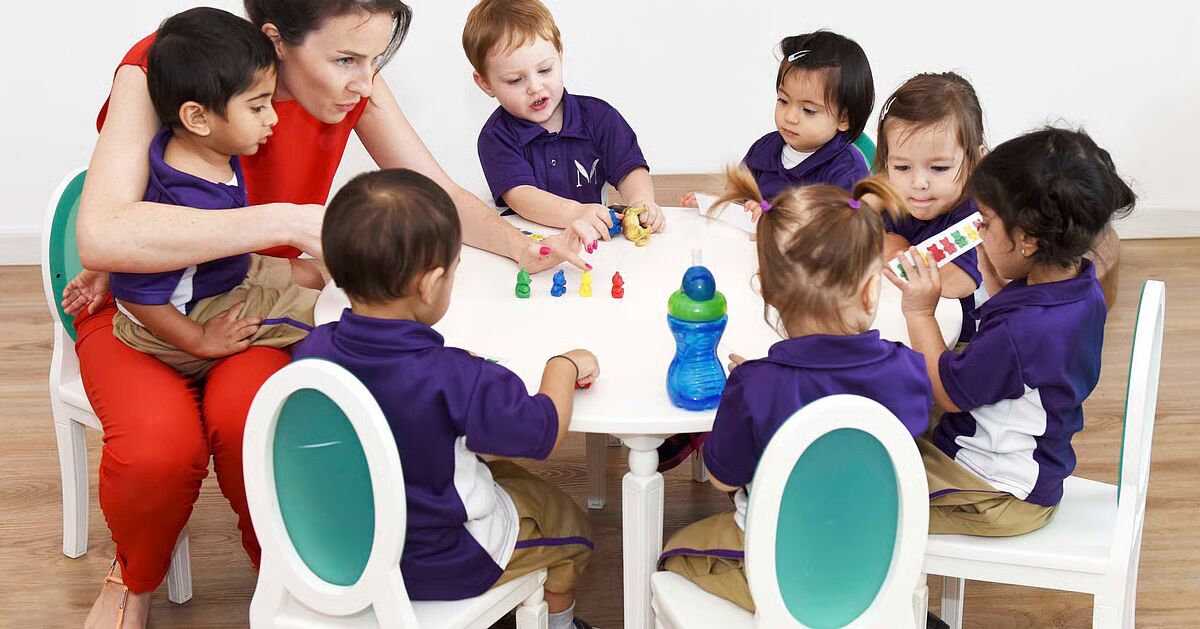
Starting in the 2026–27 academic year, Masterminds Early Learning Center will operate with a maximum class size of 12 students across Preschool through KG2, structured as two learning groups of six within each class.
“This is not a new concept launch; we have long operated with small class sizes,” says Tania Siddiqi, School Director at Masterminds Education. “The 2026–27 update simply standardises this approach across all early years levels to protect the conditions that produce strong outcomes.”
In many schools, early years classes commonly range from 20 to 27 children. At that scale, even the strongest teachers can struggle to deliver sustained individual attention, real-time feedback, and consistent emotional safety throughout the day. By contrast, learning groups of six create the practical conditions for:
- Stronger teacher-child relationships
- Faster feedback loops and higher language exposure
- More purposeful guided play (not crowd control)
- Consistent emotional regulation and a sense of belonging
- Earlier identification of academic and social gaps
This is what nurturing looks like when translated from a slogan into a daily operating system.
Why small is not a trend, it is a quality control mechanism
Research increasingly shows that learning is not just an individual process—it is also a group process, shaped by shared attention and social connection.
In one classroom neuroscience study, researchers recorded EEG from 12 students simultaneously over multiple regular class sessions and found that brain-to-brain synchrony predicted both classroom engagement and social dynamics. The authors suggest shared attention as a key mechanism: when students are collectively engaged in small groups, their neural activity becomes aligned; when attention drops, synchrony decreases as well.
Even more striking for educators, the study found that brief face-to-face interaction (eye contact) before class increased synchrony during lessons, and that this synchrony correlated with students’ perceived closeness to one another.
This matters because it reinforces what experienced educators already know: engagement, belonging, and learning are tightly intertwined—and they are structurally easier to cultivate in smaller groups, where children are truly seen, guided, and connected.
At Masterminds Education, the perspective is simple: small is not a marketing claim—it is a deliberate design choice that safeguards outcomes. It is what makes whole-child development real, not theoretical.
Whole-child development is how learning works
Decades of research in developmental neuroscience and education converge on one core point: children do not develop in isolated domains. Intellectual, physical, and social growth are deeply intertwined, and attempts to optimise one while neglecting the others misunderstand how the developing brain functions.
From a neurobiological perspective, learning is grounded in bodily experience. Movement and sensorimotor development scaffold higher-order cognition in early childhood, while physical activity supports attention and executive function—the skills that make learning stick.
Social development is equally foundational. Many core intellectual capacities—language, self-regulation, moral reasoning—emerge through interaction with others. Stress or insecurity can directly impair learning, whereas supportive relationships foster exploration and cognitive flexibility.
This is precisely why class size is not a secondary detail. Smaller settings make it easier to build stable relationships, emotional safety, and consistent feedback loops that underpin both learning and behaviour.
A whole-child programme integrated into the school day
Masterminds Early Learning Center is designed to build intellectual, physical, and social-emotional foundations through a cohesive daily programme, rather than bolt-on enrichment. Key elements include:
- Languages, leading with English and integrated Arabic and French
- Early literacy and mathematics with conceptual foundations, not rote performance
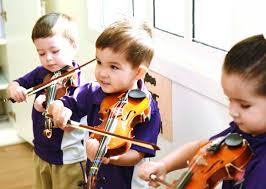
- Music education, including Suzuki violin and piano instruction
- Physical development, including swimming, gymnastics, structured movement, and foundational motor skills
- Knowledge-building through broad vocabulary, general knowledge, and early thinking skills supporting academic depth later
Masterminds’ learning design is further informed by cognitive science and ongoing collaboration with researchers at the Wharton Neuroscience Initiative, exploring how attention, movement, language, music, and social interaction shape long-term learning—reinforcing why small groups and expert teaching matter.
One organisation, two pathways as children grow
While Masterminds Early Learning Center focuses on ages 1–6, Masterminds Education also operates the Masterminds VIP Micro-School for older students, designed for families seeking ultra-small learning groups and an integrated, whole-child model beyond early childhood.
Families exploring early years options in Dubai can learn more and request an admissions conversation via www.masterminds.ae.

