

Inside Instagram’s new Teen Accounts: What changes for families in the UAE.
Dubai: Every parent with a child on social media shares the same concerns—who their child is interacting with, what content they’re exposed to, and how much time they’re spending online. Meta is now addressing some of these worries.
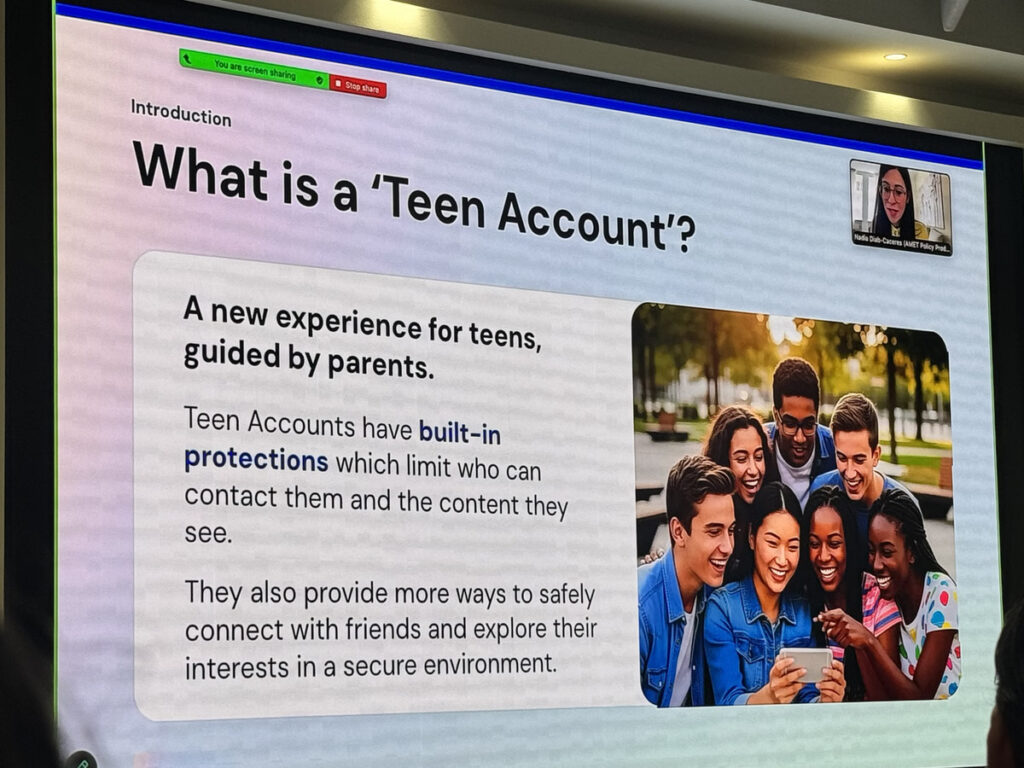
In April 2026, Meta introduced Instagram Teen Accounts across the MENA region, bringing a set of built-in safety features designed for users aged 13 to 17. The goal is to make the platform safer for teens while keeping parents more informed and involved.
What are Instagram Teen Accounts?
Teen Accounts are not a separate app; they are part of the regular Instagram experience by design.
“Our research shows that teenagers don’t want to be in an app that ‘infantilises’ them,” said Nadia Diab Caceres, Head of Instagram Public Policy MENA. “They’re at a stage where they’re developing independence and autonomy. They want to be in the same space as everyone else, just with appropriate protections.”
These protections are enabled by default, but parental control varies by age. Teens under 16 require a parent or guardian’s approval to change or relax any settings. Teens aged 16–17 can modify some settings on their own, unless their account is actively supervised by a parent or guardian.
Instagram Teen Accounts: 6 key features explained
Moon Baz, Meta’s Director of Global Partnerships for Africa, the Middle East and Turkey, was clear about the platform’s intent. “We have launched Teen Accounts with a default protected mode so parents can have peace of mind. At the same time, we’ve introduced a number of new tools to promote a safe experience and healthy digital habits,” Baz told Gulf News.
“Teen Accounts are automatically set to private, and parents can monitor their teens’ activity with transparency, without being intrusive.”
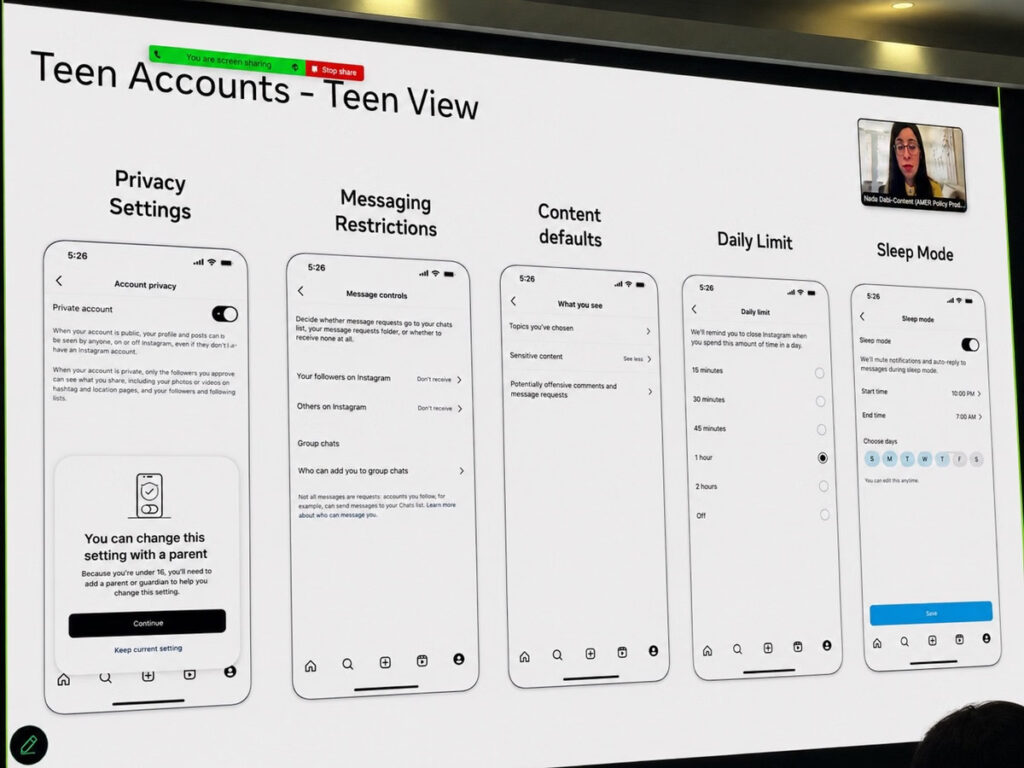
Private accounts
All Teen Accounts are set to private by default. For users under 16, even existing public accounts are switched to private, and parental permission is required to change this. Teens aged 16–17 with existing public accounts may keep them public without permission.
Restricted messaging
Teens can only receive direct messages from accounts they already follow or have previously interacted with.
60-minute daily reminder
After 60 minutes of use, Instagram sends a prompt encouraging teens to log off.
Age-appropriate content
Accounts are automatically set to an “Ages 13+” content filter, which shapes the content, comments, profiles, and messages teens see across the platform. For parents who want stricter controls, Meta offers a “Limited Content” setting that applies stronger filters, further restricts search results, and disables teens from seeing, leaving, or receiving comments on posts, Diab explained.
Tags and mentions
Teens can only be tagged or mentioned by people they already follow.
Sleep mode
Between 10pm and 7am, notifications are muted, auto-replies are activated for messages, and teens receive reminders to close the app. However, this feature is optional. “We don’t always know how teens are using the app at night,” Diab said. “Sometimes they’re doing homework with friends. It’s not just about time, it’s about the quality of that time.”
The event, organised by Meta and Creators HQ, also brought together several popular UAE influencers, particularly family and parenting content creators, including Sneha Rebecca, a mother of three teenagers.
“I believe these new features can help reduce some of the negative effects of social media, especially with tools like default private settings, screen time limits, and expanded parental controls. They may help curb overstimulation and doom-scrolling, and I’m looking forward to trying them with my own children to see how they work,” she said.
Instagram Teen Accounts and the UAE’s new child digital safety law
The rollout comes alongside the UAE’s Child Digital Safety Law, which came into effect on January 1, 2026. The law introduces stricter protections for children online, targeting harmful content, excessive screen time, and the collection of children’s personal data. It applies to major platforms including Instagram, TikTok, Snapchat, and Twitch.
It also places responsibility on parents and caregivers to actively monitor children’s online activity. International platforms have been given a one-year window to comply with the new regulations, or they risk restrictions or blocking within the UAE.
The initiative also aligns with the UAE’s Year of the Family. Alia Al Hammadi, Vice Chairperson of the UAE Government Media Office and CEO of the 1 Billion Followers Summit, highlighted why this moment is significant.
“More than 50% of the GCC’s population is under 25, and platforms like Instagram are among the most widely used. With numbers like these, addressing excessive screen time and mental health—especially within families—is essential. Digital safety for children is not just a national initiative; it’s a national conversation. And with 2026 being the Year of the Family, safety today also means digital safety.”

