

So, what makes falcons so valuable? That’s the million-dirham question.
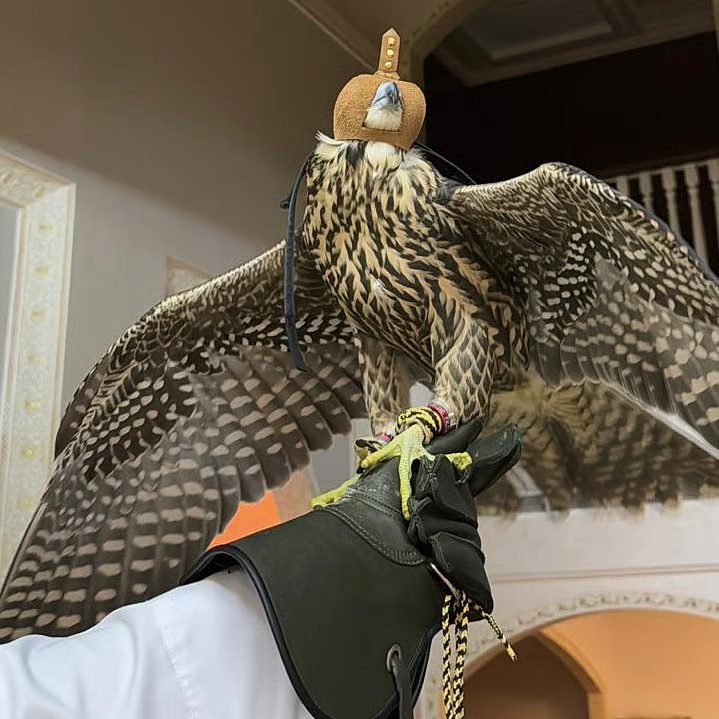
Dh2.1 million for a falcon!
The eye-catching figure has put the spotlight on a world where falcons can fetch thousands, hundreds of thousands and, in some cases, millions of dirhams.
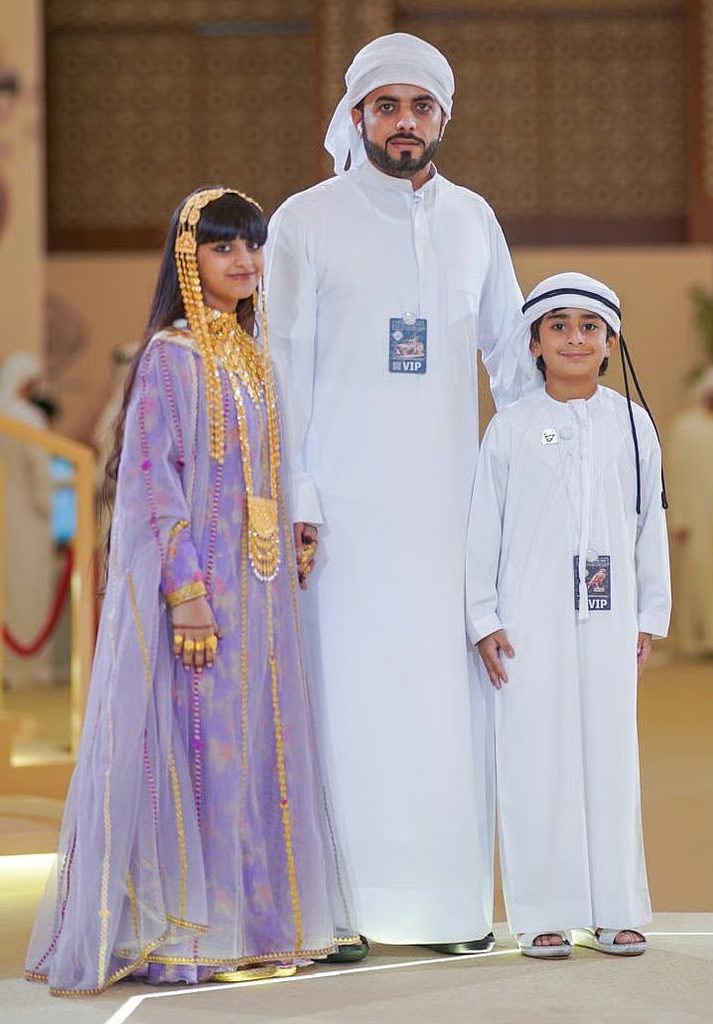
Among those taking part in the falcon auctions at the Abu Dhabi International Hunting and Equestrian Exhibition (ADIHEX) was Khalid Bin Saifan Al Muhairi, whose falcon sold for Dh2.1 million at the final auction.
Videos circulated the previous week showing him alongside a young girl dressed in traditional Emirati attire and wearing jewellery as she placed bids at the auction. The pair were later seen carrying a falcon he had purchased.
For those unfamiliar with the world of falconry, the price may seem extraordinary. But for those who buy, breed, train and compete with falcons, a bird’s value can reflect far more than what happens in the auction room.
So, what makes falcons so valuable? That’s the million-dirham question.
Beyond the price tag
At the final ADIHEX auction, Al Muhairi presented his falcon to the audience as the bidding intensified, speaking enthusiastically about the bird before it went on to set a new auction record.
For him, however, falconry extends beyond the excitement of the auction. He views falcons as an investment, with some potentially entering breeding programmes after three to four years and generating value through their offspring.
He owns many falcons and travels to different countries to sell them. Following the ADIHEX auction, he travelled to Qatar, where another falcon auction was held.
Asked what can drive the high prices seen at auctions, Al Muhairi pointed to silalah nadirah, or “rare bloodlines”, as one of the main factors that can make certain falcons more valuable.
Asked whether the young girl who accompanied him was also interested in falconry, Al Muhairi responded with a slight laugh, his pride evident as he said: “Yes, just like her father.”
What makes a falcon valuable?
According to a falcon breeder who took part in the ADIHEX auction, a bird’s value depends largely on what each buyer is looking for.
“Falcons can be sought for different purposes, including hunting, racing and beauty competitions. Someone looking for a racing bird, for instance, may look for different qualities from a buyer interested in beauty competitions or breeding,” he said.
Not every falcon, he stressed, is expensive. Prices can start at around Dh5,000, with a bird’s type, characteristics and lineage helping explain the difference between lower-priced birds and those commanding much higher prices.
“When an auction becomes highly competitive, it is often breeders bidding against one another for birds they see as having future potential,” he noted.
He added that high-priced birds may spend two or three years competing in beauty competitions before being put into breeding.
A bird can therefore generate returns beyond its initial purchase price.
A market beyond the auction
The business of falconry does not begin or end at the auction house. Muhammad Farhan Al Hamadah, a falcon shop owner in Al Ain, said the market extends across the Gulf, with buyers coming from Saudi Arabia, Qatar and Bahrain. He said it was difficult to determine which country has the highest demand.
His shop stocks farm-bred falcons from countries including Spain, Britain, Canada and the United States, with birds varying in type, appearance, size and lineage.
For many buyers, he said, the motivation is simply a love of falconry. Competitions and prize money can provide another incentive, particularly when a bird performs well in beauty competitions and attracts greater interest.
“The potential return can also extend to breeding. If a falcon produces offspring that are later sold, its value can increase significantly,” he added, comparing the potential investment to property or a company.
The same focus on quality is reflected at auctions, where young falcons with desirable characteristics are selected for sale.
A tradition passed to the next generation
At ADIHEX, a falcon was bought by teenager Salem Al Hameli’s father, giving him a bird to train and eventually take into the desert.
For Al Hameli, the interest goes beyond simply owning a falcon. It is also a connection to Emirati heritage.
“I became interested in falcons because falconry is part of our Emirati tradition and history. It was also something our great leader, Sheikh Zayed bin Sultan Al Nahyan, practised,” he said, adding that he enjoys the hobby.
His days with the bird involve regular training in the desert. In the morning, he releases it to chase a pigeon and, depending on whether it catches its prey, continues with its hunting training.
He then returns to the majlis, where he holds the falcon on his hand and pets it, helping the bird become accustomed to him and learn to trust people.
Once the falcon is trained and accustomed to him, Al Hameli said, he can release it to hunt houbara or curlew. A successful hunting bird can also command a higher price, he added.
“I feel so proud to be able to do this and enjoy my teenage years this way. As an Emirati, being able to take part in the same hobbies as our leaders is something I really cherish.”
For his father, buying the falcon was also about giving Salem something meaningful to spend his time on.
“I got him a falcon so he could spend his time doing something meaningful, rather than wasting his teenage years. Falcons really teach you patience, self-control, and independence,” he said.
He also stressed the importance of having a falcon examined by a veterinarian before purchase to assess its health and check for any signs of illness.
For Al Hameli, falconry is more than a hobby. It is a tradition he hopes to carry into adulthood.
“I see myself taking part in competitions, selling and buying falcons, and continuing this for the rest of my life.”

