

Seven-year-old Zayyan is living with a rare and progressive genetic disorder that leads to irreversible muscle degeneration.
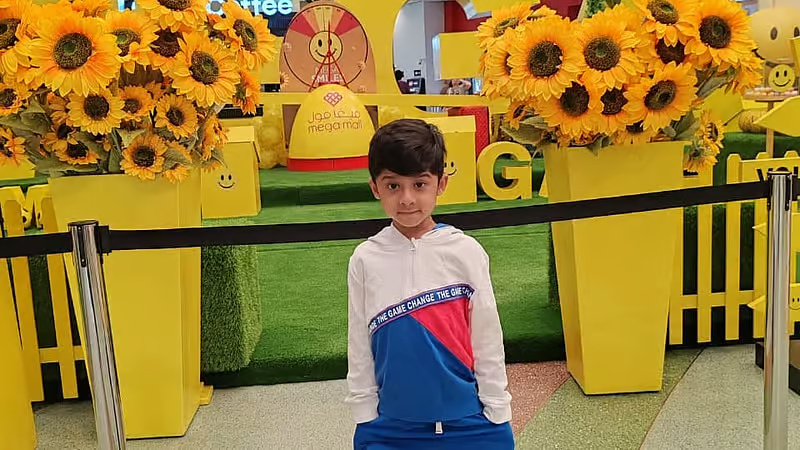
When people first meet Zayyan, they see a cheerful seven-year-old boy with a warm smile, bright eyes and an endless curiosity about the world around him. He enjoys watching the scenery from the car window, exploring new places, playing with his sister and finding joy in everyday moments.
But behind that happiness is a long and difficult journey. For years, his parents, Indian expatriates Jagfar and Jasmine Jagfar, watched their son struggle to reach developmental milestones. His younger sister, Izzah, soon outgrew him, and people would often mistake her for the older child.
The family visited numerous doctors and specialists in search of answers, but no one could identify the cause of his condition. “We kept visiting doctors and specialists, but no one could figure out what the issue was,” Jagfar said in an interview.
By the end of 2024, Zayyan’s condition had deteriorated rapidly. He was no longer able to climb stairs and began struggling with everyday activities, including tripping while getting onto the school bus.
That moment became a turning point for the Sharjah-based family, prompting them to seek specialist care from a neurologist at Rashid Hospital in Dubai. “At the very first visit, the doctor identified what his issue was,” Jagfar said.
The diagnosis was Duchenne Muscular Dystrophy (DMD), a rare and progressive genetic disorder that causes irreversible muscle degeneration. Without intervention, children who once ran, jumped and climbed may gradually lose these abilities. The condition can also lead to serious complications, including respiratory problems and heart issues, as they grow older.
Time is running out
“We took three days to process it,” Jagfar recalled. “Since then, we have been focused on finding a solution.”
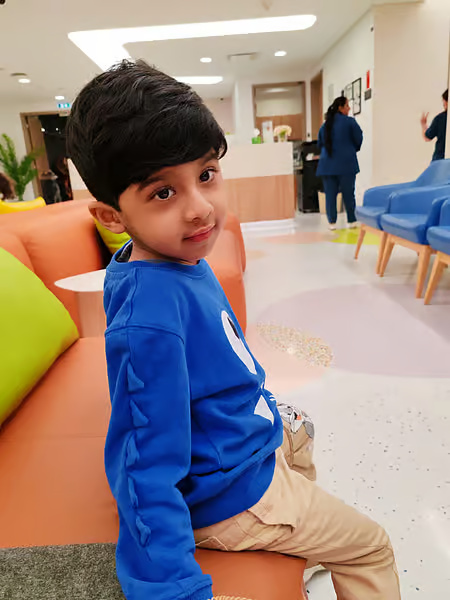
While there is currently no cure for DMD, available treatments can help slow disease progression and support children in managing symptoms.
The treatment the family is seeking is Elevidys® gene therapy, a one-time treatment designed to deliver a functional form of the dystrophin protein, which muscles need to function properly. It is among the most expensive medical treatments available, with the official cost estimate from Al Jalila Children’s Specialty Hospital listed at Dh10,654,465.
For months, the family struggled to find a way forward. They launched crowdfunding efforts in India but were unable to raise funds in the UAE. Two months ago, with Zayyan set to turn eight in September and his condition worsening rapidly, the Al Jalila Foundation stepped in, waived regulations and granted official authorisation for the family to raise funds in the UAE.
Since then, the family has raised Dh1.5 million, but they say time is running out.
“Recently, we found that he developed cataracts in his eyes,” Jagfar said. “We do not have much time remaining.”
If Zayyan loses his ability to walk and becomes dependent on a wheelchair, the gene therapy may no longer be effective. “Every day that passes without this treatment is another day Zayyan’s body grows weaker,” the family wrote in their appeal.
A mother’s love
Through it all, one person has emerged as an unexpected campaigner — Zayyan’s mother, Jasmine. Before the diagnosis, she was a quiet homemaker who rarely spoke publicly. Today, driven by her love for her son, she leads the awareness campaign, manages his social media platforms, creates videos, coordinates collaborations and reaches out to journalists, influencers and philanthropists for support.
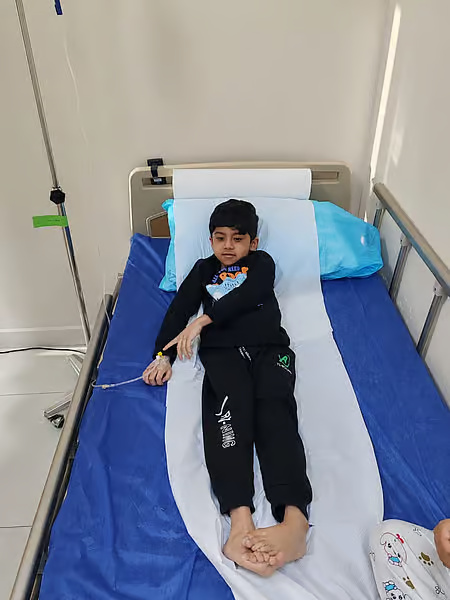
“Her determination has helped Zayyan’s story reach thousands of people,” Jagfar said. “A mother’s love can inspire extraordinary courage.”
For Jagfar and Jasmine, their hope as parents remains simple: to see their son continue living the life every child deserves.
“We hope he can continue to walk,” Jasmine said. “We hope he can continue to laugh. We hope he can continue to learn. We hope he can continue to dream.

