

UAE Sees Growing Demand for Veterinary Specialists in Livestock, Pets, Wildlife and Public Health.
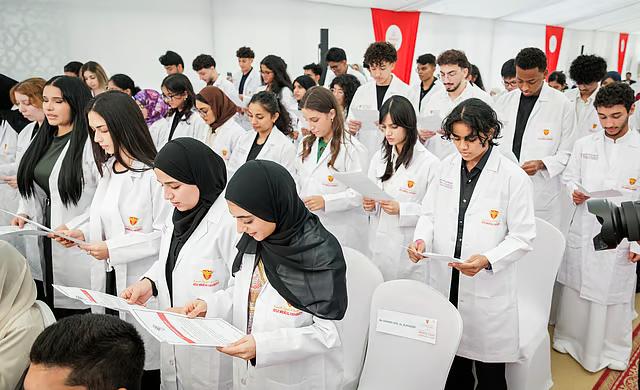
Dubai: For many people, veterinary medicine brings to mind a clinic, an unwell pet or a farm animal requiring treatment. But the profession extends far beyond diagnosing and treating animals.
In the UAE, a new generation of locally trained veterinarians is being prepared for roles spanning animal healthcare, food safety, disease monitoring, wildlife conservation and public health.
A significant step came on September 23, when Gulf Medical University (GMU) held its White Coat Ceremony at the Thumbay grounds in Ajman. For the first time, the university presented white coats to a cohort of students preparing to enter the veterinary profession.
The 2026 Doctor of Veterinary Medicine students form the inaugural cohort of the Thumbay College of Veterinary Medicine, the seventh college established under Gulf Medical University.
For Professor Mohammad Khalifeh, Dean of the Thumbay College of Veterinary Medicine, the programme has a broader purpose than simply training more veterinary clinicians.
He highlighted the important role veterinarians can play in identifying emerging infectious diseases, many of which can originate in animals before affecting humans. This means veterinarians may be among the earliest professionals to detect signs of a potential outbreak.
An early warning system for disease
Veterinarians are often well placed to identify unusual changes in animal health that could indicate a wider threat to public health. Training veterinarians locally can also give them a deeper understanding of the UAE’s animals, farms, markets and environmental conditions.
Khalifeh said this local knowledge could help veterinarians recognise signs of illness in animals such as camels before they develop into broader public health concerns. Local education also helps students establish professional networks within the country.
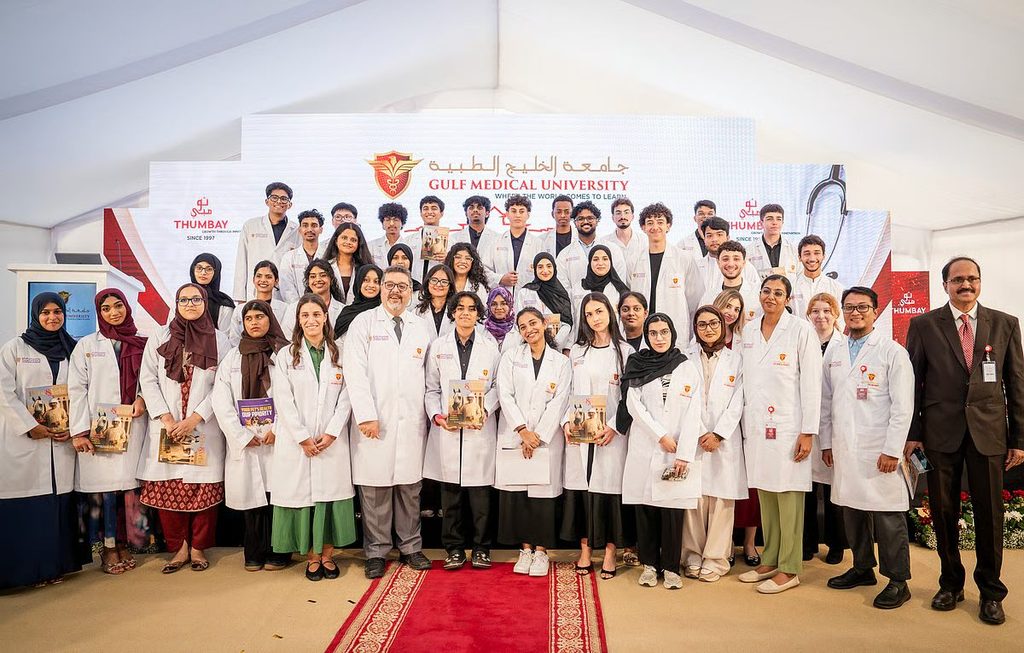
The programme is also designed to encourage collaboration across healthcare disciplines. Veterinary students study on the same campus as future doctors, pharmacists and laboratory scientists, creating opportunities for different professions to learn and work alongside one another.
Khalifeh said training students alongside other healthcare professionals can help build relationships that become valuable once they enter the workforce. Graduates will already have connections across different health disciplines, making it easier to communicate and respond quickly when potential health threats emerge.
This collaborative approach reflects the World Health Organization’s “One Health” model, which recognises that human health, animal health and the environment are closely interconnected.
Protecting human health through animal care
Veterinary care can have an impact far beyond the health of individual animals, contributing to the safety and wellbeing of the wider community.
Khalifeh explained that a well-trained veterinarian does more than diagnose and treat illness. Vets can educate pet owners, advise farmers and identify signs of disease, poor welfare or neglect before problems become more serious or spread further.
Preventive measures such as vaccination, parasite control, responsible breeding practices and humane animal handling can therefore help safeguard both animals and the people who come into contact with them.
Khalifeh also emphasised the close connection between animal welfare and public safety. Healthy, vaccinated and properly handled animals can reduce risks not only for their owners but also for the wider community.
Rabies prevention is one example of how animal and human health are closely connected. Other preventive veterinary measures can similarly reduce the risk of disease while raising overall standards of animal care.
Khalifeh said that training veterinarians to high professional standards can have a much wider impact, influencing countless decisions made by pet owners, farmers and others across the community.
From farms to the food chain
Veterinarians also play an important role in supporting food safety and food security. Their responsibilities can include inspecting meat and dairy products, maintaining livestock health and monitoring diseases that could affect food-producing animals.
Another key area is the responsible use of antibiotics on farms. Khalifeh highlighted the importance of monitoring antibiotic use because antimicrobial resistance that develops in animals can ultimately have consequences for human healthcare.
Beyond farms and clinics, veterinarians can pursue roles in disease surveillance, diagnostic laboratories, border control, wildlife conservation and scientific research.
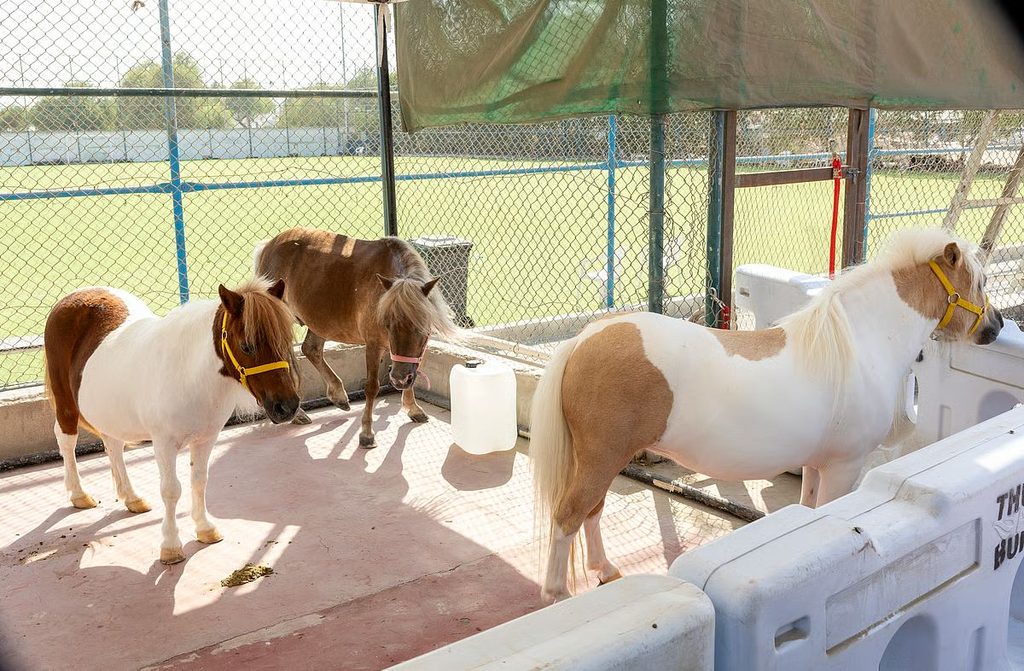
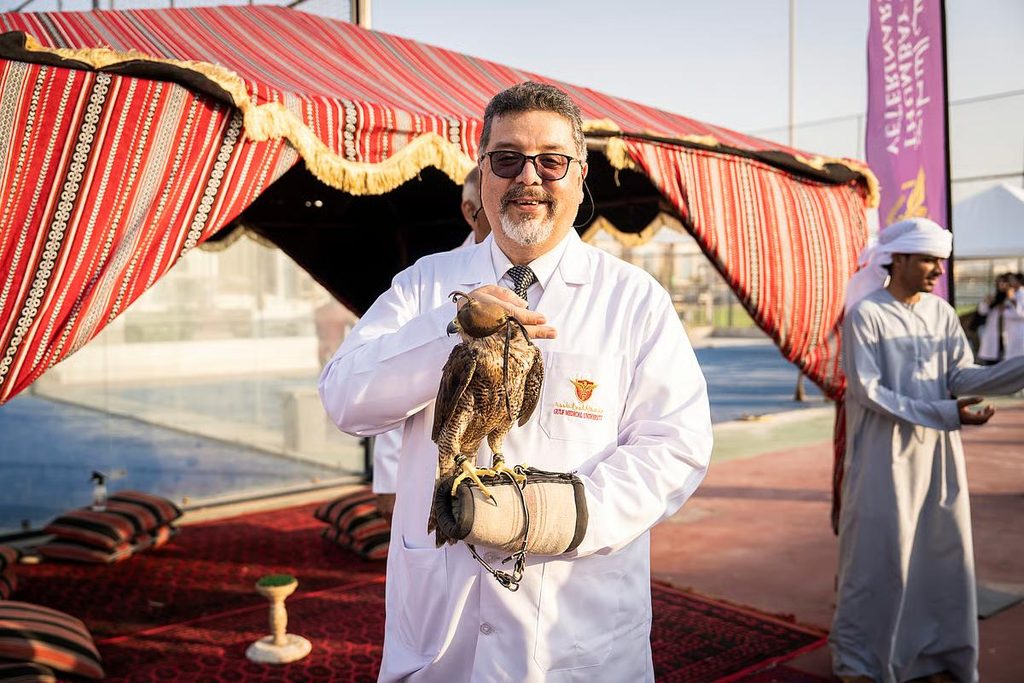
This broad range of expertise is particularly relevant to the UAE, given the country’s strong cultural connections with camels, falcons and horses, alongside its livestock industry, expanding companion-animal sector and wildlife conservation efforts.
The new veterinary programme has therefore been structured to prepare graduates for careers extending well beyond traditional pet care.
Addressing gaps in animal welfare
The five-year Doctor of Veterinary Medicine programme comprises 170 credits and 1,980 hours of clinical contact. During the final year, students undertake rotations covering companion animals, production animals, equine and camel medicine, as well as diagnostics and public health.
The curriculum is designed to expose students to the diverse species and professional environments they are likely to encounter while working in the UAE. This regional focus is intended to help develop a veterinary workforce equipped to address the country’s specific needs.
Khalifeh said the UAE has a strong culture of caring for animals and an active network of rescue organisations, but there is still a need to expand professional capacity, particularly by developing more specialists and encouraging veterinarians to establish long-term careers in the country.
He identified shelter medicine, animal rehabilitation, behavioural care, and exotic and wildlife medicine as areas where demand is currently exceeding the available pool of trained professionals.
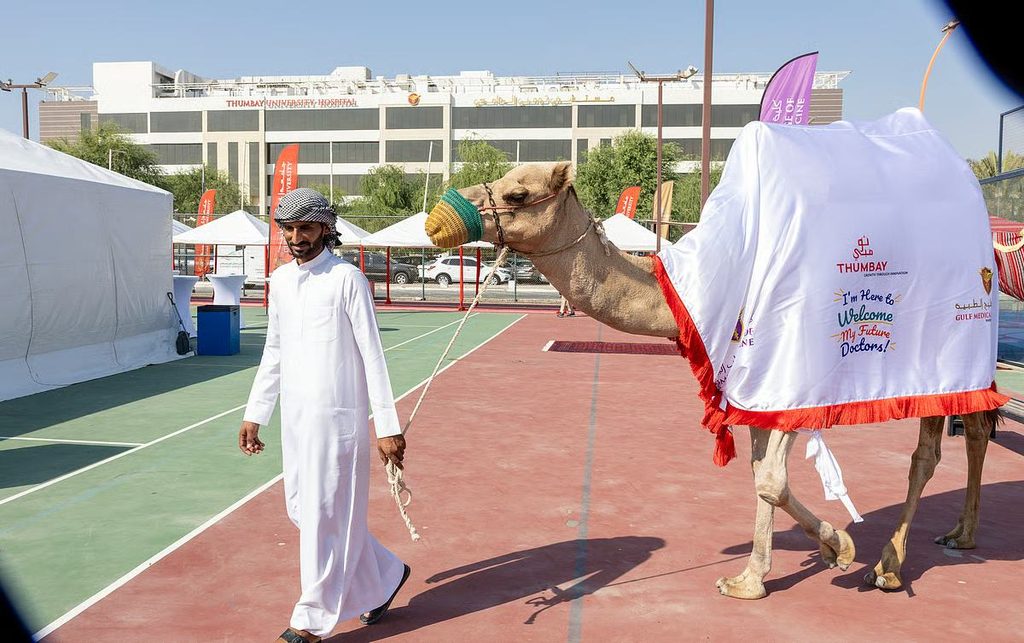
The programme is already incorporating animal physiotherapy into its curriculum. Meanwhile, Thumbay Veterinary Hospital is planned to open next year and serve as a teaching hospital for veterinary students.
Khalifeh hopes the next generation of veterinarians will view animal welfare and rescue medicine as established professional career paths rather than activities undertaken alongside their primary work.
His aim is for graduates to approach rescue and welfare work as genuine veterinary specialities, helping ensure that vulnerable animals can receive high-quality professional care.
Building a home-grown veterinary workforce
The inaugural veterinary cohort marks an early step towards developing a locally trained workforce for a profession that extends across animal welfare, public health, disease prevention and food security.
By training veterinarians within the UAE and exposing them to the country’s particular animal populations and healthcare needs, the programme aims to build expertise that can contribute across clinics, farms, laboratories, conservation programmes and public health systems.
The veterinary students received their white coats from Dr Kaltham Ali Kayaf, Director of Animal Health and Development at the Ministry of Climate Change and Environment. Shahad Adil Al Alkhoori and Mohamed Rashid Almehrzi accepted the white coat on behalf of the inaugural class.
For Al Alkhoori, representing the first cohort was a milestone carrying both pride and responsibility. She said being part of the programme’s inaugural batch meant there was no previous class to follow, giving the students an opportunity to establish standards and traditions for future veterinary cohorts.
Having been passionate about animals since childhood, Al Alkhoori said the programme gives her the opportunity to pursue the career she had long envisioned while contributing to the veterinary needs of her community.
Almehrzi similarly described receiving the white coat as a moment that highlighted the responsibility associated with becoming a veterinarian.
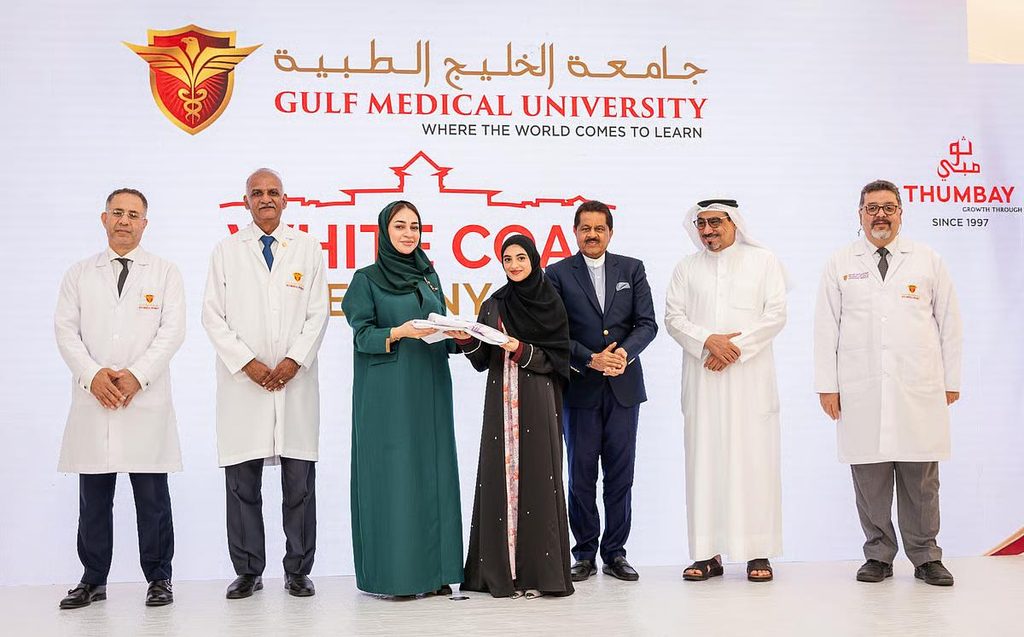
He pointed to the important place animals such as camels, falcons, horses and livestock hold in the UAE’s heritage. Providing high-quality veterinary care, he said, contributes not only to animal health but also to preserving the country’s culture and supporting food security.
Almehrzi added that he was proud to be part of the programme’s first cohort and to pursue his veterinary education in the UAE.
The five-year programme is open to Grade 12 graduates who have studied biology and chemistry, with applications currently open for the next intake.
For students beginning their veterinary education, receiving the white coat marks the start of a career whose responsibilities can extend well beyond treating individual animals.
As Khalifeh described it, veterinarians can serve as “a quiet guardian of public health”, while also contributing to animal welfare, safer food systems and stronger health standards across the UAE.

