

Nurse’s calm response transforms tense medical emergency into a controlled rescue.
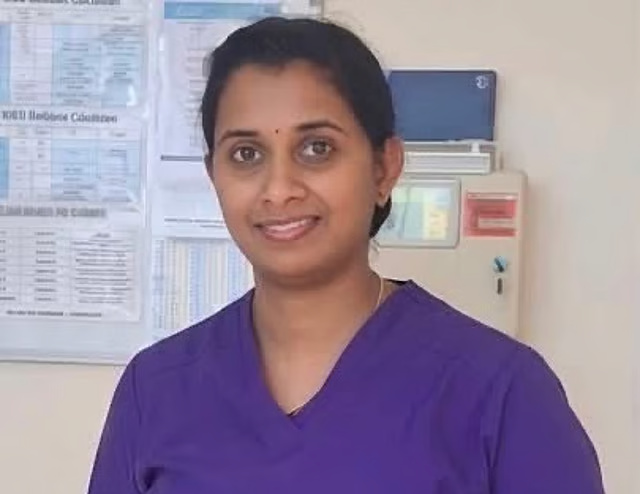
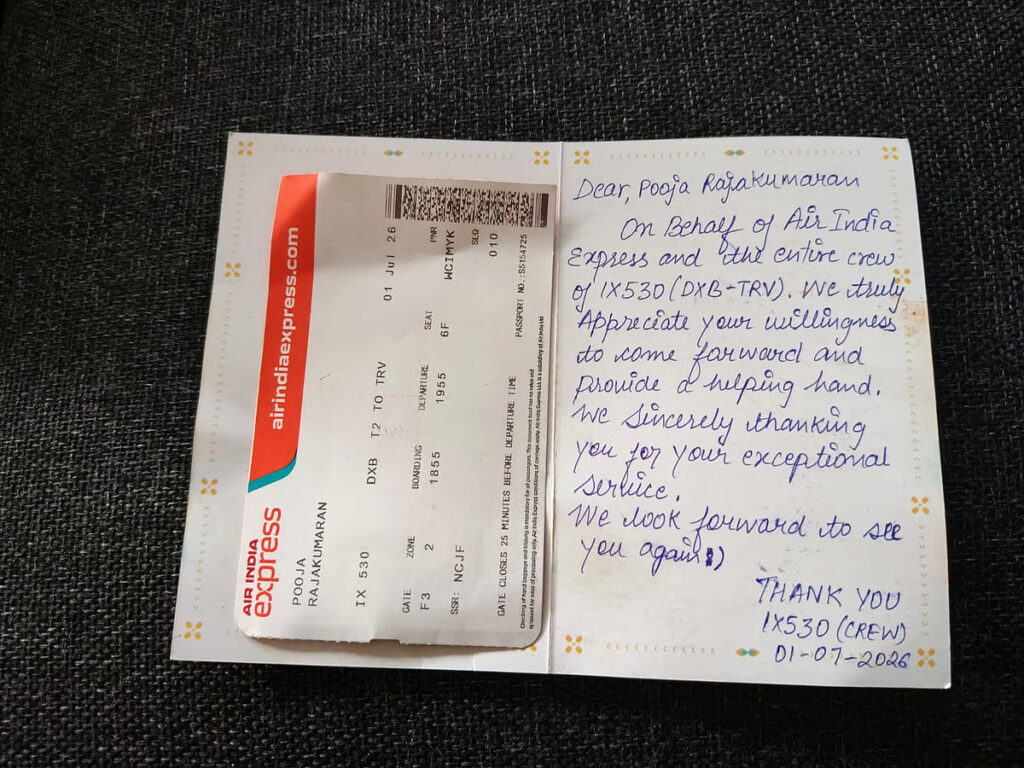
Dubai: The quiet atmosphere inside the aircraft was suddenly interrupted by an urgent announcement from the cabin crew seeking doctors, nurses, or medical professionals among the passengers. For Pooja Rajakumaran, there was no hesitation.
“Once I heard the call for medical assistance, my instincts as a nurse immediately kicked in. I got up from my seat, walked towards the crew, and introduced myself, saying, ‘I am a nurse. Please tell me how I can help,’” Rajakumaran recalled.
Within minutes, the UAE-based nurse was assisting a distressed passenger as the cabin crew evaluated the situation and determined whether it needed to be escalated to the captain for a possible emergency diversion.
Passenger in distress
Rajakumaran, a 34-year-old nurse working in the Neonatal Intensive Care Unit (NICU) at Ras Al Khaimah Hospital, was directed to a female passenger who had recently undergone a mastectomy and was returning after receiving physiotherapy treatment in Dubai.
The passenger, who was travelling in a wheelchair, appeared visibly unwell and was in need of medical attention.
“When I first assessed her, she was suffering from severe dizziness, appeared extremely weak, and was drifting in and out of consciousness,” Rajakumaran recalled.
She noted that the passenger’s condition was further affected by weakness and shivering. “Her pulse was very faint, and her hands were ice-cold and trembling,” she said.
Working within the limited space of an aircraft cabin, Rajakumaran immediately focused on keeping the passenger alert, stable, and under close observation.
“I immediately began gently tapping her and speaking to her continuously to help keep her awake and conscious,” Rajakumaran said.
She also requested water from the cabin crew and carefully assisted the passenger in drinking it.
“I kept rubbing her hands to generate warmth and improve circulation. We also wrapped her in a blanket to make sure she was comfortable and secure,” she added.
Decision-making at 35,000 feet
As the situation developed, the senior cabin crew sought Rajakumaran’s assessment on whether the captain should be informed and whether an emergency diversion would be necessary.
“When the senior cabin crew asked whether the situation was serious enough to inform the captain about a possible emergency diversion, I assessed her vital signs and reassured them that she was experiencing severe anxiety and physical exhaustion,” Rajakumaran explained.
“I confirmed that she was stable enough to continue the flight without an emergency landing. I kept monitoring her closely until we reached our destination. By the time we landed, her temperature had returned to normal, and she was visibly relieved,” she added.
Emergency preparedness
Originally from Kollam, Kerala, India, Rajakumaran brings seven years of nursing experience, including previous work in Saudi Arabia before relocating to the UAE. She joined Ras Al Khaimah Hospital in 2025 and currently serves in the Neonatal Intensive Care Unit (NICU).
According to Rajakumaran, her professional experiences played a crucial role in helping her manage the situation onboard.
“Throughout my nursing career, including my time in Saudi Arabia and my current role in the NICU at RAK Hospital, I have been trained to handle critical situations and work in high-pressure environments on a daily basis,” she said.
She added that this training gave her the confidence to accurately assess the passenger’s condition in the confined space of an aircraft cabin and guide the crew calmly without creating unnecessary panic.
Duty doesn’t end with the shift
Rajakumaran described her journey as an expatriate healthcare professional in the UAE as both personally fulfilling and professionally enriching. The incident onboard reinforced a belief she says is shared by healthcare workers everywhere — that their responsibility to care for others extends beyond the workplace.
“My message to fellow healthcare professionals is to always trust your training and never hesitate to step forward when someone is in need. Our commitment to caring for humanity does not end when our shift finishes or when we leave the hospital,” Rajakumaran said.
For most passengers, the journey concluded like any other, with the aircraft landing safely. But for one woman recovering from cancer treatment, the flight ended with a sense of relief after a frightening medical episode. For the nurse who responded to the call for help, the experience was a reminder that some of the most meaningful moments in healthcare do not always take place inside hospital walls.
Sometimes, they happen 35,000 feet above the ground — where a calm voice, steady hands, and years of experience can make all the difference.

