

While travel has not yet fully returned to pre-conflict levels, industry insiders say the gap is narrowing week by week as flight operations stabilise and travel demand continues to recover.
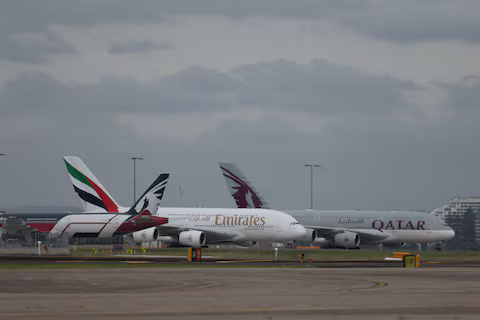
Travel between Gulf countries is steadily recovering towards pre-conflict levels as flight operations and travel conditions improve, according to travel agents. While international visitors remain cautious about travelling to the region, intra-GCC travel is showing clearer signs of recovery, with Capital Economics also reporting that demand is beginning to return towards pre-war levels.
While travel has yet to fully return to pre-conflict levels, the gap is narrowing week by week as confidence and demand recover, said Imtiaz Hussain Nasir, CEO of Pinoy Tourism.
‘Postponed demand, not lost’
Industry executives say that while some travellers remain cautious, underlying demand remains strong. Nasir described the GCC travel market as resilient, noting that much of the demand delayed during the conflict has been postponed rather than lost.
“I would describe the GCC travel market as resilient and recovering faster than many initially expected,” Nasir said. “There is still some caution, but people have not lost their appetite for travel. A considerable amount of demand was postponed rather than lost.”
If a lasting ceasefire is reached between the warring parties, Nasir said he remains optimistic about the GCC’s peak winter tourism season in the coming months.
Geoffrey Salatan, founder and CEO of Geof Travel, said intra-GCC and regional travel “appears to be recovering faster” as travellers favour shorter and more convenient trips.
Travel bookings have improved significantly from the immediate aftermath of the conflict, when uncertainty prompted many travellers to delay plans. “We are now seeing more enquiries and confirmed bookings as confidence returns,” he said.
Leisure travel leads recovery
Leisure travel and visits to friends and relatives have recovered to around 85 per cent of pre-conflict levels, while business travel is at about 70 per cent, according to Rashida Zahid, vice president of operations at musafir.com.
“We’re already seeing that demand build on musafir.com well ahead of schedule, which signals confidence is genuinely returning rather than just spiking,” she said.
Within the GCC, Salalah is currently the leading destination for leisure travel, while Riyadh remains the top choice for business trips.
How soon will travel return to pre-war levels?
The UAE’s tourism-dependent economy and hospitality sector were hit soon after the conflict began, although the sector has shown signs of recovery in the second half of the year.
Property consultant Cavendish Maxwell expects hotel occupancy to recover by 60 to 66 per cent over the next four months, following a nearly 30.3 per cent decline in the first half of the year.
Despite lingering uncertainty, particularly as some international airlines continue to suspend services to the region, Gulf tourism is expected to strengthen into the fourth quarter.
Zahid said forward bookings remain strong for the rest of the year, adding that as corporate activity resumes after the summer, the market is expected to see a meaningful acceleration.

