

Gold prices in Dubai eased by up to 75 fils per gram as global rates softened, while India recorded gains.
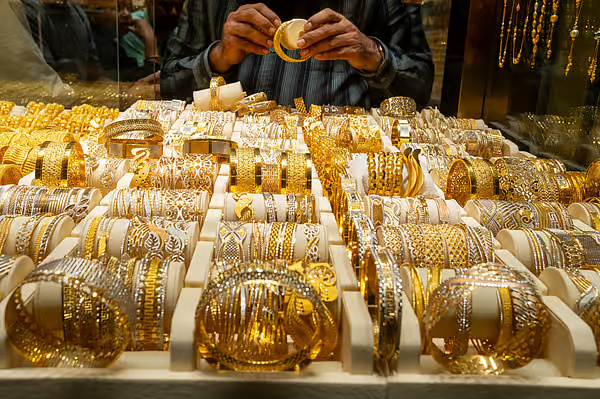
Dubai: Gold prices in Dubai slipped slightly on Thursday, offering shoppers a modest reprieve after recent volatility in global bullion markets.
24K gold fell to Dh546.75 per gram, down from Dh547.50 the previous day, while 22K declined to Dh506.50 from Dh507.00. The dip follows softer international spot prices, where gold was trading at $4,522.08 an ounce, down 0.23 per cent.
Although the movement is relatively small, even minor fluctuations in Dubai’s jewellery market can influence purchasing decisions, particularly for larger buys such as wedding jewellery and investment bars.
Gold prices in Dubai softened as global markets reacted to renewed hopes that tensions between the US and Iran may not escalate further, reducing safe-haven demand for bullion.
Comments from US President Donald Trump suggesting the conflict may be moving toward a diplomatic phase lifted investor sentiment. If concerns around the Strait of Hormuz ease and oil supply disruption risks decline, inflation expectations could soften as well, which in turn reduces pressure on central banks to keep interest rates elevated—typically a negative driver for gold prices.
That matters for gold because bullion typically performs better in lower-interest-rate environments. Since gold does not generate interest or yield, higher interest rates make it less attractive compared to assets like bonds or savings instruments that offer returns.
At the same time, the US dollar and Treasury yields eased earlier this week, which helped limit sharper declines in gold prices in Dubai by providing some support to overall bullion demand.
For consumers in Dubai, the dip offers slight price relief, especially for those planning to buy jewellery or gold coins after recent volatility in bullion markets.
Analysts say gold remains highly sensitive to geopolitical developments, meaning daily price swings are likely to persist.
In contrast to Dubai, gold prices in India moved higher on Thursday, reflecting different domestic market dynamics.
24K gold in India rose to ₹15,993 per gram (₹159,930 per 10 grams), up from ₹15,944 per gram (₹159,440 per 10 grams) the previous day. Meanwhile, 22K gold increased to ₹14,660 per gram (₹146,600 per 10 grams), compared with ₹14,615 per gram (₹146,150 per 10 grams) earlier.
The uptick indicates that local factors—such as currency fluctuations in the rupee, import duties, and steady domestic demand—are offsetting softer international bullion trends.
For consumers in India, this means gold remains relatively expensive despite softness in global markets, as local currency movements, import costs, and steady demand continue to keep prices elevated.
Gold prices are currently being driven by two major forces: geopolitical uncertainty and central bank policy.
Market analysts note that bullion remains sensitive to developments around global conflicts as well as expectations for interest rates, which influence demand for non-yielding assets like gold.
According to analysts at Citigroup, if tensions around the Strait of Hormuz ease, some of the broader macroeconomic pressure on gold could also reduce, potentially helping prices stabilise.
However, investor sentiment remains cautious as messaging around the US–Iran situation has repeatedly swung between escalation risks and diplomatic optimism.
At the same time, minutes from the latest meeting of the Federal Reserve show policymakers remain concerned about inflation, leaving open the possibility of tighter monetary policy if price pressures persist.
This creates a challenging environment for gold, as bullion typically performs better during periods of economic uncertainty and lower interest rates, both of which are currently uncertain.
Gold’s latest pullback also reflects a broader shift in investor behaviour.
Throughout 2025, retail investors moved heavily into gold as a safe-haven asset during periods of uncertainty, contributing to a 66% surge in prices last year—the strongest annual gain since 1979.
However, after gold reached a record high of nearly $5,600 an ounce in January, sentiment shifted as investors increasingly favoured oil instead.
Brent crude prices almost doubled since January, climbing to $126 a barrel on May 1, as tensions around the Strait of Hormuz disrupted supply flows and heightened fears of energy shortages.
This has created an unusual divergence in markets, where instead of defaulting to gold as a geopolitical hedge, some investors are increasingly choosing direct exposure to energy markets.
For now, gold remains caught in a tug-of-war between safe-haven demand, oil-driven inflation expectations, and interest rate outlooks—factors that are likely to continue influencing gold prices in Dubai in the coming days.

