

Analysts believe the recent selloff has gone too far, with market positioning and a fragile truce shaping price movements.
Global oil prices have retreated toward pre-conflict levels around $70 a barrel as the US-Iran peace agreement holds, easing geopolitical risk concerns and removing significant risk premiums from energy markets.
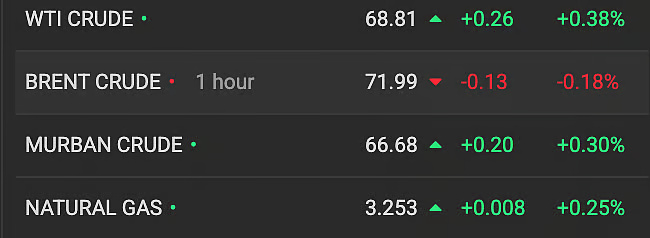
Oil benchmarks traded mixed early Tuesday (July 7), with Brent crude futures slipping 0.18% to $71.99 per barrel, while Gulf producers increased crude exports amid the 60-day ceasefire.
In contrast, WTI crude futures for August delivery gained 0.38% to $68.81 a barrel by 9:50 am Tokyo time, while Abu Dhabi’s Murban crude benchmark climbed 0.30% to $66.68 per barrel, according to OilPrice.com market data.
The price movement comes as Iran continues the funeral ceremonies for slain Supreme Leader Ayatollah Ali Khamenei, which have attracted millions of mourners.
With military exchanges between the United States and Iran having subsided, oil prices have fallen sharply as geopolitical tensions ease, shipping activity through the Strait of Hormuz recovers faster than expected, and broader OPEC+ output increases add further supply pressure.
Key factors driving the recent oil price decline
Easing Middle East tensions:
Crude prices have retreated from recent highs as indirect US-Iran peace negotiations helped reduce geopolitical uncertainty and removed a significant risk premium from energy markets.
Gulf oil supply recovery:
Tanker movements and commercial shipping activity are gradually returning through the strategic Strait of Hormuz. Major Gulf producers, including Saudi Arabia and Kuwait, are increasing daily exports to rebuild supply flows.
Higher production targets:
OPEC and its allies have agreed to raise output targets as part of efforts to balance the market. The shift has changed expectations from a potential supply deficit toward concerns of an oversupplied market.
Weakening global demand outlook:
Concerns over slowing US economic activity and weaker Chinese import demand have added further pressure on crude prices.
Analysts warn the selloff may be overstated
ING Research said the recent decline in oil prices appears “excessive”, suggesting markets may be too optimistic about how quickly crude flows through the Persian Gulf will return to normal.
The firm highlighted several signs that bearish sentiment may have become overextended:
- Delayed buying activity: Refiners have postponed fresh purchases and relied on existing inventories, expecting prices to fall further before restocking.
- Weak Chinese demand: China’s crude imports fell nearly 30% year-on-year to 7.8 million barrels per day, the lowest level since 2018, weighing on global oil prices.
- Potential demand recovery: Data provider Kpler expects Chinese crude imports and demand to improve as early as August.
Market shifts into ‘contango’
Brent crude has been trading at a notable discount to future contracts, creating a market structure known as “contango.” This encourages traders to store oil rather than sell it immediately, reflecting expectations of ample near-term supply.
Analysts caution that continued inventory drawdowns by refiners are unlikely to persist, potentially triggering a wave of restocking that could narrow the gap between near-term and future oil prices.
Meanwhile, speculative funds have accumulated record gross short positions across some oil benchmarks, adding to downward price pressure but also increasing the risk of a short squeeze if market sentiment turns more bullish.
The market moves come amid elevated US-Iran tensions, which had previously pushed significant war-risk premiums into crude prices.
Following Iran’s Supreme Leader’s funeral, market participants will closely monitor the region for signs of renewed disruptions, given its critical role in global oil production and supply flows.
Signs of diplomatic breakthroughs or renewed tensions could shift the fragile balance between global oil markets and geopolitical risks.

