

From Maradona’s Hand of God to Argentina-Egypt’s Latest Dispute: World Cup Refereeing Decisions That Still Spark Debate.
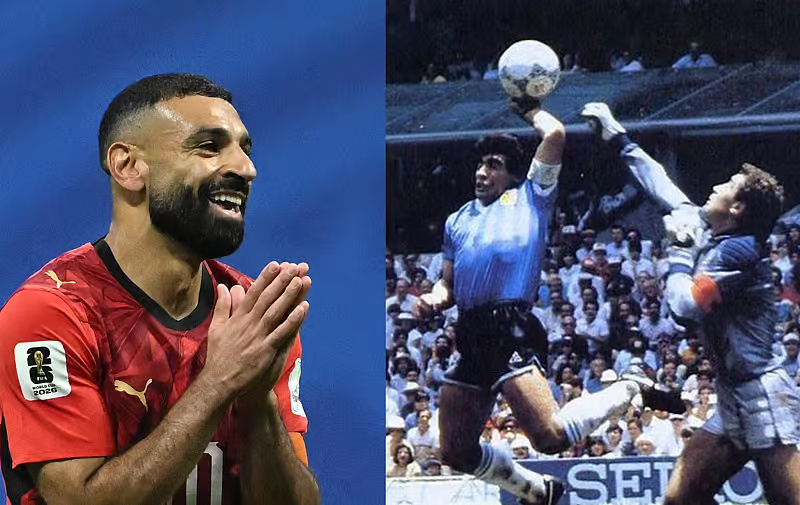
Only at a football World Cup can even the most neutral supporters find themselves swept up in national pride. For decades, many England fans have labelled Diego Maradona a “cheat” for his infamous Hand of God goal at the 1986 World Cup in Mexico, yet their enthusiasm often fades when the debate turns to England’s own controversial moment — the famous Wembley “ghost goal”.
During the 1966 World Cup final between hosts England and West Germany, played before a packed Wembley crowd, the match reached a tense moment when Geoff Hurst’s close-range strike struck the crossbar, bounced down near the goal line and was cleared by the German defenders. The question of whether the ball had fully crossed the line has remained one of football’s most enduring debates.
The England players celebrated the goal despite the uncertainty over whether the ball had fully crossed the line.
Swiss referee Gottfried Dienst was also unable to clearly determine the outcome of the shot, but after consulting with the linesman, he awarded the goal.
England went on to lift the trophy — their first and only World Cup title — after defeating West Germany 4-2 in the final. Yet the controversy surrounding the “ghost goal” has remained a complicated chapter in English football history, one that many still prefer not to revisit.
Mention Diego Maradona’s name in England, however, and the debate quickly becomes intense. How can someone be regarded as the greatest player of all time when he used his hand to score in a World Cup quarter-final?
In that 1986 clash against England, Tunisian referee Ali Bin Nasser failed to spot Maradona’s handball and awarded the goal to Argentina. The moment later became one of football’s most recognisable images. In Argentina, the “Hand of God” — the name Maradona himself gave it — is still celebrated as a piece of football folklore.
But you will rarely find an Argentine who does not question the penalty awarded to West Germany against Argentina in the closing stages of the 1990 World Cup final. Many still believe Mexican referee Edgardo Codesal was wrong to point to the spot after a challenge by Roberto Sensini on Rudi Völler.
Andreas Brehme converted the penalty, giving Germany victory and ending Argentina’s hopes of becoming the first team since Brazil in 1962 to win consecutive World Cup titles. For an entire generation of Argentinians, the image that remains is of a devastated Maradona crying during the medal ceremony.
Fast forward to 2026, and another World Cup controversy has captured global attention. Argentina’s dramatic 3-2 comeback victory over Egypt in the round of 16 left millions of Egyptian fans heartbroken.
Their frustration was not only about surrendering a 2-0 lead after the 79th minute. Many believed disputed refereeing decisions and the intervention of VAR (Video Assistant Referee) played a decisive role in their elimination.
Advantage for the bigger team?
Egypt coach Hossam Hassan expressed his anger after the match when questioned about Mostafa Zico’s disallowed goal. With Egypt leading 1-0, Zico appeared to have scored from a devastating counter-attack, only for VAR to rule out the goal because of a foul in the buildup.
Egypt also argued that they should have received a penalty in stoppage time after Mohamed Salah went down inside Argentina’s box. At 2-2, a penalty at that stage could have changed the outcome.
However, Julian Alvarez appeared to have challenged Salah while attempting to win the ball, with the Egyptian forward losing possession before the contact.
South American football expert Tim Vickery described the incident as neither a penalty nor a foul, while also acknowledging a familiar debate in football — that major teams often receive the benefit of the doubt in high-pressure World Cup matches.
The Egyptian Football Association later filed a complaint over the decisions, while Zico accused FIFA of favouring Argentina.
Argentine sports journalist Alejandro Magdaleno, who attended the match, believes such controversies are part of football’s enduring nature.
“The history of football has always been the same. Usually, the teams that win say they did so despite the referee, while those that lose claim they were defeated because of the referee,” he said.
Magdaleno defended the officials, saying VAR had acted correctly and arguing that there was a foul before Egypt’s disallowed second goal and no justification for awarding a penalty for the Salah incident.
But Dubai-based Egyptian media professional Sherouk Zakaria felt the inconsistencies were impossible to ignore.
“We were winning, but in the last 10 minutes everything went upside down when Argentina scored three goals. To see how it unfolded was heartbreaking. It was not because of mistakes from our team; it was because of unfair decisions,” she said.
For Zakaria and many Egyptian supporters, the defeat represented more than just a football result. Egypt’s unexpected run to the World Cup knockout stage had created a rare moment of national celebration.
Nobody expected Egypt to reach this stage, she said, adding that the team had brought joy and hope during a difficult period for many people.
Sharjah-based Argentine supporter Jorge Ferrari said he understood the pain of Egyptian fans but felt the focus on refereeing decisions overlooked tactical mistakes.
“When a team loses after being in such a strong position, they have to blame someone. The easiest thing is to blame the referee,” he said.
Ferrari pointed to Egypt’s decision to continue attacking after Lionel Messi’s equaliser made it 2-2.
“Argentina were tired and Egypt could have managed the game better and taken it to extra time. Instead, they pushed for the winner and were punished,” he said.
The debate over referees, VAR and controversial decisions will continue to be one of football’s most fascinating conversations — especially for neutral fans.
For supporters whose teams suffer because of those decisions, however, the emotions are far more personal.
When Japan’s controversial goal against Germany at the 2022 World Cup in Qatar sent shockwaves through the tournament, one Serbian fan summed up football’s enduring unpredictability:
“It’s a game played by 22 people. These things can happen. Football is Maradona’s handball. That’s what makes this game so beautiful.”

