

Balogun reinstated by FIFA, sparking World Cup controversy and political storm over alleged Trump influence.
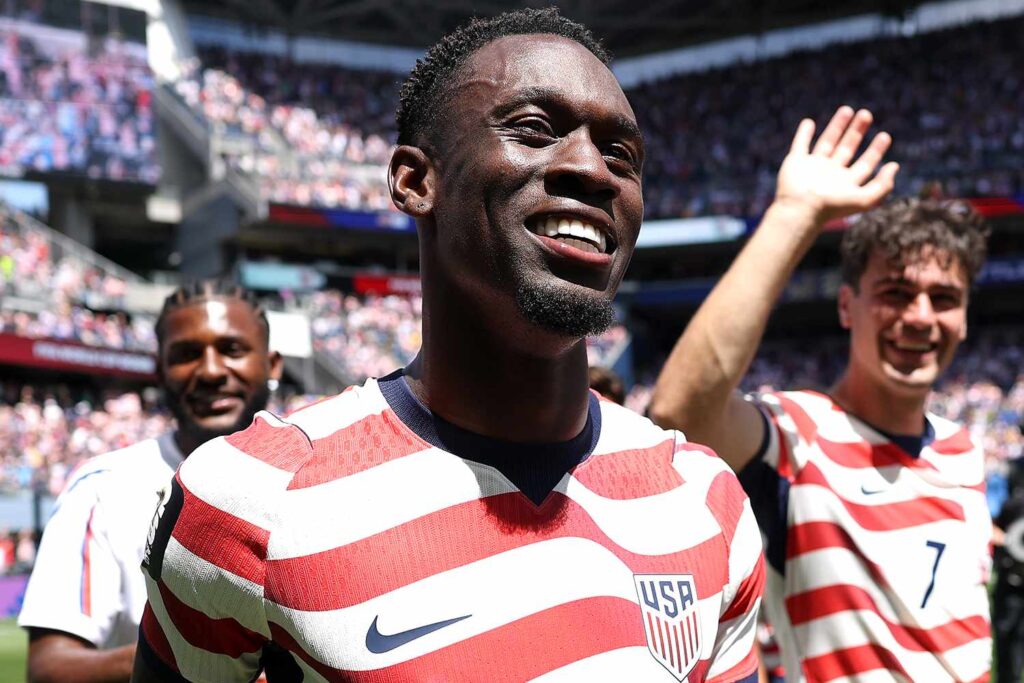
Seattle: The United States received a significant boost ahead of its FIFA World Cup Round of 16 clash against Belgium after football’s governing body unexpectedly cleared striker Folarin Balogun to play, following a controversial disciplinary reversal that has placed President Donald Trump at the center of growing scrutiny.
According to a source familiar with the discussions, Trump reportedly spoke this week with FIFA President Gianni Infantino after Balogun was shown a straight red card against Bosnia and Herzegovina, requesting a review of the incident.
Shortly after, FIFA announced that its Disciplinary Committee had applied the rarely used Article 27 of the FIFA Disciplinary Code to suspend Balogun’s automatic one-match ban for a one-year probationary period, making the 25-year-old forward eligible for Monday’s clash against Belgium in Seattle.
A highly unusual decision, the ruling caught players, fans, and analysts off guard.
Balogun had been widely expected to miss the knockout match after receiving a red card in the 64th minute of the United States’ 2-0 Round of 32 win over Bosnia and Herzegovina.
Following a VAR review, officials upgraded Balogun’s challenge on Bosnian defender Tarik Muharemovic to a straight red card for serious foul play after he was adjudged to have stepped on the defender’s ankle.
Under normal circumstances, such an offence results in an automatic one-match suspension.
For several days, neither the US team nor its supporters believed there was any possibility of overturning the ban.
That changed when reports emerged that FIFA had invoked Article 27, a rarely used provision that allows disciplinary authorities to suspend the enforcement of an on-field sanction under probationary conditions.
Rare exception: What Article 27 means
The decision does not nullify Balogun’s red card.
Instead, it defers the mandatory suspension for one year. If Balogun commits another similar disciplinary offence during that probationary period, the suspended ban will be activated immediately, in addition to any further punishment imposed.
Although Article 27 has been used in limited cases before, football observers note that applying it to pause an automatic red-card suspension during the knockout stage of a World Cup is highly unusual. The ruling is expected to intensify debate over consistency and transparency in FIFA’s disciplinary procedures.
Why Balogun matters
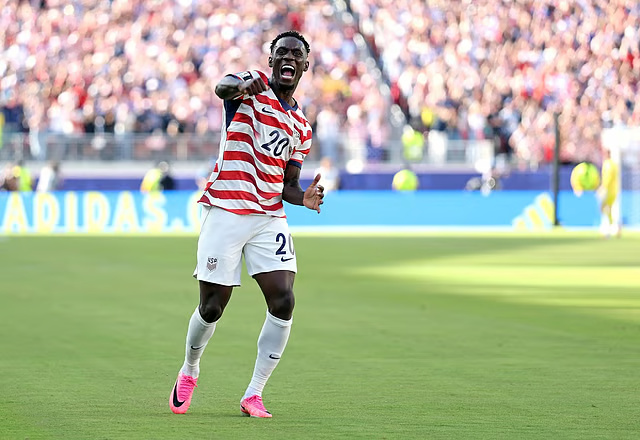
The ruling is a major boost for the United States.
Under coach Mauricio Pochettino, Balogun has become the focal point of the team’s high-pressing attack, entering the Belgium fixture as the Americans’ top scorer with three goals in four World Cup appearances.
He had already scored against Bosnia and Herzegovina before being sent off in the second half.
US Soccer welcomes ruling
US Soccer has accepted FIFA’s decision and turned its attention to Monday’s knockout clash.
“We accept the decision of the Disciplinary Committee and are pleased that Folarin Balogun is eligible to compete tomorrow,” the federation said.
“Our full attention is focused on the Round of 16 match against Belgium in Seattle, and we look forward to the continued support of our amazing fans.”
Why the decision is controversial
The timing of the ruling — alongside reports that Trump personally contacted FIFA President Gianni Infantino before the announcement — has raised questions about whether external political influence played any role in what is typically an independent disciplinary process.
FIFA has pointed to Article 27 as the legal basis for its decision, but the unusual application of the provision during a high-profile World Cup knockout stage is expected to remain under close scrutiny as the tournament progresses.

