

Dubai rental disputes: Essential documents, fees and legal procedures for tenants and landlords.
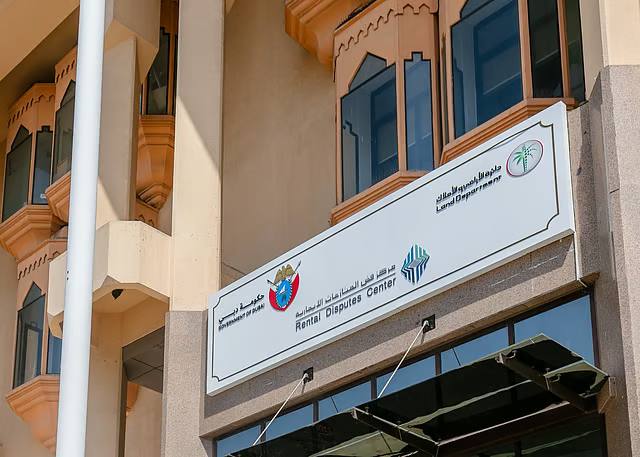
Dubai: Rental disputes between landlords and tenants can arise over a range of issues, from unpaid rent and security deposit deductions to rent increases, lease renewals and eviction notices.
In many cases, landlords and tenants may first attempt to settle the disagreement directly. If they are unable to reach an agreement, the dispute can be referred to Dubai’s Rental Disputes Centre (RDC). Understanding the documents required, filing costs and the steps involved can help both parties prepare before starting a case.
What to do before filing a rental dispute in Dubai
Before taking formal action, landlords and tenants may try to resolve the matter between themselves and should maintain written records of any communication, according to Awatif Al Khouri, Senior Emirati Advocate and Founder of Awatif Mohammad Shoqi Advocates and Legal Consultancy.
Al Khouri explained that, depending on the nature of the dispute, a formal notice may be required by law. For instance, a landlord may need to provide a tenant with 30 days to settle outstanding rent, while certain eviction cases require at least 12 months’ notice delivered through a Notary Public or by registered mail.
Documents needed to file a rental dispute in Dubai
The documents required to file a rental dispute can differ depending on the nature of the case. However, Al Khouri said applicants will generally need to prepare the following:
- A valid Ejari-registered tenancy contract
- A valid Emirates ID
- A bank letter or statement showing the claimant’s IBAN
- Evidence supporting the claim, such as correspondence, notices, cheques or DEWA bills
- For eviction cases, proof that the required notice was properly served may also be necessary
How and where to file a rental dispute case in Dubai
If attempts to settle the disagreement amicably have been unsuccessful and you have sufficient evidence and the necessary documents, you can proceed with filing a rental dispute case.
Cases can be submitted online through the Rental Disputes Centre (RDC) website or in person through a Real Estate Services Trustee Centre.
To file online, applicants can create an account on the RDC portal, provide details of the tenancy and dispute, upload the required supporting documents and pay the applicable filing fees.
Al Khouri explained that hearings may subsequently be attended through the RDC’s tele-litigation system. The centre also provides an amicable settlement process, allowing landlords and tenants to try to reach an agreement through reconciliation before moving ahead with litigation.
How much does it cost to file a rental dispute case in Dubai?
The amount you will need to pay generally depends on the type and value of the claim being filed.
“For claims involving eviction, lease renewal or termination, the filing fee is 3.5 per cent of the annual rent or lease value, with a minimum charge of Dh500 and a maximum of Dh20,000. For monetary claims, the fee is 3.5 per cent of the amount being claimed, capped at Dh15,000. Additional service, knowledge, innovation and other applicable charges may also apply,” Al Khouri said.
Common mistakes tenants make when filing a rental dispute
1. Assuming you can appeal later
Ahmed Elnaggar, CEO of Elnaggar & Partners, said one of the most common mistakes tenants make is assuming they will have an opportunity to appeal the decision later.
Under Article 17(a) of Decree No. 26 of 2013, RDC judgments involving claims below Dh100,000 are final and cannot be appealed.
“Since almost all residential deposit claims fall below this threshold, the tenant only gets one chance. The tenant must submit all evidence and arguments at the First Instance stage,” Elnaggar said.
2. Filing a case without complete evidence
Another common mistake is starting a rental dispute without having all the necessary evidence ready.
“The tenant should never submit a case expecting to add documents later. All paperwork should be ready on day one,” Elnaggar said.
This may include the tenancy contract, proof of the security deposit and relevant bank statements, signed handover documents or confirmation that the keys were returned, move-in and move-out inspection photographs or reports, as well as final DEWA and cooling clearance receipts.
3. Submitting documents without certified Arabic translations
Tenants should also ensure that documents submitted as evidence meet the RDC’s language requirements.
“The RDC operates in Arabic. Any English documents, including lease agreements, WhatsApp messages, emails and contractor invoices, must be translated by a Ministry of Justice (MOJ)-certified legal translator. Submitting untranslated documents can lead to hearing delays or evidence being dismissed,” Elnaggar said.
4. Choosing the wrong RDC procedure
Selecting the correct procedure is another important consideration when filing a rental dispute.
According to Elnaggar, a fast-track Payment Order is generally suitable only when the landlord has acknowledged the exact amount owed in writing and there is no disagreement over issues such as property damage or repair costs.
“If the landlord claims property damage, disputes the amount, or provides repair quotes, the case is contested. The tenant must file a standard First Instance rental case, not a Payment Order,” he said.
5. Confusing normal wear and tear with tenant damage
Tenants may also face disputes over whether deductions relate to genuine property damage or normal wear and tear.
“Tenants often accept unfair deductions for routine turnover costs. Minor scuffs, standard paint fading, or natural wear over time are the landlord’s responsibility. The tenant is only legally liable for direct damage, unauthorized modifications, or neglect,” Elnaggar noted.
How long does a Dubai rental dispute case take?
There is no fixed timeframe that applies to every rental dispute.
Under the RDC’s legal framework, claims are generally expected to be decided within 30 days of being referred to the relevant tribunal, although this period may be extended, according to Ahmed Khalil, legal associate at BSA LAW.
However, the 30-day period should not be viewed as a guaranteed timeframe for completing the entire dispute process. Factors such as serving legal notices, obtaining expert evidence, appeals and enforcement proceedings can extend the overall duration of a case.
“In our practical experience, the Rental Disputes Centre usually issues its judgment within one or two hearings, often in less than a month. However, cases requiring further examination or referral to an expert can take longer, and their duration cannot be predicted precisely. Any appeal or enforcement proceedings will also add to the overall timeframe,” Khalil said.
Can a tenant stop paying rent after filing a rental dispute?
Filing a rental dispute does not automatically suspend a tenant’s obligation to continue paying rent, Khalil explained.
Stopping rent payments could expose the tenant to a separate claim for unpaid rent and, potentially, eviction, subject to the applicable legal notice requirements.
“If a proposed increase is disputed, the tenant should check the applicable DLD Rental Index and whether the required notice has been given — generally at least 90 days before the lease expires, unless otherwise agreed. The tenant should raise any objection in writing and retain the supporting correspondence,” he said.
Khalil added that tenants should continue paying any undisputed rent when it becomes due. If the landlord refuses to accept the payment, the tenant should promptly use the RDC’s “Offer and Deposit” procedure and complete the deposit in accordance with the judge’s directions.
However, using the Offer and Deposit procedure does not by itself determine the legally applicable rent or settle a dispute over lease renewal. A separate claim may still be required, and any additional rent subsequently awarded must also be paid.
What happens after the RDC issues a decision?
Once a judgment has been issued, the parties should first determine whether the decision is eligible for appeal.
“The parties should first check whether the judgment can be appealed. Where an appeal is available, the deadline is generally 15 days, with the starting date depending on whether the judgment was issued in the party’s presence or requires formal notification. Not every judgment is appealable,” Khalil explained.
Once a judgment becomes enforceable, the successful party can open an execution file with the RDC if the other party does not comply with the decision voluntarily.
“The other party is formally notified of the judgment, and under the RDC’s published procedures, further enforcement requests can generally be made seven days after notification,” Khalil explained.
The enforcement process will depend on the type of relief granted by the RDC.
“It may involve recovering money through attachment of assets, carrying out an eviction, or implementing a lease renewal. These steps take place under judicial supervision and can be pursued against either a tenant or a landlord, depending on the judgment,” he said.
Khalil added that obtaining a judgment and enforcing it are separate stages of the rental dispute process.

