

Check the latest traffic hotspots before setting off and plan the quickest route accordingly.
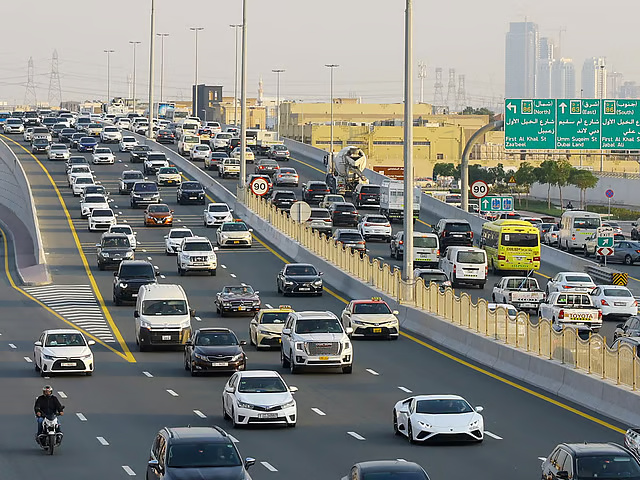
Dubai: Traffic is building across several major roads on Friday morning as commuters head to work, with the heaviest congestion reported on routes from Sharjah into the emirate, according to Google Maps.
Heavy traffic is building on Sheikh Zayed Road (E11) from Al Nahda towards Abu Hail. Slow-moving conditions are also affecting Sheikh Rashid Road (D75) from Karama towards Bur Dubai.
On Al Khail Road (E44), motorists are facing heavy to moderate congestion between Ras Al Khor and Business Bay, with additional slowdowns near Al Quoz. Traffic is also building in and around Al Quoz, Dubai Hills, and Jumeirah Village Triangle, where an accident has been reported near the merge with Sheikh Mohammed bin Zayed Road (E311).
Stop-start traffic is affecting parts of Umm Suqeim Street (D63), while Sheikh Mohammed bin Zayed Road (E311) is experiencing delays from Sharjah towards Dubai, particularly around Muhaisnah, before easing near Mirdif.
Traffic on Emirates Road (E611), however, is flowing relatively smoothly.
Motorists are advised to allow extra travel time, keep a safe following distance, and consider alternative routes where possible as morning rush-hour traffic continues to build.

