

Everything you need to know about the closure.
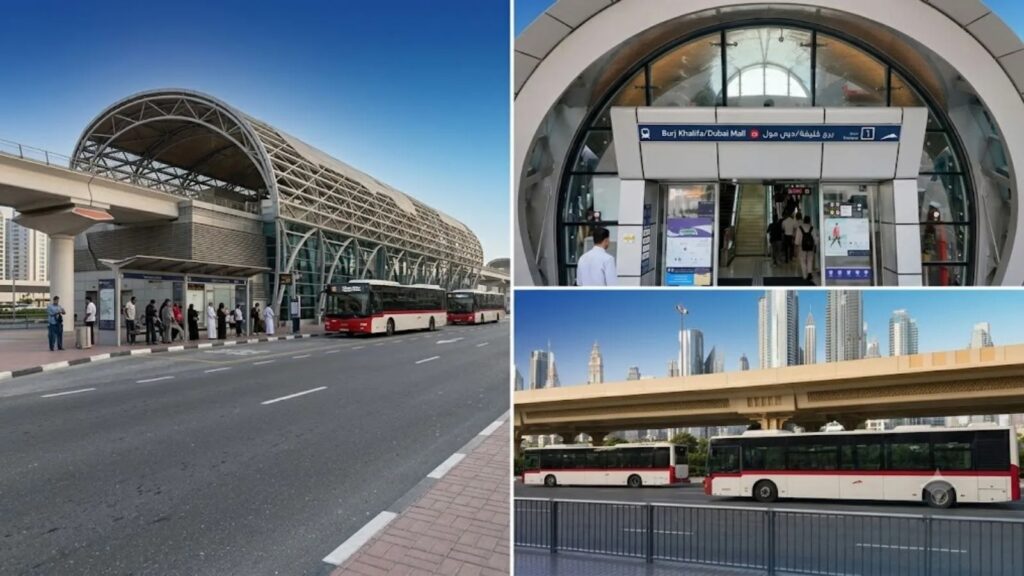
Dubai’s Roads and Transport Authority (RTA) has announced that a key service road near Burj Khalifa and Dubai Mall will remain closed until the end of 2026.
The bus and taxi access road at the Burj Khalifa/Dubai Mall Metro Station has been temporarily shut to allow major expansion works at the station to move forward.
Commuters will still be able to access nearby alternative parking facilities to continue their journeys during the closure period.
The Dubai Metro expansion project will increase the station’s footprint by 65 per cent, significantly boosting its passenger-handling capacity.
Once completed, the station’s hourly capacity will rise from 7,250 to 12,320 passengers, allowing it to accommodate up to 220,000 passengers daily.
The expansion plans are designed to meet rising passenger demand, particularly during peak periods such as New Year’s Eve celebrations, public holidays and major events.
First announced in June 2025, the project has now been formally agreed between the Roads and Transport Authority (RTA) and Emaar.
The upgrade will increase the station’s total area from 6,700 square metres to 8,500 square metres, while introducing improved entrances and pedestrian bridges, smoother passenger movement, larger concourse areas, and additional escalators and lifts.
The upgraded station will also feature additional fare gates to improve passenger flow, along with new retail outlets for visitors.
Speaking about the expansion plans, Mattar Al Tayer, Director General and Chairman of the Board of Executive Directors of Dubai’s Roads and Transport Authority (RTA), highlighted the station’s strategic importance within the Dubai Metro network.
He said the Burj Khalifa/Dubai Mall Metro Station is among the network’s most significant stations due to its location near key landmarks including Burj Khalifa, Dubai Mall and Downtown Dubai.
Al Tayer said the station provides a convenient transport link for residents and visitors travelling to the area, particularly during major occasions such as New Year’s Eve celebrations, national and religious holidays, and large-scale events.
He added that increasing the station’s capacity by 65 per cent and raising its daily passenger-handling capability to 220,000 will significantly enhance metro services in Downtown Dubai, especially during peak periods.
The expansion, he said, will improve safety, comfort and passenger movement while supporting continued growth in metro usage and meeting projected demand through 2040.
Passenger numbers at the Dubai Metro station have grown by 7.5 per cent in recent years, reflecting rising demand and increased use of public transport in the area.
Mohamed Alabbar, founder of Emaar, previously said the station expansion reflects a people-focused approach to urban development.
He said the agreement supports Emaar’s vision of creating integrated destinations that prioritise accessibility, smooth mobility and an enhanced experience for residents and visitors.
Alabbar highlighted that the Burj Khalifa and Dubai Mall area has evolved beyond a commercial and tourism hub, becoming a key part of Dubai’s global identity that attracts millions of visitors annually. He said this growth requires transport infrastructure that can deliver high levels of efficiency and capacity.
He added that the expansion of the Burj Khalifa/Dubai Mall Metro Station represents an investment in improving quality of life by reducing travel times, improving access to major attractions and enhancing visitor experiences during peak periods, including New Year’s Eve celebrations and holiday seasons.

