

OAG Data Ranks DXB Ahead of Heathrow, Incheon, Amsterdam and Istanbul for September 2026.
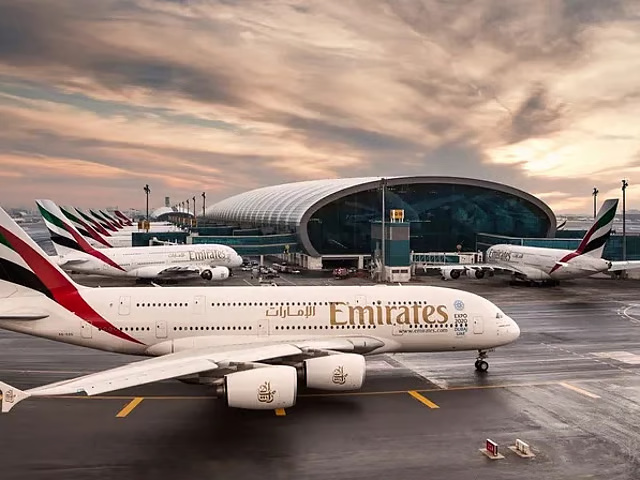
Dubai: Dubai International Airport (DXB) has retained its position as the world’s busiest airport for international passenger traffic in September, with airlines scheduling 4.34 million departing international seats during the month, according to aviation data provider OAG.
The figure translates to approximately 8.68 million seats across both arriving and departing international flights. Despite maintaining its top ranking, DXB’s scheduled international capacity is around 15 per cent lower than it was in September 2025.
London Heathrow ranked second with 4.07 million international seats, followed by Seoul’s Incheon International Airport with 3.78 million.
Amsterdam Schiphol Airport placed fourth with 3.69 million seats, while Istanbul Airport rounded out the top five with 3.59 million international seats.
Seoul recorded the strongest year-on-year growth among the leading international hubs, with capacity rising 9 per cent. Amsterdam posted a 1 per cent increase and Istanbul grew 2 per cent, while Heathrow’s capacity declined 2 per cent compared with the same period a year earlier.
DXB also retained its position as the world’s busiest airport for international passenger traffic in 2025, marking its 12th consecutive year at the top. The airport handled a record 95.2 million passengers during the year, up 3.1 per cent from 2024, according to Airports Council International World.
Traffic was significantly weaker during the first half of 2026, as regional airspace restrictions disrupted aviation across the region. DXB handled 31.5 million passengers during the six-month period, down 31.3 per cent from the same period in 2025. However, monthly passenger numbers improved through the second quarter as airline capacity gradually returned.
By the end of June, nearly 50 international airlines were operating at DXB, connecting Dubai with 217 destinations across 99 countries. Passenger load factors were also recovering towards 2025 levels as international connectivity continued to expand.

