

Flexible schedules linked to higher productivity and employee satisfaction as heat influences work habits.
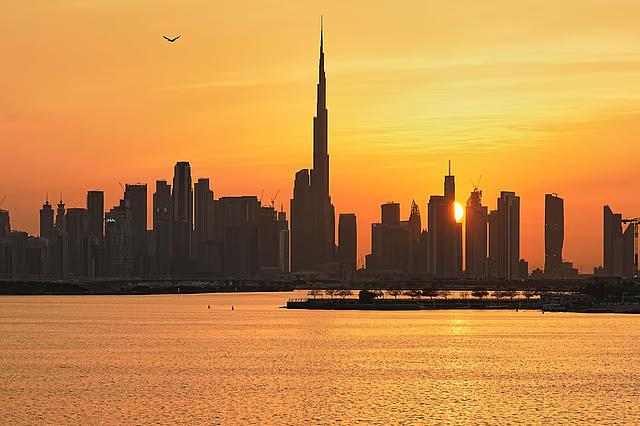
Every summer, when temperatures in Dubai rise above 40°C, the city is confronted with a question most places do not face: whether a standard five-day workweek is practical in extreme heat.
In response, for the past two summers, the Dubai Government Human Resources Department (DGHR) has introduced flexible working hours for government employees, adjusting schedules to better manage working conditions during peak summer temperatures.
With July approaching and no official confirmation yet for 2026, the question remains whether the policy will be reintroduced this year.
How Dubai introduced reduced summer working hours
In summer 2024, the Dubai Government Human Resources Department (DGHR) launched a pilot programme called Our Summer is Flexible across 15 government entities.
Employees were split into two groups: one worked a compressed four-day week with Fridays off, while the other followed reduced daily working hours spread across the week.
The pilot results were reported to be positive, with improvements in workplace flexibility, employee wellbeing and overall efficiency during the peak summer months.
The pilot recorded an 87% improvement in employees’ ability to complete tasks on time, a 96% improvement in customer service with zero complaints filed, and a 98% improvement in employee happiness. These outcomes were assessed under the Dubai Government Excellence Programme.
In 2025, the Dubai Government Human Resources Department (DGHR) expanded the initiative and rebranded it as Our Flexible Summer, rolling it out across all Dubai government entities from July 1 to September 12.
The programme was linked to the UAE’s Year of Community and aimed at supporting families during the school holiday period. The model retained two working patterns: one group worked eight-hour days from Monday to Thursday with Fridays off, while the other worked seven-hour days Monday to Thursday plus a half-day on Friday.
The UAE’s midday work ban
The flexible working-hours initiative operates alongside a long-standing summer labour protection policy: the UAE’s midday work ban, which has been in place for over two decades to safeguard outdoor workers from extreme heat exposure during peak afternoon hours.
The UAE’s annual midday work ban, now in its 22nd consecutive year, prohibits outdoor labour under direct sunlight between 12:30pm and 3pm from June 15 to September 15. It is enforced by the Ministry of Human Resources and Emiratisation (MoHRE) and applies to construction sites, infrastructure projects and other outdoor work during peak heat hours, when temperatures can reach 45–50°C. Employers who violate the rule face fines of Dh5,000 per worker, up to a maximum of Dh50,000.
Will Dubai’s flexible summer work scheme return in 2026?
After a pilot in 2024 and a full rollout in 2025, the direction of travel for flexible working arrangements in the UAE appears to be strengthening rather than reversing.
The federal government shifted to a four-and-a-half-day work week in January 2022, while Sharjah made a full four-day work week permanent for its government workforce. More recently, a government white paper published in early 2025 also supported expanded remote and hybrid working models across the UAE.
Taken together, these developments suggest that Dubai’s summer flexibility scheme is part of a broader structural shift in working patterns. While there has been no official confirmation for 2026, the policy trend across the UAE points toward continued experimentation—and a strong possibility of renewal.
The Our Flexible Summer initiative is also linked to the Dubai Quality of Life Strategy 2033, which focuses on enhancing wellbeing, livability and work-life balance across the emirate.
With 2026 set to be the UAE’s Year of the Family, government employees with children are likely to expect continuity of the flexible arrangements introduced over the past two summers.
While there is still no official confirmation on whether the programme will return in 2026 for Dubai government employees, its expansion in recent years suggests that flexible working models are becoming an increasingly important part of Dubai’s broader approach to employee wellbeing, productivity and quality of life.

