

A survey has highlighted a gap in the United Arab Emirates between parents’ awareness of child passenger safety and their actual use of car seats.
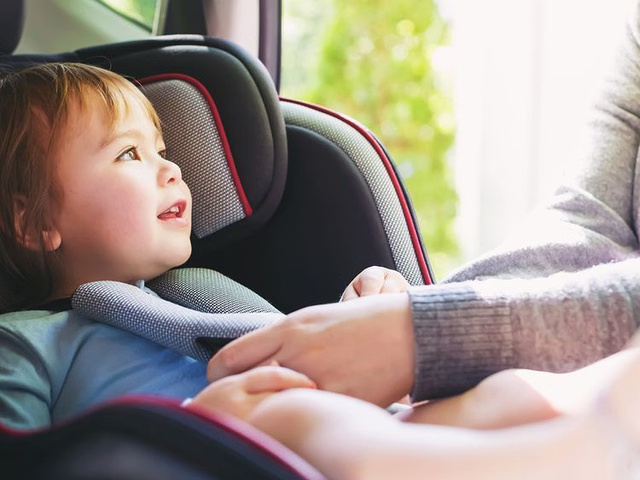
A new survey commissioned by RoadSafetyUAE and Al Wathba Insurance has found that nearly three in ten parents in the United Arab Emirates still travel without using a child car seat for young children, despite widespread awareness of their safety benefits.
The study, conducted among 1,010 UAE residents in January 2026, showed that 72% of parents with children aged 0–4 own a proper child restraint system, while 28% do not—nine years after child car seats were made mandatory in 2017.
It also noted that child restraint systems can reduce the risk of death in road accidents by up to 71% and injury risk by up to 82%, making non-use of seat belts and restraints a major barrier to improving road safety. Although 95% of parents agreed that child seats offer better protection, actual ownership and consistent usage remain significantly lower.
Why some parents go without child car seats
Among parents in the United Arab Emirates who do not own a child car seat, the survey found several common reasons. The most frequently cited—by 29% of non-owners—was that their child dislikes being strapped in.
Other explanations included the belief that holding a child in an adult’s arms is sufficiently safe, confidence in their own driving skills as a safeguard against accidents, and concerns about the cost of purchasing an appropriate seat.
The study also pointed to inconsistency among those who do own child restraint systems. While 79% of parents said they always use a child car seat, 18% reported using one most of the time, and just under 3% admitted they never use one.
Among this group, parents cited several similar reasons for not using child car seats in the United Arab Emirates.
Around 43% said they were confident they would not be involved in an accident and therefore did not feel the need to secure their child. Many also pointed to children resisting being strapped in, while others said they only make short trips and therefore considered a car seat unnecessary. A smaller group questioned the effectiveness of child seats in the event of a collision.
Even among parents who own car seats, usage is inconsistent outside their own vehicles. Only 52% said their child always uses a proper seat in taxis, limousines, or friends’ cars, while 12% admitted their child never uses one in such situations.
Progress since 2017
The findings show clear improvement in the United Arab Emirates since child car seat rules were introduced in 2017.
Ownership of child restraint systems has increased by eight percentage points, rising from 64% in 2017 to 72% today. At the same time, consistent usage has also improved, with the share of parents who say their child always uses a car seat increasing from 70% to 79%.
What needs to change
Thomas Edelmann said the reasons behind non-ownership and inconsistent use of child car seats in the United Arab Emirates should be directly addressed through stronger policy and education efforts.
He urged that awareness campaigns begin during the pre-natal stage, ideally supported by a hospital discharge requirement ensuring families provide proof of child car seat ownership before leaving with a newborn—a practice already implemented in several other countries.
Edelmann emphasized that parents must be educated on both the safety benefits of child restraint systems and legal compliance, with sustained messaging continuing through kindergarten and school years, alongside stricter enforcement. He summed up the message clearly: “If you love your kids, buckle them up, on all trips.”
Muralikrishnan Raman echoed similar concerns, noting that despite legal requirements and strong evidence supporting child restraint systems, it is still common to see children travelling unrestrained in vehicles in the United Arab Emirates.
He said that proper restraint systems save lives and reduce injuries in road accidents for both adults and children, adding that many people still observe children moving freely inside cars without adequate protection. The survey, he explained, aimed to back such observations with data and facts on an issue of critical importance.
Raman also stressed that developing safe habits from an early age is essential for long-term improvements in road safety outcomes.

