

Dh2 Billion Airport Expansion Coincides with Rising Mortgage Demand Among Dubai Apartment Buyers.
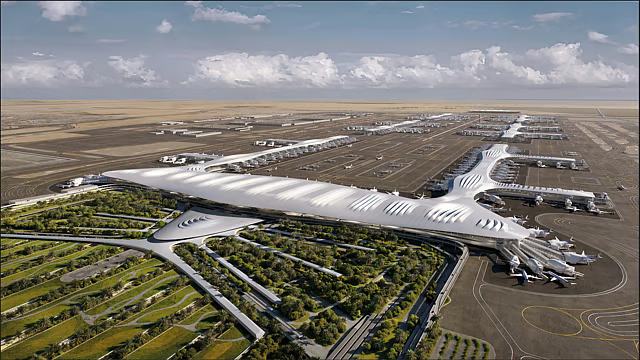
DUBAI: Residents considering a home in Dubai South could soon benefit from improved public transport connectivity following the approval of a new Metro extension linking the district to Al Maktoum International Airport City.
The Dh2 billion project is expected to strengthen the area’s appeal among homebuyers, tenants, businesses and property developers by providing an additional transport connection to one of Dubai’s major emerging aviation and commercial hubs.
The three-kilometre extension will feature two new stations, connecting the existing Route 2020 line to the airport’s West Terminal. According to the Dubai Government Media Office, operations are scheduled to commence in 2031.
Improved connectivity for residents and workers
The proposed Metro connection is expected to offer benefits beyond airport accessibility, particularly for people living and working in Dubai South.
Joseph Salem, Partner and Middle East Lead for the Travel, Transportation and Hospitality practice at Arthur D. Little, said the development would support the growing residential and workforce population around the aviation hub while providing a reliable and affordable connection to other parts of Dubai.
He noted that Dubai South is expected to accommodate more than one million residents and workers, making efficient public transport an important part of the area’s long-term development.
Linking Dubai South to the wider transport network
Al Maktoum International Airport (DWC) is located within the larger Dubai South development and operates separately from Dubai International Airport (DXB). Both airports are managed by Dubai Airports.
The proposed Metro extension will connect with the airport express line and the Etihad Rail high-speed network, creating additional transport links for passengers, employees and visitors.
According to the government, the project is also expected to improve traffic movement on surrounding roads, reduce congestion and provide easier access to major urban centres across Dubai.
For the property market, improved connectivity could make Dubai South more attractive to buyers and tenants who prioritise convenient access to employment hubs and other parts of the city.
However, the exact locations of the two proposed stations and estimated journey times have not yet been announced. These details will be important in determining how directly individual residential communities benefit from the extension.
Vivek Bhavsar, Director of Consulting at JLL MENA, has previously highlighted the potential impact of Metro expansion on residential communities receiving rail connectivity for the first time.
He said areas gaining Metro access for the first time are likely to experience the most noticeable impact from the expansion.
The upcoming connection therefore represents another major infrastructure development for Dubai South, with the potential to strengthen its position as a residential, commercial and aviation-linked destination.
Strong property activity signals growing buyer interest
The Metro announcement follows a period of significant real estate activity in Dubai South. According to a July report by W Capital Real Estate Brokerage, the district recorded 2,869 property transactions worth Dh3.3 billion in June. Transaction volumes increased by 111%, while their total value climbed 106% compared with May.
Off-plan properties accounted for a substantial share of the activity, indicating strong buyer interest in the district even before the latest Metro extension was approved.
Walid Al Zarooni, Chairman of W Capital Real Estate Brokerage, said Dubai South was emerging as one of the emirate’s key real estate growth destinations. He attributed the growing investor interest to major infrastructure developments, particularly the expansion of Al Maktoum International Airport, which is attracting developers and institutional investors.
The brokerage also reported that Dubai South had welcomed 653 new companies over the preceding 12 months, bringing the total number of operating businesses to more than 4,200. This expanding commercial presence is expected to support the district’s longer-term residential and business demand.
Mortgage activity reflects changing buyer preferences
The Metro announcement comes at a time when mortgage-backed purchases are becoming increasingly prominent in Dubai’s residential property market.
According to Property Finder’s analysis of Dubai Land Department data, mortgages accounted for 34.7% of apartment transactions in October, compared with 31% in September and 26.7% in August.
The average apartment mortgage value declined to Dh1.77 million in October from Dh2.67 million in the previous month. Meanwhile, mortgage registrations across Dubai increased by 5.2% to 3,811, marking the third consecutive monthly rise. However, the total value of registered mortgages fell 24.7% to Dh7.32 billion.
Cherif Sleiman, Chief Revenue Officer at Property Finder, said the increase in mortgage registrations was more significant than the decline in overall lending value, suggesting that a wider group of buyers was entering the market with relatively smaller loans.
These figures reflect activity across Dubai rather than Dubai South specifically. Nevertheless, they provide an indication of broader market conditions, where affordability, financing options and future infrastructure developments are increasingly influencing home-buying decisions.
Rental demand also remains an important component of the market. Property Finder reported that rental enquiries accounted for 73% of property leads in Dubai during October. Asking rents on the platform increased for a second consecutive month after reaching their lowest point of the year in August.
Community infrastructure adds another dimension
For prospective residents, transport connectivity is only one factor when evaluating a developing neighbourhood. Access to schools, healthcare, recreational spaces and other essential services also plays an important role in residential decisions.
At the same meeting, Dubai’s Executive Council approved a separate Dh9.59 billion plan to develop community services and facilities through 2040.
The initiative covers existing and upcoming residential neighbourhoods and will be implemented in phases, with priority given to residential communities for UAE citizens. Planned facilities include educational institutions, healthcare services, safety and security infrastructure, sports facilities, amenities for senior citizens and spaces for family activities.
However, the announcement does not specify particular projects or funding allocations for Dubai South. The broader objective is to ensure that public services and community facilities are distributed efficiently and equitably as Dubai’s residential areas expand.
A Dubai Land Department study approved during the meeting also projects the development of 365,000 residential units across the emirate by 2030. The study estimates residential occupancy in Dubai at 97%, although it does not provide a separate occupancy figure for Dubai South.
Infrastructure and affordability shape the outlook
The planned Metro extension, airport expansion, growing business presence and wider community development initiatives are adding to Dubai South’s long-term property investment proposition.
For buyers, the appeal will depend not only on future connectivity but also on property prices, mortgage affordability and access to everyday amenities. For tenants, commuting convenience and the availability of essential services will remain important considerations.
While the Metro is not scheduled to become operational until 2031, its approval provides another indication of the infrastructure investment planned around Dubai South and the wider Al Maktoum International Airport development.
What prospective buyers and investors should consider
For developers and businesses operating around Al Maktoum International Airport, the confirmed Metro connection offers greater clarity for long-term investment and development planning.
Joseph Salem said the planned transport link could benefit several sectors, including property development, hospitality and logistics, by improving accessibility and providing greater confidence in the area’s future infrastructure.
He noted that early confirmation of transport connectivity is an important factor in investment decisions, particularly when developers, airlines, logistics companies and hospitality operators are planning projects around a major airport hub.
Previous assessments of Dubai’s Gold Line expansion have also highlighted several factors that can influence individual property performance, including proximity to Metro stations, building quality, purchase prices and expected handover dates. However, these assessments do not establish specific property price or rental growth forecasts for the upcoming DWC Metro extension.
For prospective buyers and tenants considering Dubai South, the latest announcement provides a clearer indication of the district’s future transport connectivity, with the Metro link scheduled to become operational in 2031.
The actual benefits for individual residential properties will depend on the final station locations, accessibility arrangements and travel times once further project details are released. Until then, buyers should assess current property values, existing amenities and commuting requirements alongside the potential benefits of future infrastructure development.

