

Young Emirati author uses his writing to inspire and make a difference.
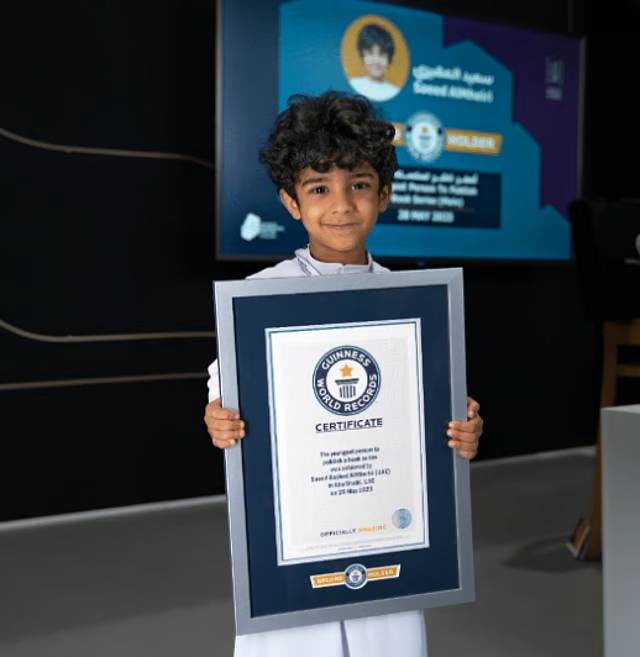
Abu Dhabi: All eyes were on the four-year-old standing on stage.
Facing an audience of around 400 people, the young boy stood confidently, delivering a message that others could achieve what he had accomplished.
Behind that moment, his mother recalled, were days of coordinating school commitments and travel arrangements. Behind the book was a casual conversation, while his confidence had developed over years of listening and learning.
“People usually see success once it becomes visible, but so many of the small things that came before it remain behind the scenes,” said Mouza Al Darmaki.
Now eight, Saeed AlMheiri has represented Emirati children at international exhibitions and events and has been chosen as a book ambassador in other countries. His story has reached schools and featured in educational research and learning materials internationally.
Yet, in the AlMheiri household, Saeed is one of four children: AlDhabi, Saeed, AlMaha and Khalifa. Their mother says none of what followed was ever part of a carefully laid-out plan.
“From the beginning, we never planned to have an ‘exceptional child’, and we never wanted his childhood to revolve around achievement.”
The boy whose questions never stopped
Saeed’s journey began with questions at around the age of three. “Why?”, “How?” and “What would happen if…?” were regular features of conversations in the car, around the dining table and before bedtime.
Often, one answer was not enough to satisfy his curiosity.
“Over time, I realised that his curiosity was not temporary,” Mouza said. When something caught his interest, he would return to it days later, approach it from a different perspective and try to connect it with what he had already learned.
She said there was no single moment when she recognised that he had a special talent. Instead, she noticed a series of small signs that gradually became apparent.
The sister who inspired him to believe it was possible
Saeed grew up in a household surrounded by books, stories and conversations. One of his earliest role models was his older sister, AlDhabi, who enjoyed reading and writing and transformed her ideas into stories, initiatives and projects.
“Saeed did not simply hear that a child could write. He watched his own sister do it when she was six.”
However, Mouza was careful not to let AlDhabi’s achievements become a template that Saeed felt pressured to follow.
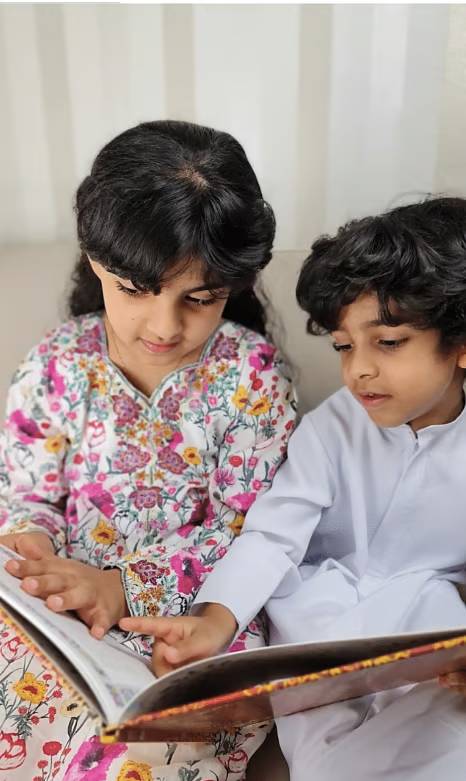
“What he took from her was the belief that a child is capable, and then he chose for himself what he wanted to do with that possibility.”
Saeed’s interests led him towards the sea, wildlife and nature. Over time, he also developed an interest in robotics, space and artificial intelligence.
Melting Ice
When Saeed wrote his book Melting Ice during COP28, Mouza noticed how he was connecting the discussions about climate change with the stories he wanted to share.
His fascination with marine life continued to grow, particularly his interest in dugongs and other marine species. He is now working on a project with support from the Mohamed bin Zayed Species Conservation Fund.
For Mouza, however, the most meaningful aspect is not the project itself, but the fact that Saeed continues to explore the subject out of his own interest.
“What I love most is that Saeed does not only talk about what he has already achieved. He talks about new ideas, research, and very big projects he imagines himself creating in the future.”
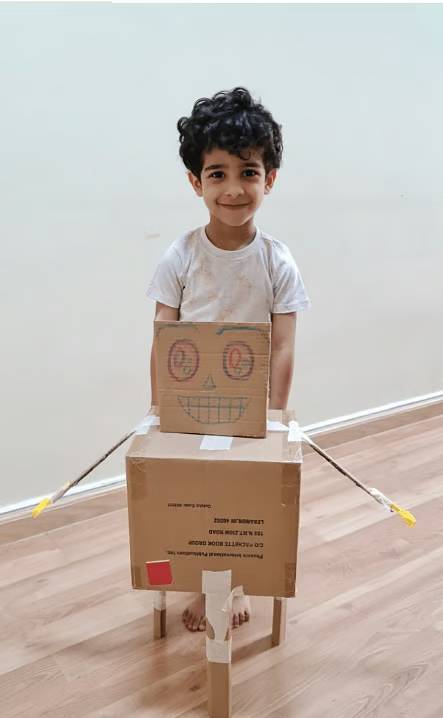
That, she explained, reassures her that his passion is still driven by his own curiosity.
She is also keen to ensure that he is not defined by a single label.
“I am extremely proud of what he has achieved through writing, but writing is one part of who he is.”
She believes that in the coming years, he may discover interests and talents that the family has not even considered yet.
Building a bridge between two languages
The journey has not been without its challenges, and Mouza is open about some of the difficulties along the way.
By the age of four, Saeed was asking questions about science, nature, wildlife and space. Many of the resources that helped answer his questions were available in English. Gradually, the family realised that he was retaining scientific facts and terminology in English because that was the language in which he had first encountered them.
Mouza wanted to nurture his curiosity without allowing Arabic to become disconnected from his growing knowledge.
“So, we began building a bridge between the two languages.”
At home, the family spoke to him in Arabic, using their own language and local dialect. They encouraged him to discuss what he had learned, talked through his questions and naturally incorporated Arabic into stories and everyday conversations.
“Over time, it made a big difference.”
Ensuring success does not come at the expense of childhood
Another challenge was managing the attention and opportunities that came with recognition at such a young age.
From the time Saeed started school, Mouza maintained clear communication with his teachers and the school to ensure his education remained on track. When he travelled to represent the UAE, she made arrangements to find out what his classmates were studying so he could keep up with lessons and avoid missing important foundations.
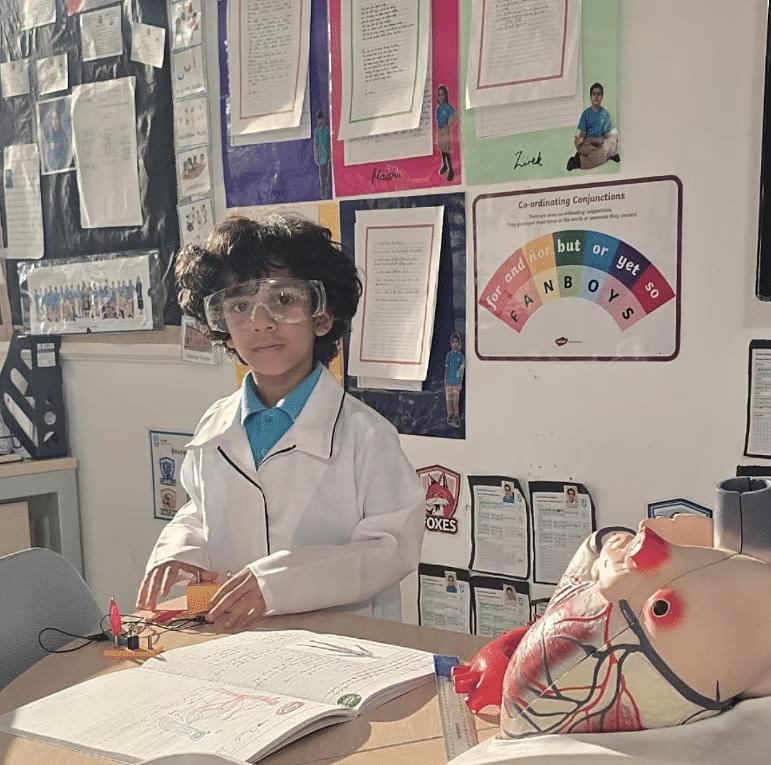
She also made it clear that not every opportunity had to be accepted.
“I looked at his age, his education, his comfort, and whether he actually wanted to take part.”
“No matter how big an opportunity is, I do not want the price of it to be an essential part of his education or childhood.”
One question that matters
For years, Mouza has followed a simple approach when discussing school results with her children.
Rather than asking, “What mark did you get?”, she asks: “Are you happy with your result?”
If the answer is yes, the child understands the effort that went into achieving it. If the answer is no, they are encouraged to reflect on what they could have done differently.
“I do not want a child to study because their mother is waiting for a particular number. I want them to understand that their education is their responsibility, and that we are there to support and help them,” she said.
She first adopted this approach with AlDhabi when she was around six and has continued to use it with Saeed and his siblings.
Every child deserves their own voice
Mouza previously participated in the Child Voice initiative with the Abu Dhabi Early Childhood Authority. The experience reinforced her belief in listening to children rather than allowing adults to speak on their behalf all the time.
At home, she makes an effort to ensure that each of her children feels heard.
“AlDhabi, Saeed, AlMaha and Khalifa are not copies of one another, and I do not want them to be.”
She hopes they will motivate and inspire one another without feeling the need to compete or compare themselves.
“I want them to take courage from one another, not follow the same path.”
Mouza also wants her children to understand that success does not mean never making mistakes.
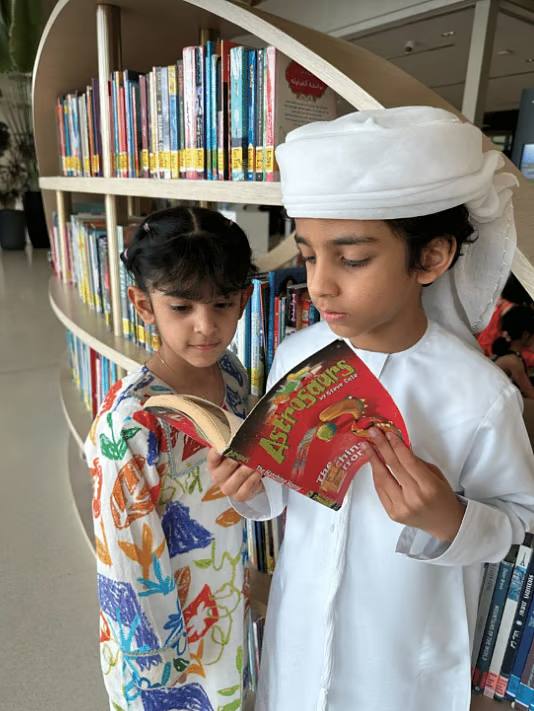
“I do not want a child who is afraid to bring me a lower grade, hides an attempt that did not work, or avoids trying something new because they are worried about how we will look at them.”
When something does not go as planned, she often asks a simple question: “What do you think you could do differently next time?”
This encourages children to treat mistakes as opportunities to learn rather than as judgements of their abilities.
Her advice to other parents
“Do not rush to turn talent into achievement.”
Before thinking about how to make a child successful, Mouza believes parents should first ask what their child is trying to tell them about their interests and personality.
She encourages parents to observe their children when they are not being directed or asked to perform. What activities do they choose? Which questions do they keep asking? What subjects do they repeatedly return to?
And when opportunities arise, she says parents do not need to accept every one of them. Instead, they should consider whether an opportunity offers something meaningful, suits the child’s age, brings enjoyment and leaves enough time for school, play, rest, friendships and safety.
Now eight, Saeed still remembers his appearance on stage and tells his mother how proud he is of the words he shared with the audience.
For Mouza, hearing that from her son is more rewarding than the event itself.

