

Masdar City leads the way in sustainable urban living in Abu Dhabi.
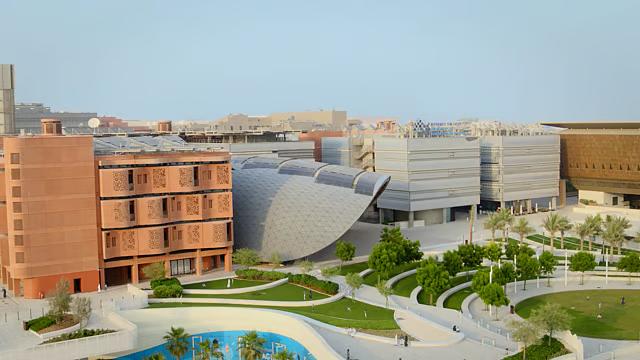
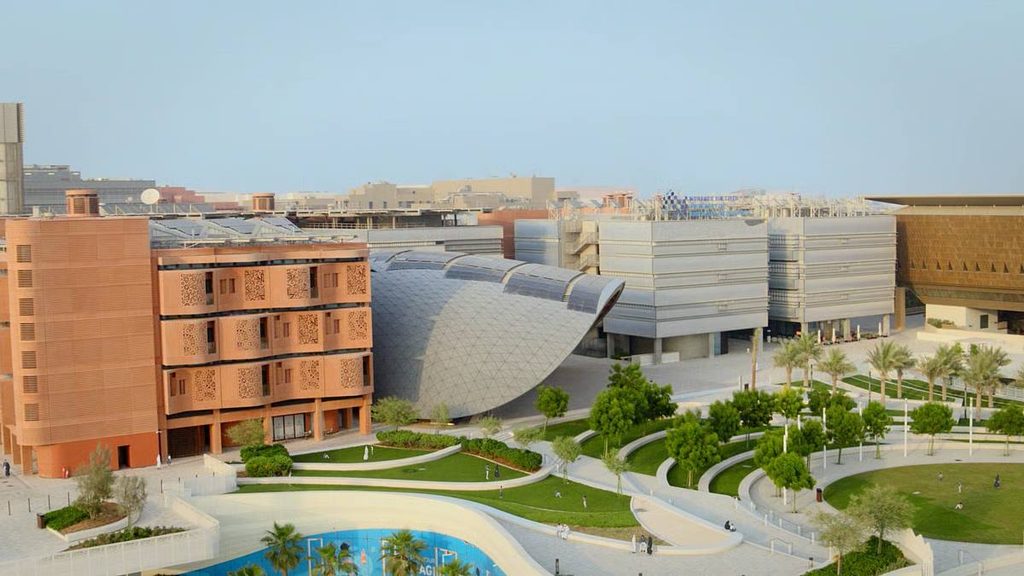
Abu Dhabi is home to a city that sees the future as an opportunity to turn ambitious goals into reality. At Masdar City, the UAE’s net-zero vision takes shape through streets, buildings and neighbourhoods designed for people to live, work and study in today.
Inspired by the vision of the late His Highness Sheikh Zayed bin Sultan Al Nahyan, the UAE’s founding father, and aligned with President His Highness Sheikh Mohamed bin Zayed Al Nahyan’s emphasis on sustainability and innovation, Masdar City has developed into a vibrant district of offices, research laboratories, residential spaces and start-ups.
Its guiding philosophy is straightforward: while technology plays an important role, sustainability starts with thoughtful design.
Designing in harmony with the climate
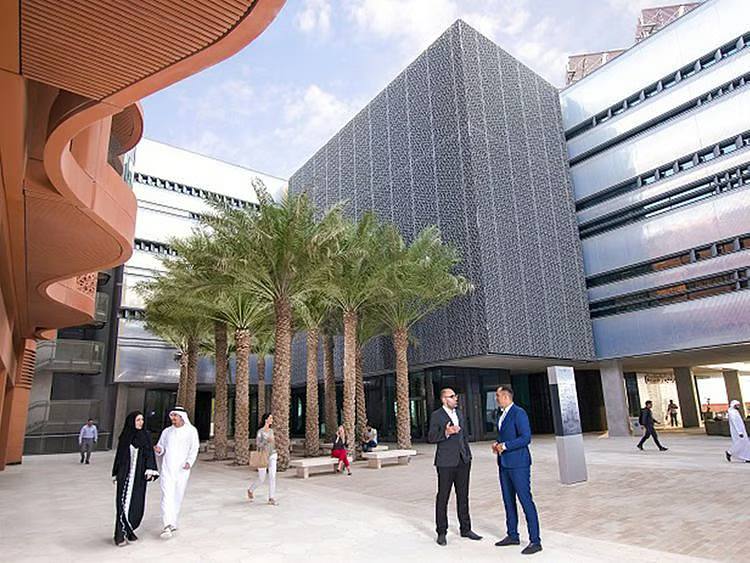
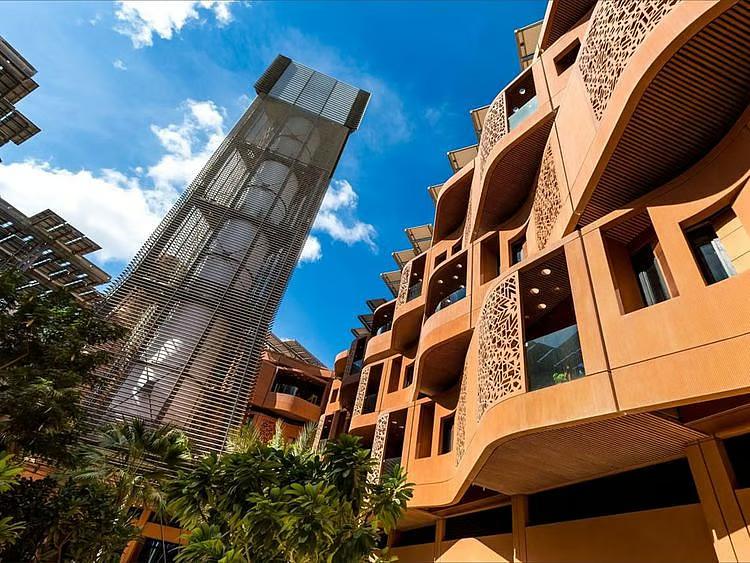
Masdar City follows the principles of passive design, using the local climate to minimise energy and water consumption before relying on technology.
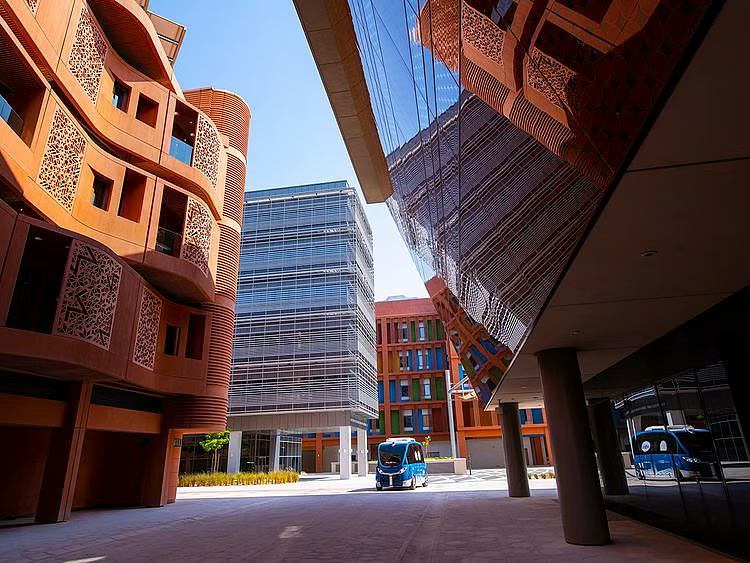
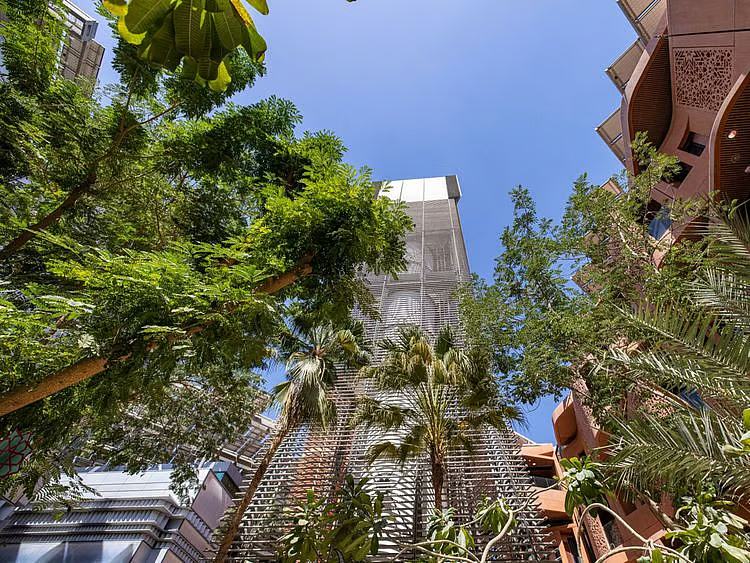
The city’s downtown core is elevated on a seven-metre podium and positioned to take advantage of prevailing winds, making the area feel approximately 10 degrees cooler than central Abu Dhabi. Angled and shaded windows limit direct sunlight while allowing natural light inside. Airtight building envelopes and substantial insulation further reduce the need for air conditioning.
Sustainability also influences the materials used throughout the development. Benches and street structures are made with low-carbon concrete, while much of the aluminium used in cladding, windows and door frames is recycled. Recycled aluminium has roughly one-eighth of the carbon footprint of newly produced material. Timber is sourced from certified sustainable suppliers, while reinforcing steel is manufactured using recycled scrap.
An on-site facility also supports the reuse and recycling of steel, concrete and timber, helping prevent construction materials from ending up in landfills.
More than 11 megawatts of solar panels have been installed across the city, making renewable energy an integral part of its infrastructure.
The Masdar story
Masdar’s influence extends well beyond Abu Dhabi. In 2006, the UAE government established Abu Dhabi Future Energy Company, known as Masdar, to build on the country’s expertise and global standing in the energy sector while diversifying its economy and energy mix for future generations.
Under the leadership of Dr Sultan Ahmed Al Jaber, its founding chief executive and current chairman, Masdar has expanded its contribution to renewable energy, climate action and sustainability both within the UAE and internationally.
The company has been behind several notable milestones. These include Shams 1, the Middle East’s first concentrated solar power plant, and the development of the London Array, one of the world’s largest offshore wind farms.
Masdar has also helped advance sustainability through initiatives such as the annual Abu Dhabi Sustainability Week and the Zayed Sustainability Prize. The prize’s 96 winners have collectively improved the lives of more than 370 million people worldwide.
A significant new phase began in December 2021, when TAQA and ADNOC were announced as shareholders alongside Mubadala.
The partnership brought together the renewable energy expertise of TAQA, Mubadala and Masdar with ADNOC’s capabilities in hydrogen, infrastructure, international trading and logistics. The new ownership structure became effective in December 2022, establishing a major clean energy company tasked with advancing the UAE’s Net Zero by 2050 strategy and supporting the country’s ambitions in the green hydrogen sector.
Today, Masdar is a global clean energy player with activities spanning large-scale and distributed solar power, onshore and offshore wind, geothermal energy, energy storage, green hydrogen and emerging clean-energy technologies.
Its projects and partnerships represent a portfolio capacity of more than 65 gigawatts across over 20 countries. The company is working towards a target of 100 gigawatts of renewable energy capacity by 2030, supported by planned investments of approximately USD 30 billion to USD 35 billion through equity and project financing.
From pioneering concept to thriving community
A subsidiary of Mubadala Investment Company, Masdar City plays a central role in supporting the UAE’s transition towards net zero.
In 2021, the UAE became the first country in the MENA region to pledge to achieve net-zero emissions by 2050. Masdar City serves as a real-world testing ground for how this ambition can be translated into the built environment through reduced energy and water consumption, greater use of renewable power and offsets for remaining emissions.
The city’s 2024 ESG report highlights the progress made so far. Energy consumption declined by 31 per cent, while 98.3 per cent of construction waste was diverted from landfill.
The report also recorded an Emiratisation rate of 54.7 per cent, with women accounting for 31 per cent of the workforce. More than 300 community events and activities were organised, bringing residents and businesses together.
The city has continued to attract innovative companies and women-led enterprises working across sectors including artificial intelligence, life sciences, energy, space technology, agri-tech and mobility.
Buildings designed to generate more energy than they consume
One of Masdar City’s most ambitious developments is still taking shape. Masdar City Square, a collection of seven commercial buildings spanning 50,000 square metres, has been designed to promote community interaction and a shared sense of purpose. All seven buildings are targeting LEED Platinum, WELL Gold and Estidama 4 Pearl certifications.
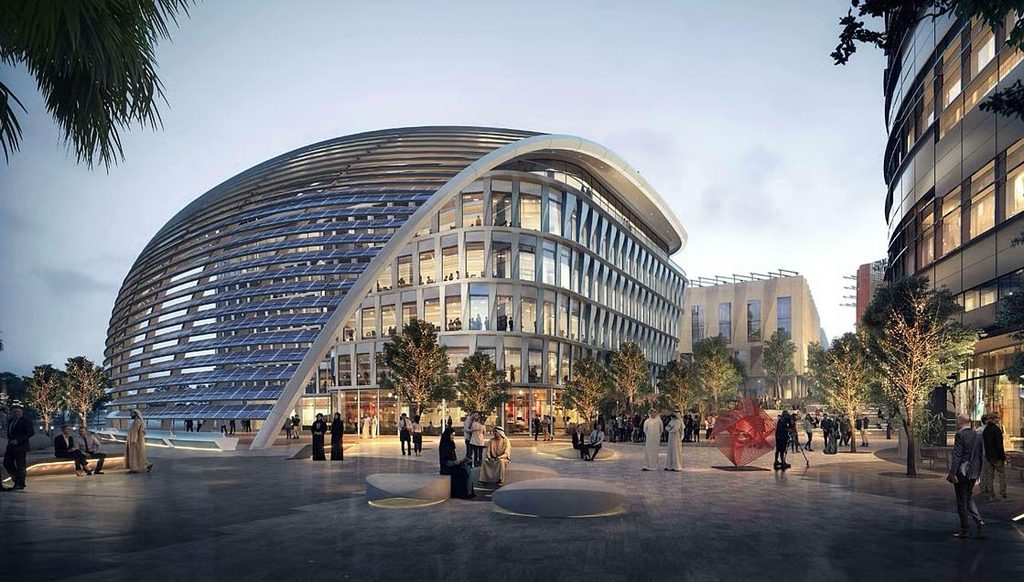
At the heart of the development is its corporate headquarters, which is set to become Abu Dhabi’s first net-zero energy building of its kind. A canopy featuring 1,033 solar panels, tilted at 22 degrees and oriented towards the south, provides shade while generating electricity.
The building’s design is expected to reduce energy consumption by 102 per cent compared with international benchmarks, while generating 109 per cent of its annual energy requirements. It is also on track to receive Zero Energy certification from the International Living Future Institute.
Another development nearby, The Link, brings together five commercial and residential buildings with a combined area of 30,000 square metres, adding to the city’s mix of business and residential spaces.
Both projects were listed on Masdar City’s project pages with an expected completion date of 2025. Readers should check the city’s official website for the latest updates on their status.
Rethinking the way people travel
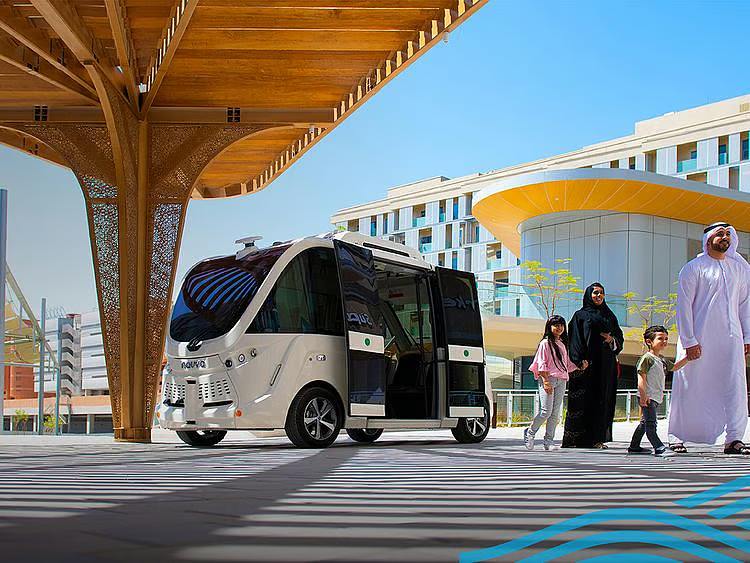
Transport contributes around 15 per cent of global carbon emissions, making mobility an important part of Masdar City’s sustainability strategy. The city has used its streets as a testing ground for new transport solutions, pioneering two generations of innovative mobility systems, with a third in development.
These initiatives reflect its vision of a future in which transport is increasingly shared, electric and autonomous.
Masdar City is also home to the Smart and Autonomous Vehicle Industries (SAVI) cluster, which aims to advance smart mobility solutions across air, land and sea.
A hub for fresh ideas
Masdar City’s ambitions extend beyond sustainable buildings and transport. It also aims to drive innovation in climate technology and support the development of solutions to environmental challenges.
Through its involvement in the Innovate for Climate Tech platform, alongside Tencent and Catalyst, and with support from COP28, the city helps connect start-ups, investors and established businesses. The initiative places particular emphasis on bringing countries in the Global South into the wider climate technology conversation.
From emerging start-ups to multinational corporations, companies based in Masdar City are working on practical innovations designed to support a more sustainable future.

