

While Iran has not released an official list, the June Islamabad accord and subsequent remarks by its officials offer an indication of the key demands Tehran wants addressed before agreeing to end the war.
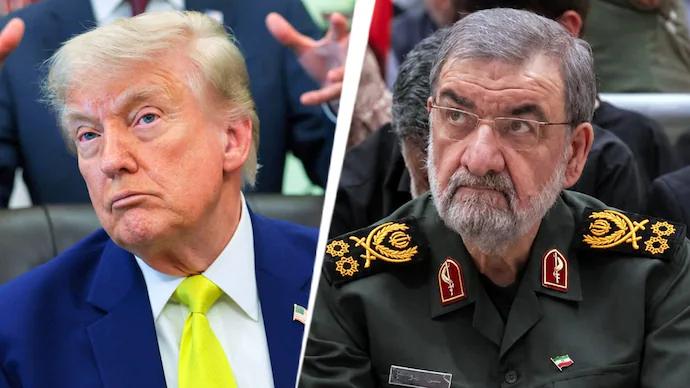
Efforts to bring the US-Iran war to an end have intensified, with Qatar stepping up its mediation efforts amid renewed tensions and warnings of a possible escalation. However, major differences remain over the terms of a potential settlement, as Tehran insists that Washington address its demands before an agreement can be reached.
In its latest proposal, Iran has offered to reopen the Strait of Hormuz within two days if the United States meets its conditions. This is a shorter timeline than the one-week period proposed earlier.
“The possibility of implementing this plan in two days is another indication of Iran’s good-faith approach. We have stated that, if Iran’s demands are met, it would be possible to restore security to the Strait of Hormuz and resume the negotiating process within a short period,” Foreign Ministry spokesman Esmaeil Baqaei said. He added that the “exchange of messages is still ongoing” through mediators.
The latest diplomatic initiative comes as Qatari mediators travel between Tehran and Washington, while Iranian officials review communications from US Vice-President JD Vance. Despite these efforts, the two sides have yet to agree on resuming direct negotiations.
At the centre of Iran’s position are seven conditions that its officials have described as essential to any agreement ending the war. The demands span security guarantees, military arrangements and economic restrictions imposed on Tehran.
What are the seven conditions Iran wants addressed, and why have they become major obstacles to negotiations?
Although Iran has not made an official list of its conditions public, the June Islamabad accord and subsequent statements by Iranian officials point to several recurring demands from Tehran.
1. A complete end to hostilities, including in Lebanon
Iran has consistently argued that ending the war with the United States and Israel requires a halt to fighting across all fronts. Tehran has specifically included Lebanon in this demand and has repeatedly called for an end to Israeli military operations in Gaza, although more recent statements outlining the condition have not explicitly mentioned Gaza.
The United States has repeatedly sought to stop the fighting between Israel and Hezbollah, a key Iranian ally. In June, Washington helped broker a trilateral framework agreement involving the US, Israel and Lebanon. The interim arrangement outlines Hezbollah’s disarmament, the withdrawal of Israeli forces and the deployment of the Lebanese military, paving the way for direct negotiations between Israel and Lebanon.
While the framework has resulted in temporary pauses in fighting, Israeli strikes in Lebanon have continued.
2. Lifting of the naval blockade
The Strait of Hormuz and surrounding waters have become one of the main flashpoints in the conflict. Following US-Israeli strikes on February 28, Iran sharply restricted maritime traffic through the strategic waterway, bringing shipping activity to historically low levels and disrupting the global economy.
The disruption also raised serious concerns about maritime safety, leaving thousands of sailors stranded at sea for weeks or months. Many faced the added risks of dwindling food supplies and potential attacks.
Just over a month after the February 28 strikes, and as negotiations failed to produce a ceasefire, the US military announced a blockade of maritime traffic entering and leaving Iranian ports and coastal areas on April 13.
The US military said the blockade would not prevent vessels travelling through the Strait of Hormuz to or from non-Iranian ports. However, US President Donald Trump warned that ships of any nationality paying Iran a toll to cross the waterway would also be targeted, arguing that Tehran should not profit from restricting access to an international shipping route.
The US naval blockade of Iranian ports was temporarily lifted following the June ceasefire but reinstated on July 15 after renewed Iranian attacks on oil tankers. The blockade forms part of Trump’s strategy to put pressure on Iran’s economy and prevent Tehran from benefiting financially from restrictions on shipping, an approach further expanded under Operation Economic Outcast.
3. Lifting of sanctions against Iran
For Tehran, relief from decades of economic sanctions is a central element of any potential settlement, rather than an issue that can be postponed until after a ceasefire.
Iran is among the world’s most heavily sanctioned countries, facing overlapping restrictions imposed by the United States, the European Union, the United Kingdom and the United Nations.
The sanctions date back to 1979 and have been expanded or reinstated at various points over the decades, particularly in response to concerns about Iran’s nuclear programme, missile development and other activities.
Washington has continued to tighten its sanctions regime against Tehran. In September this year, the US introduced additional measures aimed at increasing pressure on the Iranian economy.
While the Trump administration has not ruled out sanctions relief, the two sides disagree over when it should happen. Washington wants Iran to make concessions on its nuclear programme before granting substantial relief, while Tehran wants economic restrictions lifted as part of the initial steps towards ending the war.
4. Release of frozen Iranian assets
Billions of dollars in Iranian assets held overseas and frozen under international restrictions have become another major point of disagreement between Tehran and Washington. The two sides differ not only over access to the funds but also over the total amount Iran has frozen abroad.
Estimates vary considerably. Iran’s Tasnim News Agency and its central bank put the figure at around $24 billion, while estimates cited by The Wall Street Journal and the United States Institute of Peace (USIP) range from $100 billion to $123 billion.
Countries and jurisdictions holding Iranian funds include Iraq, India, Japan, the United States and Luxembourg.
Beyond the total amount, negotiations also centre on when and how the money would be released. Iran has sought access to some of the funds before final negotiations, with further releases taking place as talks progress.
5. Reduction of US military presence in the region
Iran wants Washington to scale back its military presence across the Middle East, reversing the expanded deployment that preceded and accompanied the war. Tehran is seeking a return to levels closer to those maintained by the United States before the conflict, rather than allowing the larger wartime deployment to become a permanent feature of regional security.
Before the war began in February, the US Central Command (CENTCOM) typically maintained around 40,000 troops across nearly 20 military sites stretching from Jordan to Oman, according to an August report by The Washington Post. These included major installations in Gulf countries that support American air and naval operations, intelligence gathering and regional logistics.
However, the US military footprint grew as tensions with Tehran intensified. In the weeks before the war, Washington deployed additional aircraft carriers, guided-missile destroyers, fighter jets and air-defence systems to the region. The deployments strengthened the US military’s ability to conduct operations and protect American bases and allies.
6. Compensation for war-related damage
Iran maintains that any lasting settlement must include compensation for damage to its infrastructure and other losses caused by the war.
US President Donald Trump has rejected Iran’s demand for war reparations. Instead, he has called on Tehran to compensate the United States for American casualties linked to roadside bombs and for protesters killed in Iran.
The extent of the damage remains another contentious issue. Iranian government spokeswoman Fatemeh Mohajerani told Russia’s RIA Novosti news agency that the country had suffered approximately $270 billion in direct and indirect losses since the war began on February 28. The interview was published on September 15, but she did not provide a detailed breakdown of the estimate.
7. An end to US attacks on Iranian territory
Tehran is also seeking assurances that Washington will not launch further attacks on Iranian territory. From Iran’s perspective, a ceasefire alone would not provide sufficient guarantees; any lasting agreement must also prevent the possibility of renewed military action.
The demand has gained further significance following comments by US President Donald Trump on November 1. Trump said Washington had already destroyed much of Iran’s military capability, but still needed to “take care of” one or two remaining targets.
Tehran, meanwhile, has warned that any fresh attack would prompt retaliation. Iran’s Supreme Leader Mojtaba Khamenei warned the United States and Israel against resuming hostilities in a written statement issued on October 31.
The exchange of warnings has heightened concerns about whether diplomatic efforts can prevent another round of fighting. The UAE, which has repeatedly called for a diplomatic solution, said it hoped negotiations would make progress while remaining prepared for a possible escalation.
“We’re hoping that there is a diplomatic breakthrough. It is not the interest of the region to go through another round… But I think we’re also, as we’ve shown before, braced for the worst,” said Dr Anwar Gargash, diplomatic adviser to the UAE President, during a conference in Manama on Sunday.
Diplomatic efforts have continued to prevent the conflict from reigniting. After a Qatari delegation visited Tehran earlier this week, Iranian envoys travelled to Qatar for further consultations as part of indirect negotiations with Washington.

