

Iran’s Changing War Strategy Fuels Regional Tensions as Gulf Faces Growing Trade Disruptions.
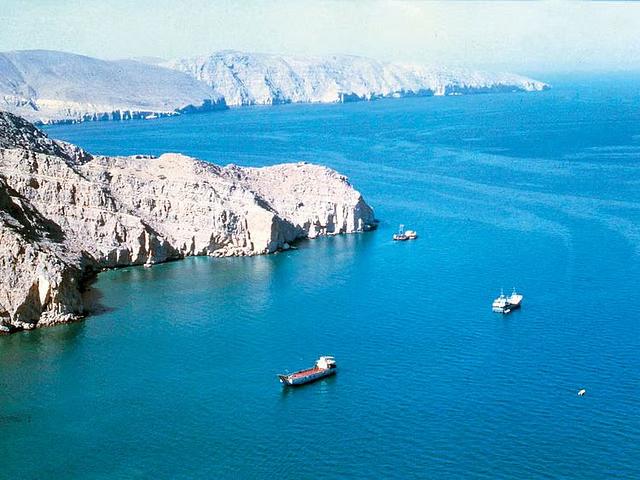
Attacks on commercial vessels in and around the Strait of Hormuz continue to disrupt maritime activity, while ongoing flight disruptions in Saudi Arabia are affecting travellers from the UAE.
Here are the major developments to follow on October 15, 2026:
Iran Claims Container Ship Sank as US Forces Destroy Dhow
Container ship incident: Iran’s Islamic Revolutionary Guard Corps (IRGC) claims that the Singapore-registered container ship GFS Pride sank after striking a mine south of the Strait of Hormuz.
However, Singaporean authorities have reported a different account, stating that the vessel was struck by a projectile. All 21 crew members were successfully rescued.
The exact cause of the incident remains disputed.
Another Singapore-registered vessel, the GFS Giselle, was also struck on the same day but managed to leave the affected area under its own power.
US operation against a dhow: US Central Command (CENTCOM) reported that American forces destroyed an Iranian-linked dhow in the Gulf of Oman on October 6.
According to CENTCOM, the vessel was allegedly involved in surveillance activities and targeting US Navy ships.
However, US officials have not disclosed the dhow’s identity or provided further evidence detailing the alleged surveillance operation.
Increasing attacks on commercial shipping: Maritime security concerns have intensified following a series of incidents involving merchant vessels.
According to The Maritime Executive, six commercial ships were attacked on Sunday, followed by another four on Tuesday.
Meanwhile, a tally published by the Financial Times indicates that as many as 24 vessels have been targeted during October.
The incidents highlight the continuing risks facing commercial shipping in and around one of the world’s most strategically important maritime corridors.
Iran Reportedly Deploying Unarmed Spotters to Identify Maritime Targets
A US military official told Reuters that Iran’s Islamic Revolutionary Guard Corps (IRGC) has reportedly adopted a different surveillance strategy following extensive damage to the country’s radar capabilities caused by US military operations.
According to the official, the IRGC has begun relying on unarmed spotters to identify potential targets in regional waters.
The large number of traditional dhows and smaller vessels operating in the Strait of Hormuz and surrounding areas could allow individuals linked to the IRGC to blend into ordinary civilian maritime traffic.
However, the information comes from an unnamed US military source and has not been independently verified. Iranian authorities have not publicly responded to the allegation.
Separately, Iran’s navy announced on October 13 that it had deployed operational units east of the Strait of Hormuz, as well as across the Gulf of Oman and the Arabian Sea.
According to the Iranian navy, these deployments are intended to enable continuous, real-time monitoring of maritime movements.
Hormuz Disruptions Highlight Vulnerabilities in Global Trade
The continuing maritime crisis has exposed the risks associated with global trade’s dependence on the Strait of Hormuz, one of the world’s most important shipping corridors.
It has also placed renewed attention on the UAE’s longstanding efforts to develop alternative ports, transport infrastructure and energy export routes to reduce reliance on the strategic waterway.
According to figures released by Kpler in late September, approximately 40% of Gulf crude oil was being transported through pipelines that bypass the Strait of Hormuz, compared with just 17% before the conflict.
The shift demonstrates how alternative infrastructure has helped maintain some energy exports despite heightened maritime security risks.
Meanwhile, the UAE suspended all trade and financial dealings with Iran in August until further notice. Flights connecting the UAE with Iran were also halted.
Recent attacks on commercial vessels now threaten to undermine the improvement in shipping activity observed towards the end of September.
US maintains that commercial shipping continues: US Central Command (CENTCOM) says merchant vessels are still passing through the Strait of Hormuz with coordinated protection from American forces and regional partners.
The command also maintains that the US blockade targeting Iran remains fully operational.
Saudi Arabia Travel Disruptions: UAE Airlines Extend Flight Cancellations
Air travel between the UAE and Saudi Arabia continues to face significant disruption as regional security concerns affect airline operations.
The immediate cause of the latest cancellations is a series of attacks targeting Riyadh’s King Khalid International Airport, attributed to Yemen’s Iran-backed Houthi movement.
Airport attacks: According to Saudi aviation authorities, an attack on October 10 resulted in 12 deaths and 309 injuries.
Another attack on October 11 reportedly killed one person and injured 11 others.
Airport closure: King Khalid International Airport is scheduled to remain closed until 9pm GMT on October 17.
During the preceding week, more than 3,000 flights from Saudi airports were either cancelled or designated as unable to operate.
Latest UAE Airline Cancellations and Suspensions
- Etihad Airways: All flights between Abu Dhabi and Riyadh remain cancelled through October 19.
- flydubai: Services to Riyadh, Dammam and Abha are cancelled through October 19. Flights to Neom were also cancelled for October 14 and 15.
- Emirates: Dubai–Riyadh flights EK815, EK817 and EK819, together with their corresponding return services, were cancelled for October 14 and 15.
- International airlines: SWISS, Austrian Airlines, Edelweiss and Eurowings have suspended their Abu Dhabi services through October 24.
Travellers should avoid assuming that flight operations at other Saudi airports are either unaffected or automatically suspended because of the closure in Riyadh.
Operational conditions may differ between destinations and airlines, making direct confirmation essential.
Travel Advice for UAE Residents
Passengers planning journeys between the UAE and Saudi Arabia should take additional precautions while airline schedules remain uncertain.
- Verify flight status: Check your airline’s official website or mobile application before travelling to the airport, as departure and arrival schedules may change at short notice.
- Explore rebooking and refund options: Travellers affected by cancellations should contact their airline or booking agent to discuss available alternatives.
- Prepare for possible delays: Allow additional time when travelling through Dubai and Abu Dhabi airports, where operational disruptions have been reported.
- Monitor official announcements: Follow verified UAE government and aviation authority channels for the latest travel and safety instructions. This briefing does not include a comprehensive review of official government advisories.
Key Questions That Remain Unanswered
Despite the latest military and aviation developments, several important details have yet to be established.
- Cause of the GFS Pride sinking: Authorities have presented conflicting accounts about whether the container ship struck a mine or was hit by a projectile.
- Extent of Iran’s reported surveillance tactics: The scale of the alleged use of unarmed spotters remains unknown, with the Reuters report relying on an anonymous US military source.
- Resumption of Saudi air travel: It remains uncertain when Riyadh’s airport will fully resume operations and when UAE airlines will restore their affected Saudi routes.
Latest Status of UAE Airlines
Flight cancellations and suspensions remain subject to operational and security developments.
Passengers should consult their airline directly for the most recent schedules, confirmed departures, rebooking arrangements and refund eligibility before making travel plans.

