

Mobile Surveillance System Enables Authorities to Identify Road Hazards and Respond Quickly to Traffic Incidents.
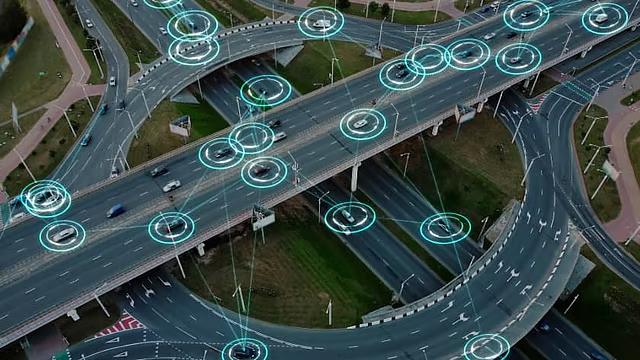
Abu Dhabi is taking a major step towards smarter and safer roads by introducing artificial intelligence into its traffic monitoring operations. While traditional road safety measures rely on traffic patrols, surveillance cameras and reports from motorists, AI technology is now providing an additional way to identify potential dangers before they lead to congestion, accidents or safety risks.
The initiative forms part of the ‘V City’ project, developed and implemented by the UAE AI Alliance for government entities. It features an AI-powered vehicle that travels through different areas of Abu Dhabi, continuously monitoring road conditions and identifying situations that could disrupt traffic movement or endanger road users.
Mohamed Al Amiri, an AI engineer at the company, explained that the vehicle is capable of recognising various road hazards, including fallen trees obstructing streets, previously unreported traffic accidents, defective traffic signals and other obstacles affecting the flow of vehicles.
Once a potential hazard is identified, the system communicates the relevant information and its location to the appropriate authorities, helping them assess the situation and take timely action.
How Abu Dhabi’s AI-Powered ‘V City’ Project Works
The UAE AI Alliance is working on several technology-driven initiatives designed to support government operations, with ‘V City’ among its projects focused on improving traffic management and public safety.
At the centre of the initiative is a specially equipped vehicle that uses artificial intelligence to observe road conditions while travelling across the emirate.
Unlike conventional monitoring methods, which may depend on fixed cameras or reports from the public, the mobile system can identify potential problems as it moves through different locations.
The project’s main advantage extends beyond simply spotting an accident or obstruction. It converts observations collected on the road into useful information that authorities can analyse to determine the appropriate response.
By helping officials locate hazards and access relevant information more efficiently, the technology aims to support quicker interventions, improve traffic management and enhance safety for motorists and other road users.
From Traditional Reporting to AI-Powered Road Hazard Detection
Road safety monitoring has traditionally depended on motorists reporting incidents, traffic patrols identifying problems or surveillance cameras capturing disruptions. Abu Dhabi’s ‘V City’ initiative introduces an additional approach by turning an AI-equipped vehicle into a mobile road-monitoring system.
This development is particularly valuable in large urban areas, where potential dangers may go unnoticed because they do not initially appear serious enough to trigger an emergency report.
Such hazards could include fallen trees partially blocking roads, malfunctioning traffic lights, debris obstructing lanes or minor collisions that have not yet been reported.
Identifying these problems quickly is essential to maintaining safe and efficient traffic movement. Even a small obstruction left unattended on a busy road can contribute to congestion, force motorists to change lanes unexpectedly and increase the risk of further accidents.
The introduction of artificial intelligence aims to improve more than just emergency response times. It also seeks to reduce the delay between a hazard appearing, being identified and authorities deciding how to address it.
By continuously monitoring road conditions, the system can provide officials with timely information, allowing them to respond to potential threats before they develop into more serious traffic disruptions.
Why Abu Dhabi Is Investing in AI Road Safety Technology
Road safety remains a major priority for Abu Dhabi, not only because of its importance in protecting lives but also because of the significant economic consequences associated with traffic accidents.
According to figures from the Integrated Transport Centre, road accidents in Abu Dhabi resulted in an estimated economic cost of Dh5.26 billion in 2025.
The figures demonstrate that traffic incidents affect more than individual road users, creating wider financial and operational challenges.
Despite these costs, Abu Dhabi has recorded encouraging improvements in several road safety indicators.
In 2025, the emirate’s road fatality rate declined to 3.11 deaths per 100,000 residents, compared with 3.41 in 2024.
Road safety statistics covering the period from 2021 to 2025 also revealed a 33% reduction in traffic-related deaths and an 18% decrease in serious injuries.
Looking ahead, Abu Dhabi aims to reduce road fatalities by 50% by 2030, with a longer-term ambition of eliminating road deaths entirely by 2040.
Moving Towards Accident Prevention Through Artificial Intelligence
Although Abu Dhabi has made measurable progress in reducing traffic fatalities and serious injuries, authorities continue to explore ways to strengthen road safety.
The next stage involves placing greater emphasis on preventing accidents rather than responding only after they occur.
This is where artificial intelligence can play an increasingly important role.
Unlike conventional monitoring systems that primarily record incidents or help authorities respond to reported problems, AI-based technology can potentially identify emerging hazards and recognise patterns associated with road safety risks.
Through initiatives such as ‘V City’, Abu Dhabi is working towards a more proactive traffic management approach in which potential dangers can be detected earlier and addressed before they lead to accidents.
The technology represents another step towards the emirate’s long-term vision of safer roads, more efficient traffic movement and fewer traffic-related injuries and fatalities.
Abu Dhabi’s Smart Traffic Network: 1,500 Cameras, 253 Vehicle Sensors and 922 Traffic Signals
Abu Dhabi’s ‘V City’ initiative is part of a wider smart traffic management system that already uses advanced technologies to monitor road conditions, analyse traffic patterns and improve road safety.
At the Abu Dhabi Infrastructure Summit 2026, the Integrated Transport Centre introduced the emirate’s Central Traffic Management Platform, an AI-powered system designed to automatically monitor traffic accidents, congestion and other road-related incidents in real time.
The platform connects more than 1,500 surveillance cameras, 253 vehicle sensors and 922 traffic signals, creating an extensive network for collecting and analysing traffic information.
It also processes large volumes of data from over 30 sources, allowing the system to automatically initiate appropriate response plans when traffic disruptions or emergencies are identified.
To keep motorists informed, traffic updates and important alerts are displayed through 122 electronic message boards positioned across Abu Dhabi’s road network.
These developments highlight the emirate’s broader strategy of creating an interconnected digital traffic management system rather than relying on individual AI solutions.
The goal is to bring together monitoring, data analysis, decision-making and emergency response within a coordinated technological framework.
Within this network, the ‘V City’ vehicle serves as a mobile monitoring tool that can complement existing roadside infrastructure.
While fixed surveillance cameras observe specific locations, the AI-equipped vehicle can travel across different areas, helping authorities identify hazards in places that may not be continuously covered by stationary monitoring systems.
How AI Transforms Road Monitoring From Detection to Understanding
The significance of artificial intelligence in traffic monitoring extends beyond capturing images or recording road conditions.
Traditional cameras can provide visual information, but AI-powered systems can potentially interpret what they observe, identify objects, determine their locations and assess their relevance to traffic safety.
Depending on the technology’s capabilities and available data, these systems can classify road hazards and communicate important findings to the appropriate authorities.
For example, if the ‘V City’ vehicle encounters a fallen tree obstructing a traffic lane, its role is not limited to capturing footage of the incident.
The system can identify the tree as a potential road hazard, establish its location and relay the information to officials responsible for addressing the obstruction.
A similar process can be applied to previously unreported accidents, defective traffic lights, debris or other obstacles that could interfere with normal traffic movement.
By converting observations into actionable information, the technology can help authorities identify problems more efficiently and make informed decisions about the necessary response.
In this way, the AI-equipped vehicle effectively operates as a mobile sensor within Abu Dhabi’s expanding smart-city infrastructure, supporting the emirate’s efforts to improve road safety and traffic efficiency.
Accumulated Data Could Strengthen Abu Dhabi’s Road Safety Strategy
As Abu Dhabi’s ‘V City’ project develops, one of its most valuable benefits could be the large amount of traffic-related information collected during thousands of journeys.
While detecting individual road hazards is important, analysing data gathered over time could help authorities identify recurring problems and understand why they happen.
By recording the locations, types and timing of road obstructions, officials could recognise patterns and determine which areas experience frequent disruptions.
For example, the data might reveal that certain hazards repeatedly occur along particular roads, that specific obstacles are more common at certain times, or that some locations require permanent infrastructure improvements instead of temporary solutions.
This approach could transform artificial intelligence from a system that simply identifies road problems into a tool that supports long-term planning and informed decision-making.
Rather than only alerting authorities when an obstruction appears, advanced AI systems could eventually help explain why particular hazards keep occurring and predict where or when similar problems might arise, provided sufficient data and suitable analytical models are available.
AI Technology Could Improve Emergency Response and Accident Prevention
One of the main advantages of AI-powered road monitoring is its potential to shorten the time between identifying a hazard and taking corrective action.
In heavily populated cities with busy road networks, effective traffic management involves more than responding to accidents after they happen.
It also includes preventing collisions, reducing delays for motorists and ensuring that minor road disruptions do not develop into major traffic incidents.
Abu Dhabi has already demonstrated the benefits of using smart technology to address road safety challenges.
Earlier initiatives introduced by Abu Dhabi Police showed positive results in managing traffic risks during changing weather conditions.
According to reported outcomes, a driver-alert system implemented between 2018 and 2023 helped achieve zero fatalities and zero major accidents under certain monitored conditions.
These results highlight the potential of technology-driven warning systems to improve driver awareness and reduce risks on the road.
Abu Dhabi Expands AI and Autonomous Mobility Initiatives
Abu Dhabi is continuing to strengthen its investment in artificial intelligence and advanced transport technologies.
In January 2026, Abu Dhabi Police signed a memorandum of understanding with Space42 to collaborate on the development of AI-based security systems, autonomous vehicles and innovative road safety solutions.
The partnership reflects the emirate’s broader efforts to incorporate intelligent technologies into transport infrastructure and public safety operations.
Speaking during AI Everything Abu Dhabi 2026, Mohamed Al Amiri, an AI engineer at the UAE AI Alliance, explained that the organisation is developing projects designed to provide rapid and effective solutions through advanced technology.
He highlighted the ‘V City’ initiative as an example of how artificial intelligence can support government authorities in identifying and addressing road-related challenges.
According to Al Amiri, the AI-equipped vehicle can recognise various hazards, including fallen trees obstructing roads, traffic accidents that have not yet been reported, malfunctioning traffic lights and other obstacles that interfere with vehicle movement.
By detecting these issues and providing relevant information to authorities, the project aims to support faster responses and more efficient traffic management.
The initiative also demonstrates how Abu Dhabi is moving towards a more proactive approach to road safety, combining real-time monitoring, intelligent data analysis and advanced technology to help prevent accidents and improve the overall driving experience.
He explained that the ‘V City’ project allows road hazards and traffic disruptions to be identified quickly, with relevant information immediately shared with the appropriate authorities. This enables officials to pinpoint affected locations, assess the situation and take necessary action without unnecessary delays.
AI-Powered Risk Assessment and Traffic Forecasting
Alongside the ‘V City’ initiative, Abu Dhabi’s Integrated Transport Centre is developing advanced artificial intelligence systems designed to assess road safety risks and predict potential traffic challenges.
These technologies aim to help authorities identify emerging problems, anticipate disruptions and make better-informed decisions to improve traffic flow and road safety.
Together, these developments demonstrate that ‘V City’ is part of a wider strategy to modernise Abu Dhabi’s transport management system.
The emirate is gradually shifting from traditional, reactive traffic monitoring towards a more proactive, data-driven approach that combines artificial intelligence, real-time information and predictive analysis to support safer and more efficient roads.
Economic Benefits of AI-Powered Road Safety Systems
Artificial intelligence in traffic management offers significant economic advantages alongside its potential to improve public safety.
Preventing road accidents can help reduce expenses associated with vehicle repairs, insurance claims, emergency services, traffic congestion and lost productivity. More importantly, it can help protect lives and prevent injuries, benefits that cannot be measured solely in financial terms.
With the annual economic impact of road accidents in Abu Dhabi exceeding Dh5 billion, investments in technologies that help minimise traffic risks could deliver substantial benefits across multiple sectors.
However, the effectiveness of initiatives such as ‘V City’ should not be evaluated only by the number of road hazards identified.
A more comprehensive assessment would consider several important performance indicators:
- Incident detection and reporting: The average time taken to identify a road hazard and notify the responsible authority.
- Response efficiency: The time required to resolve an incident after authorities receive an alert.
- Early detection: The number of incidents identified by AI before motorists or members of the public report them.
- Road clearance: The reduction in the time obstacles remain on roads.
- Accident prevention: Changes in the number of secondary accidents linked to undetected hazards or road obstructions.
- Detection accuracy: The system’s ability to correctly identify and classify different traffic incidents.
- Operational efficiency: A reduction in repeated inspections or interventions at the same locations.
- Traffic improvement: Measurable improvements in vehicle movement after identified hazards are addressed.
These measures could help determine whether ‘V City’ delivers meaningful improvements in road safety, economic efficiency and residents’ quality of life.
Abu Dhabi’s Vision for Proactive AI-Driven Government
Abu Dhabi’s ambitions extend beyond introducing digital services. The emirate is working towards a government model in which artificial intelligence supports everyday operations and decision-making.
Under the Abu Dhabi Digital Government Strategy 2025–2027, the emirate announced a Dh13 billion investment in digital transformation.
The strategy includes plans to introduce more than 200 innovative AI solutions across government services while achieving complete digitisation and automation of government processes.
By 2027, Abu Dhabi aims to become the world’s first government to comprehensively integrate artificial intelligence throughout its operations.
Progress towards this ambition was highlighted in September 2025, when the Department of Government Enablement announced that more than 100 AI use cases had been deployed across over 40 government entities.
The development marked a transition from limited AI experimentation towards wider implementation across government departments.
Within this broader strategy, the ‘V City’ initiative provides a practical example of how proactive public services could operate.
Instead of depending entirely on motorists to report fallen trees, malfunctioning traffic lights or accidents, AI-equipped vehicles can actively search for hazards and share relevant information with authorities.
This approach could help government agencies identify problems earlier and take action before they develop into more serious disruptions.
From Smart Cities to Cities That Can Detect Risks Independently
The growing use of artificial intelligence is also changing how smart cities are designed and managed.
Traditionally, smart-city infrastructure has relied on surveillance cameras, sensors and digital platforms to gather information about urban conditions.
AI-powered systems take this concept further by analysing collected information, recognising potential problems and helping authorities prioritise appropriate responses.
In this evolving model, a city does more than collect data. It increasingly uses technology to interpret conditions and support timely decisions.
The ‘V City’ vehicle demonstrates this concept by functioning as a mobile monitoring system capable of identifying road hazards that might otherwise go unnoticed.
Its value is particularly relevant to Abu Dhabi, whose territory includes Abu Dhabi city, Al Ain and Al Dhafra.
Given the emirate’s extensive and varied road network, mobile AI monitoring could help expand surveillance coverage beyond fixed cameras and strengthen coordination between field observations and government response teams.
By connecting real-time detection with data analysis and operational action, such systems could support safer and more efficient road management across the emirate.
Conclusion: AI Is Transforming Road Safety Decision-Making
The significance of Abu Dhabi’s ‘V City’ project goes beyond deploying a vehicle equipped with cameras and artificial intelligence.
It represents a developing approach to urban management in which technology supports a continuous process of identifying, assessing and addressing potential road hazards.
The system’s operational model can be understood through six connected stages:
Detection → Identification → Analysis → Alert → Response → Learning from Data
This process has the potential to transform traffic management from a largely reactive system into one that increasingly anticipates and addresses problems before they escalate.
Abu Dhabi has established ambitious road safety targets, including reducing traffic fatalities by 50% by 2030 and working towards zero road deaths by 2040.
Achieving these goals will require more than advanced monitoring equipment. The effectiveness of AI solutions will ultimately depend on their ability to reduce risks, improve response times and prevent accidents.
The future of artificial intelligence in Abu Dhabi’s transport network may therefore lie not only in identifying what is happening on the roads, but also in helping authorities understand which problems require attention, where intervention is needed and how similar risks can be prevented.
Through initiatives such as ‘V City’, data could become an increasingly valuable resource for public safety planning and government decision-making.
Rather than serving solely as a monitoring tool, artificial intelligence could become an important component of a more responsive, efficient and preventive road management system.
As these technologies develop, Abu Dhabi’s roads could evolve into an interconnected intelligent network capable of identifying emerging hazards and supporting action before road users are placed at greater risk.

