

UAE fuel prices surge as Strait of Hormuz risks persist.
The US-Iran conflict enters another tense phase on Monday, October 5, 2026, with uncertainty continuing over the reopening of the Strait of Hormuz, attacks on commercial shipping increasing and fighting intensifying in Yemen.
Mohammad Bagher Ghalibaf, Speaker of Iran’s Parliament, said the strategic Strait of Hormuz would remain “closed” until the United States meets all seven conditions linked to the 14-point Memorandum of Understanding (MoU) agreed in June.
For UAE residents, the impact extends well beyond the political and military standoff. The Strait of Hormuz remains a critical route for Gulf oil and gas shipments, while further attacks on tankers could affect energy flows, shipping, insurance costs and regional trade.
The key issues to watch today are shipping through the Strait of Hormuz, aviation, oil prices and the possibility of further regional escalation.
New front of conflict: Yemen
Saudi-backed Yemeni forces have launched a major offensive against Iran-aligned Houthi fighters, opening another front near the strategically important Bab Al Mandab shipping route.
Gulf oil exports have recently recovered to levels approaching those seen before the conflict, according to satellite data. However, renewed attacks on tankers could put that recovery under pressure.
Meanwhile, Brent crude remains above $100 a barrel, keeping energy prices and the wider economic impact of the conflict firmly in focus.
For UAE travellers, airports remain operational, but flight schedules could change at short notice as regional security conditions evolve. Passengers should continue checking directly with their airlines for the latest flight information.
Aviation: Israel routes suspended, check before you travel
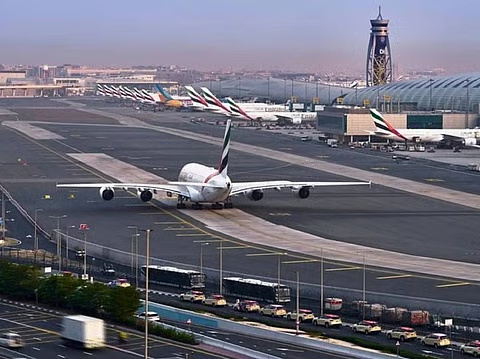
UAE airports remain open, but flight schedules and regional routes continue to change as the US-Iran conflict keeps Gulf airspace and the Strait of Hormuz under close watch.
UAE airports: Dubai International (DXB), Al Maktoum International (DWC) and Zayed International Airport (AUH) are operating at near-normal levels, although some regional services continue to face delays and cancellations.
Israel flights: flydubai has suspended flights to and from Israel following an in-flight incident on a Dubai-Israel service, while Emirates has suspended codeshare services on the route. Some international airlines also continue to suspend certain UAE services. Travellers should check directly with their airline before leaving for the airport.
Airspace and routing: With the Strait of Hormuz heavily militarised and security risks remaining elevated across the region, further escalation could lead to additional flight rerouting or temporary airspace restrictions.
Passengers travelling on routes near Iran, Iraq and Yemen should be prepared for possible last-minute schedule or routing changes.
Shipping and trade
Oil flows: Crude shipments through the Strait of Hormuz are estimated by CNN to be running at around 80 per cent of pre-war levels, indicating that the key shipping route continues to function despite heightened risks.
Maritime security: Recent attacks on tankers in and around the strait, combined with continuing tensions in waters near Oman, have pushed insurers to factor in higher war-risk premiums. Those additional costs could feed into freight rates and, eventually, the cost of imported goods.
What it means: Most consumer goods continue to move through supply chains, but businesses dependent on just-in-time deliveries or regional feeder services should closely monitor updates from ports, freight forwarders and insurers for possible rerouting or additional charges.
Energy and fuel prices
UAE motorists are already feeling the impact of higher energy prices, with new fuel rates taking effect on October 1:
- Super 98: Dh4.40 per litre, up from Dh3.80
- Special 95: Dh4.28 per litre, up from Dh3.69
- E-Plus 91: Dh4.21 per litre, up from Dh3.61
- Diesel: Dh4.80 per litre, up from Dh4.30
Why have prices risen?
The UAE Fuel Price Committee raised rates for a third consecutive month as Brent crude remained above $100 a barrel amid concerns over the conflict and potential disruption to supplies through the Strait of Hormuz.
Retail fuel prices have risen by more than 60 per cent since the conflict began in late February, increasing transport costs for households and businesses.
The G7 has also agreed to release 100 million barrels of oil and fuel from emergency reserves in an effort to ease pressure on global energy markets. The move helped push oil prices down by roughly $5, although October’s UAE pump prices still reflect the earlier surge.
Budget for higher transport costs, watch for travel disruptions
Household budgets: With all petrol grades now above Dh4 per litre and diesel at Dh4.80, motorists face substantially higher commuting costs. Ride-hailing and delivery expenses could also come under pressure. Families filling a typical 50- to 60-litre fuel tank could be paying as much as Dh125 more per fill-up compared with levels before the recent price surge.
Travel planning: Anyone booked to travel to Israel or connect through areas close to the northern Gulf should reconfirm their flights before heading to the airport and allow additional time for possible disruptions.
What to watch: Official updates on the Strait of Hormuz, threats linked to the conflict in Yemen, airline advisories and future UAE fuel price announcements will remain important indicators of how the conflict could affect everyday life in the Emirates.

