

Hormuz Remains a Key Flashpoint as Gulf Oil Flows Continue and Diplomacy Persists.
As the US-Iran conflict enters its 215th day, the two sides remain caught between continued military pressure and efforts to keep diplomatic channels open.
The latest data, however, suggest that the Strait of Hormuz is handling significantly more oil than initially feared, supported by US-backed tanker movements and alternative methods of moving crude to international markets.
Hormuz remains operational — but conditions are far from normal
Gulf oil producers continue to move substantial volumes of crude and petroleum products through the Strait of Hormuz despite ongoing Iranian pressure and heightened security risks in the region.
According to Kpler data, oil and petroleum-product flows through the strait averaged 13.1 million barrels per day last week. That represents nearly 80% of the 17.1 million barrels per day that passed through the strategic waterway before the conflict began.
US Navy-backed tanker movements, vessels operating with their AIS tracking systems switched off, and ship-to-ship transfers have all helped maintain the flow of exports despite the disruption.
Why it matters: The Strait of Hormuz is particularly important to the UAE because of the country’s proximity to the waterway and its position as a major global oil producer and shipping hub.
Any prolonged disruption to traffic through the strait could push up energy prices, freight and insurance costs, with the effects potentially filtering through to consumer prices.
Oil remains the biggest economic pressure point
Oil prices continue to represent one of the most significant economic consequences of the conflict.
Brent crude was trading at around $105 a barrel at the beginning of the week before easing slightly to about $103 as of 1.35pm Tokyo time on Wednesday, Sept. 30.
Despite the modest decline, crude remains nearly 50% higher than the roughly $72-a-barrel level recorded before the conflict began on February 28.
In the UAE, monthly fuel prices have risen sharply and steadily between March and September 2026, reflecting the surge in global crude benchmarks and the impact of continuing regional tensions.
Super 98 petrol has risen 46.72%, climbing from Dh2.59 per litre in March to Dh3.80 in September.
Diesel has recorded an even steeper increase, jumping 58.09% from Dh2.72 to Dh4.30 per litre over the same period.
The UAE’s monthly fuel-price mechanism reflects broader oil-market trends over the course of the month rather than movements in crude prices on any single day.
Saudi Arabia’s alternative oil route is back in operation
Saudi Arabia’s East-West Pipeline has again emerged as an important alternative route for oil exports that can bypass the Strait of Hormuz following drone attacks on the infrastructure.
Tanker loadings at Yanbu have resumed after the pipeline restarted, although throughput remains below both pre-attack levels and its full capacity.
Current flows are estimated at around 2 million to 2.65 million barrels per day, with Kpler expecting volumes to increase towards 3 million to 4 million bpd.
The route has wider significance for global energy markets because every additional barrel exported without passing through Hormuz helps ease pressure on the strategically important waterway.
Shipping workarounds are helping — but risks remain
The latest data from Hormuz provide some relief, but keeping oil moving currently relies heavily on military protection, alternative export routes and emergency shipping arrangements.
JPMorgan estimates that global crude and refined-product inventories have declined by around 555 million barrels since the conflict began.
The bank has warned that a prolonged disruption could eventually push inventories towards a critical stress level, adding further upward pressure on oil prices.
The picture is therefore mixed: the Strait of Hormuz continues to function, but shipping conditions remain far from normal.
Washington and Tehran keep diplomatic channels open
Despite deep differences between the two sides, diplomatic efforts have not completely stalled.
Iran has been advocating a proposal that includes a pause in hostilities, the lifting of the US blockade on Iranian ports and measures intended to restore greater access through the Strait of Hormuz.
Iranian officials say Tehran is awaiting a response from Washington, while US President Donald Trump has indicated that negotiations could continue.
Trump, however, has rejected reports that Washington offered Iran sanctions relief or access to frozen Iranian funds, writing: “I offered them NOTHING.”
The contrasting statements underline the uncertainty surrounding the diplomatic track, even as communication between the two sides appears to remain possible.
UAE flights remain subject to change
Regional air travel remains fluid as airlines continue adjusting their operations in response to the conflict.
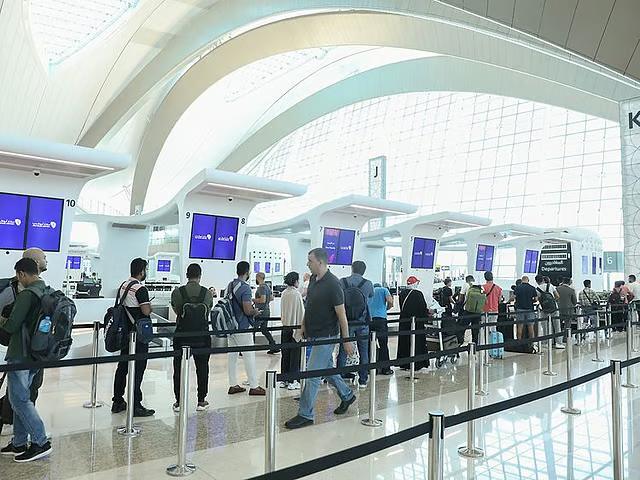
Some Emirates, flydubai and other airline services continue to face delays, cancellations or route changes. Passengers are therefore being advised to check the latest status of their flights directly with their airline before travelling to the airport.
Air Canada has also extended the suspension of its Dubai services until the end of March 2027, citing the situation in the Middle East.
Travel advice: An airport operating normally does not necessarily mean every scheduled flight will depart as planned. Travellers should confirm their flight status with their airline before leaving for the airport.
What happens next around Hormuz?
The key question is whether the current US-backed system for keeping maritime traffic moving can be sustained while Washington and Tehran pursue negotiations.
For now, the system is holding — but it depends on several measures working at the same time, including military protection, alternative export routes, tanker arrangements and emergency logistics.
Any breakdown in one or more of those mechanisms could again put pressure on shipping through the Strait of Hormuz, with potential consequences for oil supplies, freight costs and global energy prices.
For UAE residents, any credible diplomatic breakthrough could quickly ease pressure on oil prices, shipping costs, insurance premiums and airline operations. Conversely, renewed attacks in or around the Strait of Hormuz could quickly reverse the recent improvement in conditions.
What UAE residents should watch today
- Hormuz: Any fresh attack on tankers or significant restriction on shipping could send oil prices sharply higher again.
- Diplomacy: Watch for Washington’s response to Iran’s latest proposal concerning Hormuz and a possible pause in hostilities.
- Oil: Brent crude trading around $105 a barrel is keeping attention firmly on the UAE’s October fuel-price review.
- Flights: Regional aviation remains fluid, so passengers should check directly with their airline before heading to the airport.
- Shipping: Continued US-backed tanker movements would signal that Gulf oil exports are sustaining their recent recovery.
For the UAE, the immediate concern is not a complete shutdown of the Strait of Hormuz. Instead, the region is dealing with a more militarised, costly and complex shipping environment that remains vulnerable to any major escalation.
For residents, that means developments around Hormuz can quickly have consequences beyond the oil market — potentially affecting fuel costs, travel, shipping expenses and the wider cost of goods.

