

ADX says new listings, wider investor access and digital tools are strengthening Abu Dhabi’s capital market.
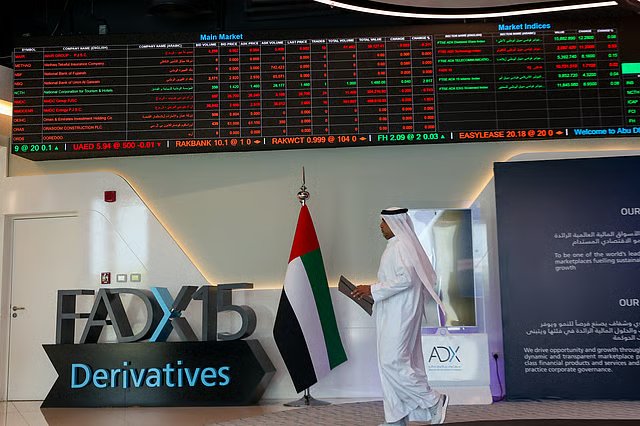
Abu Dhabi: Abu Dhabi has experienced sustained demand from companies seeking to list over the past five years, helping establish its stock exchange as a major global listing venue while attracting growing participation from both retail and international investors.
“We have seen tremendous demand over the last five years in terms of listings. So, we were among the largest listing venues in the world, and that’s driven by a number of reasons, both on the supply and the demand side,” Matthias Büchler, Chief Strategy and Transformation Officer at Abu Dhabi Securities Exchange (ADX), said.
ADX now ranks among the world’s 20 largest stock markets by market capitalisation, with listed companies valued at around Dh2.9 trillion.
Büchler said Abu Dhabi’s strong access to capital has helped support the supply of new listings, while ADX has focused in recent years on making the market more accessible to retail and international investors.
“Today, ADX is fully connected to all the financial centers in the world, and we have seamless onboarding and trading opportunities for all investors, and that makes it ultimately a very attractive market to come and list or to invest in,” he said.
More investors enter the market
Investor participation has continued to expand, with Büchler saying ADX has added another 30,000 investors so far this year.
He also said 97% of the index had recovered following recent regional disruptions, while 55% of listed companies were trading above their share-price levels recorded before the events.
Market participation had already strengthened during the first half of the year. By the end of June, ADX recorded Dh171 billion in trading value, while trading volume reached 50.3 billion shares.
Nearly 3.3 million trades were executed during the six-month period. Institutional investors accounted for 78% of total trading value, while international investors represented 48%.
Foreign investors also made up 77% of all new investor registrations during the first half of the year.
Büchler said recent market activity included a peak daily trading value of Dh3.5 billion, while around Dh50 billion in dividends have been distributed so far this year.
Building resilience before disruption hits
Recent regional tensions put market infrastructure across the region to the test, but Büchler said ADX had spent several years strengthening its systems and operational resilience before the disruption occurred.
“Resilience is nothing you build overnight. It is a long-term effort, and over the last few years, we have taken several measures and investments to build resilience,” said Matthias Büchler, Chief Strategy and Transformation Officer at Abu Dhabi Securities Exchange.
ADX has upgraded its technology infrastructure, adopted international market standards and separated parts of its post-trade operations into an independent legal entity.
The exchange also introduced shorter-term measures during the crisis to help manage market volatility.
Earlier initiatives included upgrading ADX’s core trading platform and establishing AD Clear and AD CSD as separate subsidiaries. The exchange also introduced hybrid cloud capabilities and implemented measures such as revised circuit-breaker floors and updated short-selling protocols.
More listings and products
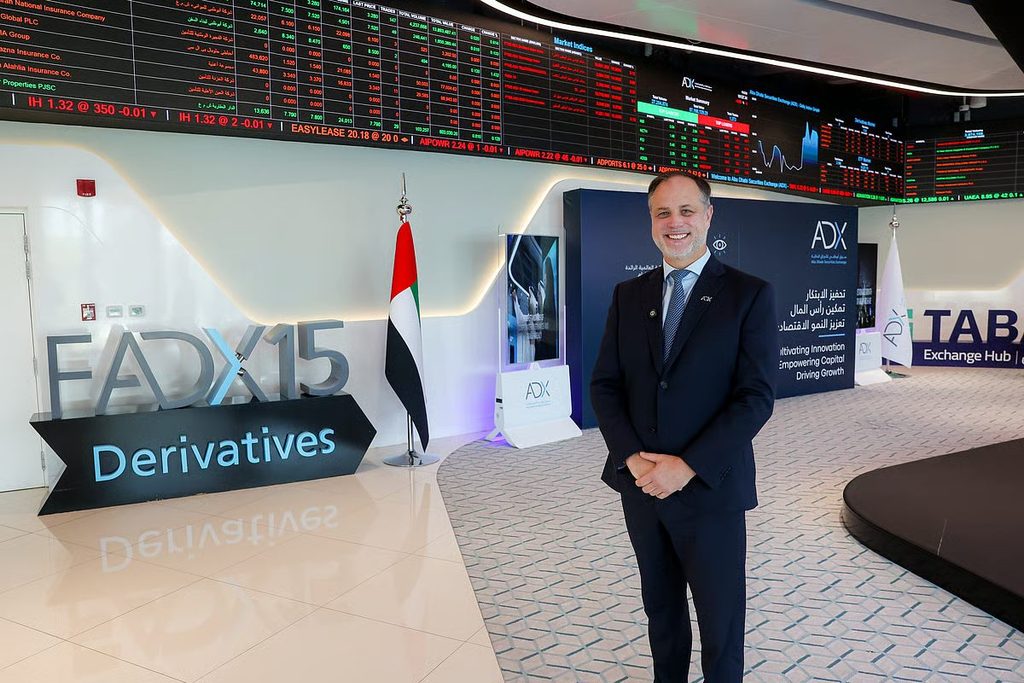
The next phase of ADX’s strategy will continue to focus on boosting market liquidity by attracting more company listings, expanding the range of investment products and increasing the number of investors participating in the market.
“When you talk liquidity in the stock exchange world, it pretty much means that you have more listings and more products, so people can choose a vast array of what they want to invest in,” Büchler said.
Expanding investor diversity is another key part of ADX’s strategy, with the exchange seeking greater participation from both retail and international investors.
ADX has also been strengthening its connections with global markets and financial institutions. HSBC became the exchange’s first foreign General Clearing Member, while Morgan Stanley joined as its first international remote trading participant.
During the first half of the year, ADX added four new listings, including two exchange-traded funds that are dual-listed on the New York Stock Exchange.
ADX turns to tokenisation and AI
Digital infrastructure is also emerging as an important area of focus for the exchange.
Büchler said ADX launched a sandbox with DFNS on September 20 to begin developing tokenisation and digital wallet capabilities in Abu Dhabi.
“It’s a first step in a very exciting journey to future-proof the capital market,” Büchler said.
ADX has also made its market data available through an AI-enabled Model Context Protocol (MCP), allowing investors with their own AI models to access and use exchange data in an AI-ready format.
Büchler said the aim is to make market information more accessible and help investors make informed decisions.
“What is important is that people can make informed decisions, and we as ADX play a vital role in this by providing data to all customers that they can make these informed decisions,” he said.
Looking ahead, ADX’s strategy remains focused on attracting more listings, expanding its range of investment products and broadening its investor base. The exchange also aims to maintain market infrastructure that offers international participants an experience comparable with major global exchanges.
Büchler said these efforts will include attracting more companies to list in Abu Dhabi.
“We hope to have many more IPOs to come from the Abu Dhabi ecosystem and also elsewhere. So that’s a continuation of deepening and broadening our market,” he said.

