

One place in every emirate to discover Emirati heritage, from weaving to Gulf history.
Dubai: Living in the UAE does not necessarily mean getting to know Emirati culture. Many residents can spend years here without sitting down to an Emirati meal, seeing traditional weaving up close or discovering how mapmakers centuries ago depicted the Gulf.
This weekly guide highlights one place in each emirate where residents and visitors can experience a different aspect of Emirati heritage. This week’s picks include a conversation over an Emirati meal in old Dubai, a traditional crafts house in Abu Dhabi and a Sharjah centre preserving centuries of Gulf history.
Dubai: A cultural meal at the Sheikh Mohammed Centre for Cultural Understanding
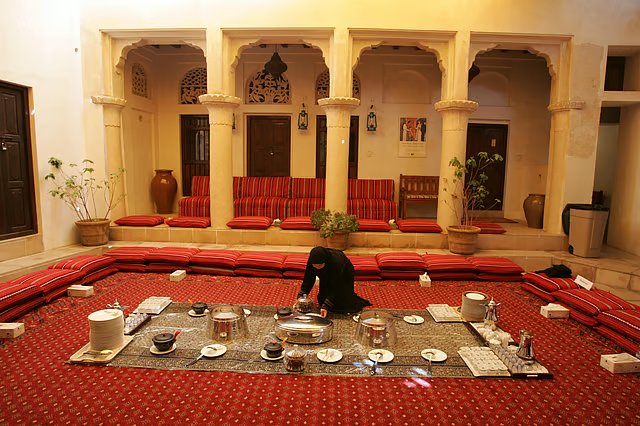
Since 1998, the Sheikh Mohammed Centre for Cultural Understanding has operated under the motto “Open doors, open minds”, with the aim of fostering understanding between Emiratis and the international community. The centre is housed in a restored wind-tower building in the Al Fahidi Historical Neighbourhood.
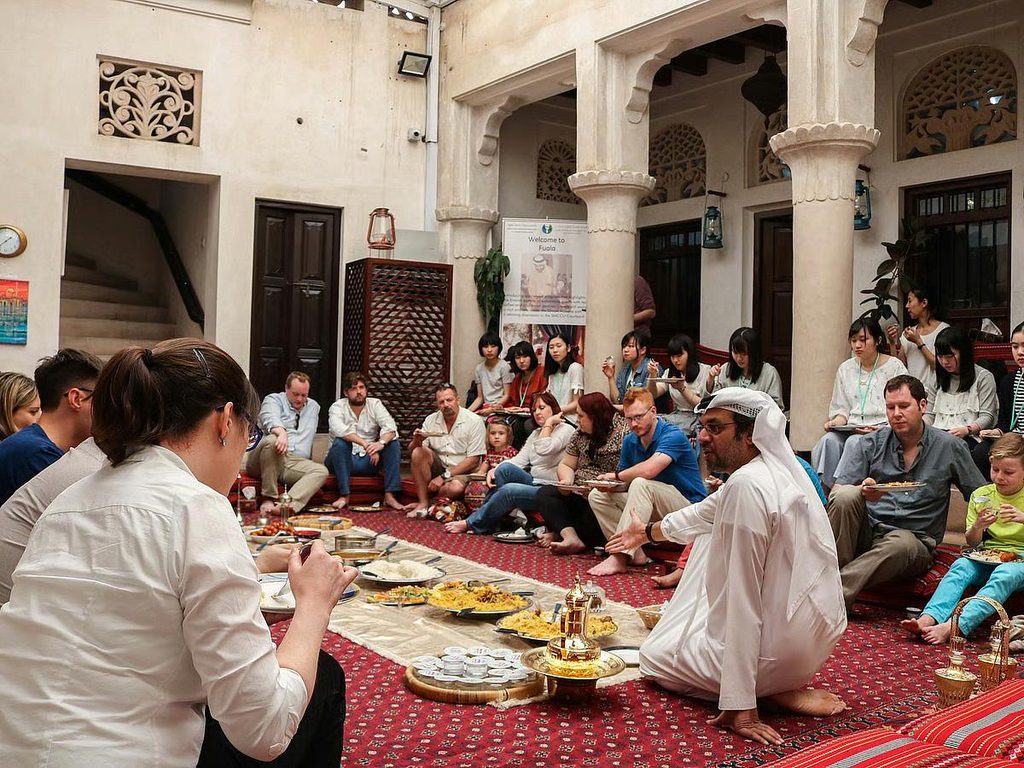
Its cultural meals offer one of the simplest ways to experience that mission. Emirati presenters lead conversations over a traditional spread, discussing Emirati culture, the influence of Islam on local traditions, values and everyday life.
Guests are encouraged to ask questions — including those about aspects of Emirati life they may have wondered about but never had the opportunity to ask.
Cultural meals are offered on most days of the week. Breakfast is served on Mondays and Wednesdays at 9am, while lunch runs from Monday to Thursday at 1pm. From Friday to Sunday, guests can opt for brunch at 10.30am. Tuesdays also feature Fuala, an Emirati tea-time experience, as well as dinner.
Sessions must be booked at least one day in advance, and guests should provide any dietary requirements at least 24 hours beforehand.
When: Breakfast Monday and Wednesday at 9am; lunch Monday to Thursday at 1pm; brunch Friday to Sunday at 10.30am
Where: House 26, Al Musallah Road, Al Fahidi Historical Neighbourhood
Price: Breakfast and brunch Dh130; lunch Dh145; Fuala Dh150; dinner Dh160 per person
Abu Dhabi: The House of Artisans at Qasr Al Hosn
Next to Qasr Al Hosn, the capital’s oldest building, the House of Artisans is dedicated to preserving and promoting traditional Emirati crafts. It opened in April 2021 as part of the Department of Culture and Tourism’s efforts to keep the UAE’s heritage alive.
Three traditional crafts are at the heart of the centre. Al Sadu is a weaving technique practised by Bedouin women for centuries, using camel hair and goat and sheep wool to make tent panels, cushions, carpets and camel accessories.
Talli is a form of ornamental braiding used to decorate women’s clothing, while Khoos involves weaving palm leaves into items such as baskets and mats.
What sets the House of Artisans apart is the opportunity to meet the people keeping these crafts alive. Visitors can meet artisans working in the space and hear directly from them about how each craft is made.
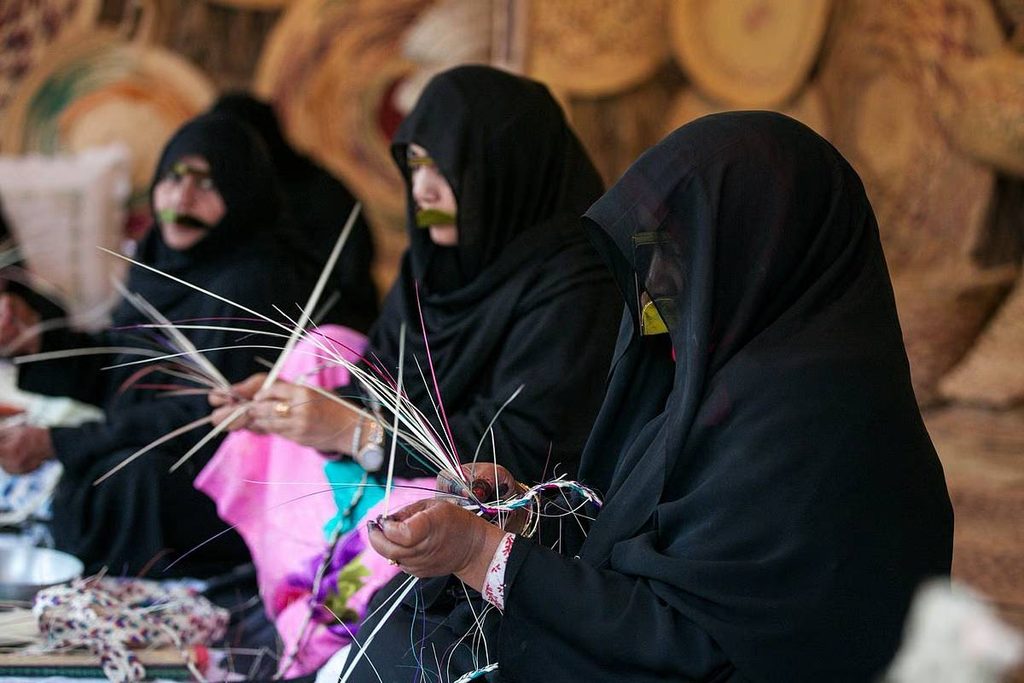
Workshops and live demonstrations are also held, covering traditional crafts such as Al Sadu, Khoos and Talli, alongside activities including doll-making and pottery.
When: Open daily; check the Qasr Al Hosn website for the week’s workshop schedule
Where: House of Artisans, Qasr Al Hosn, Abu Dhabi
Price: Qasr Al Hosn admission is Dh30 for adults; some special workshops are charged separately
Sharjah: The Dr. Sultan Al Qasimi Centre
For anyone curious about how the UAE and the wider Gulf developed, this is the place to start.
The Dr. Sultan Al Qasimi Centre for Gulf Studies is located at the entrance to University City, around 12km from central Sharjah. Much of its collection comes from the private holdings of His Highness Sheikh Dr. Sultan bin Muhammad Al Qasimi, Supreme Council Member and Ruler of Sharjah, which he has assembled over many years.
The collection is spread across several halls. The Geographic Hall traces how knowledge of the Gulf evolved through early printed maps, beginning with the Renaissance. Another hall focuses on the ruling family of Sharjah, featuring rare photographs and a documentary film about the emirate in 1937. Visitors can also see rare coins linked to the region, along with some of the earliest images of the Gulf.
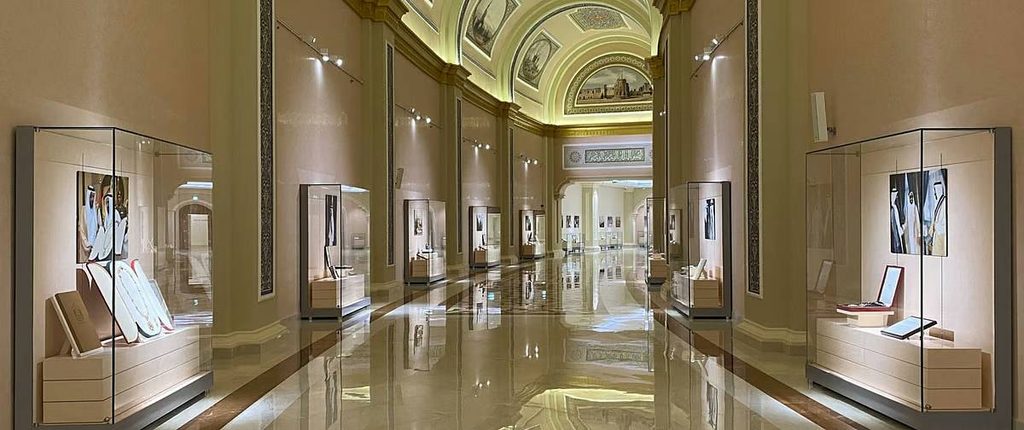
Beyond the exhibition halls, the Centre has an archive library housing rare historical publications on the Arabian Peninsula. Researchers can access more than 1.5 million historical documents and records.
When: Weekdays, daytime; call ahead to confirm opening hours
Where: Northern entrance of University City, Sharjah
Price: Free

