

Fatema Al Nuaimi on ADNOC Gas’ resilience, LNG expansion and lessons from past crises.
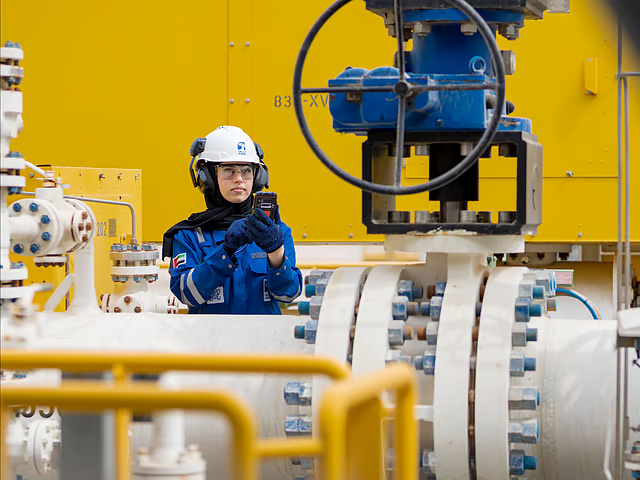
Abu Dhabi: In April, ADNOC Gas’s Habshan facility came under attack, putting the company’s crisis-response capabilities to the test. For CEO Fatema Al Nuaimi, the priority in those crucial first hours was clear: protecting employees before anything else.
“What I remember most from those first hours is that our response protected our people. That had to come before everything else,” she says.
It is a sentiment that also reflects the UAE’s broader experience in recent years — a country that has navigated major disruptions, from the pandemic to regional conflict, while maintaining its economic momentum and development trajectory.
ADNOC Gas, the world’s largest listed integrated gas processing company and one of the UAE’s most strategically important businesses, has been no exception. Under CEO Fatema Al Nuaimi, the company has continued to advance an ambitious growth strategy despite a more complex and challenging operating environment.
Built beforehand
Al Nuaimi is careful not to portray resilience as something created in the heat of a crisis.
“Resilience was not something we created after the attack. Much of it had been built quietly beforehand through preparation, strong teams, and a culture that allowed people to act when it matters,” she says.
That preparation was put to the test during the Habshan incident. Al Nuaimi says ADNOC and ADNOC Gas teams worked beyond expectations to protect one another while maintaining the energy supply the UAE relied on every day.
Behind that operational response was a fundamental responsibility: keeping homes cool, electricity flowing, refrigerators running and industries operating across the country.
ADNOC Gas supplies more than 60 per cent of the UAE’s sales gas requirements and almost all of the gas required by major domestic industries, underscoring the company’s critical role in the country’s energy system.
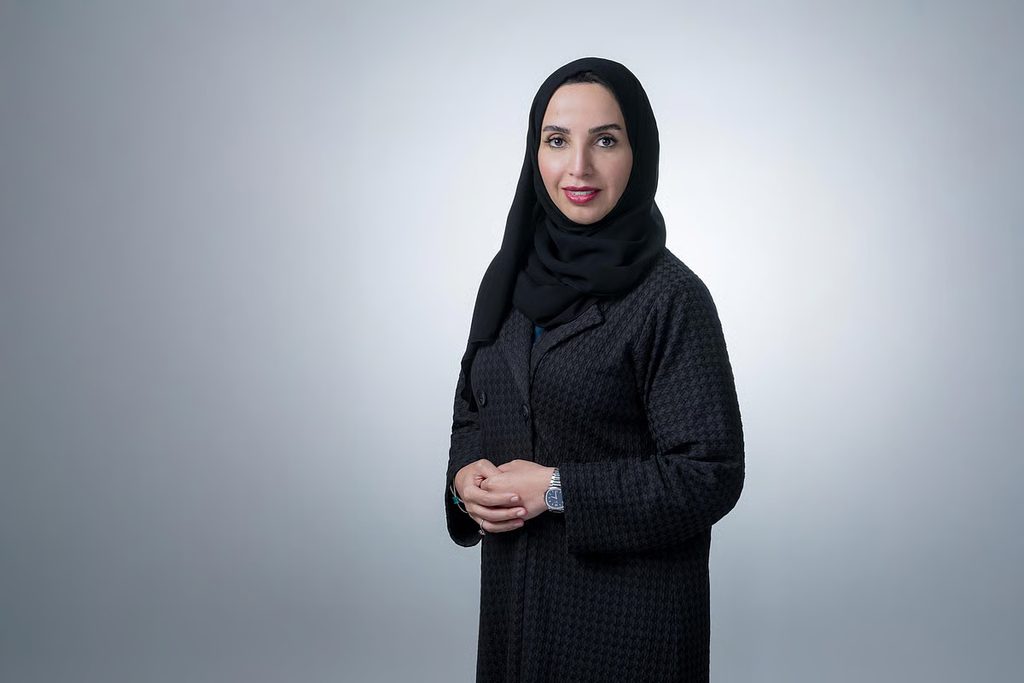
Al Nuaimi says ADNOC Gas teams worked “hand in hand” with power, water and industrial customers throughout the disruption. She says the experience reinforced the company’s vital role in supporting the UAE’s energy needs and powering the country’s continued progress.
By the numbers
In the second quarter, ADNOC Gas reported net income of $665 million, exceeding the company’s own guidance range of $400 million to $600 million. During the same period, the company took final investment decisions and awarded $8.2 billion in EPC contracts for Phases 2 and 3 of its Rich Gas Development project.
In May, ADNOC Gas paid a $3.6 billion dividend for 2025, making it the largest dividend payout by an issuer on the Abu Dhabi Securities Exchange that year and exceeding the company’s original commitment by more than $500 million.
Net income increased from $4.72 billion in FY2023 to $5.2 billion in FY2025, while dividends rose from $3.25 billion to $3.6 billion over the same period. The company aims to maintain this momentum through its progressive dividend policy, which targets 5% annual dividend growth through 2030.
From IPO onward
ADNOC Gas was listed on the Abu Dhabi Securities Exchange in 2023, marking a major milestone in its transformation into a publicly traded integrated gas company.
Over the three years since the listing, Al Nuaimi says the business has undergone a fundamental transformation. “In the last three years, we have evolved from a collection of world-class operating assets into an integrated, publicly listed gas company with a clear value proposition,” she says, noting that the company has become one of the largest listed businesses on the exchange.
She says the company’s strategy is centred on turning its world-scale resources into stronger commercial outcomes, with a sharper focus on creating value from every molecule, deepening customer relationships and delivering sustainable long-term returns for shareholders.
Balancing speed
Al Nuaimi says ADNOC Gas’ value chain has a far more direct impact on everyday life than many people realise. “Every aluminium smelter, every cement plant, every air conditioner in the country: there is a molecule of ours behind it,” she says, highlighting the company’s role in supporting industries and essential services across the UAE.
ADNOC Gas is now pursuing one of the industry’s largest gas expansion programmes, targeting a 45% increase in volumes over the next four years, supported by an estimated $28 billion in investment.
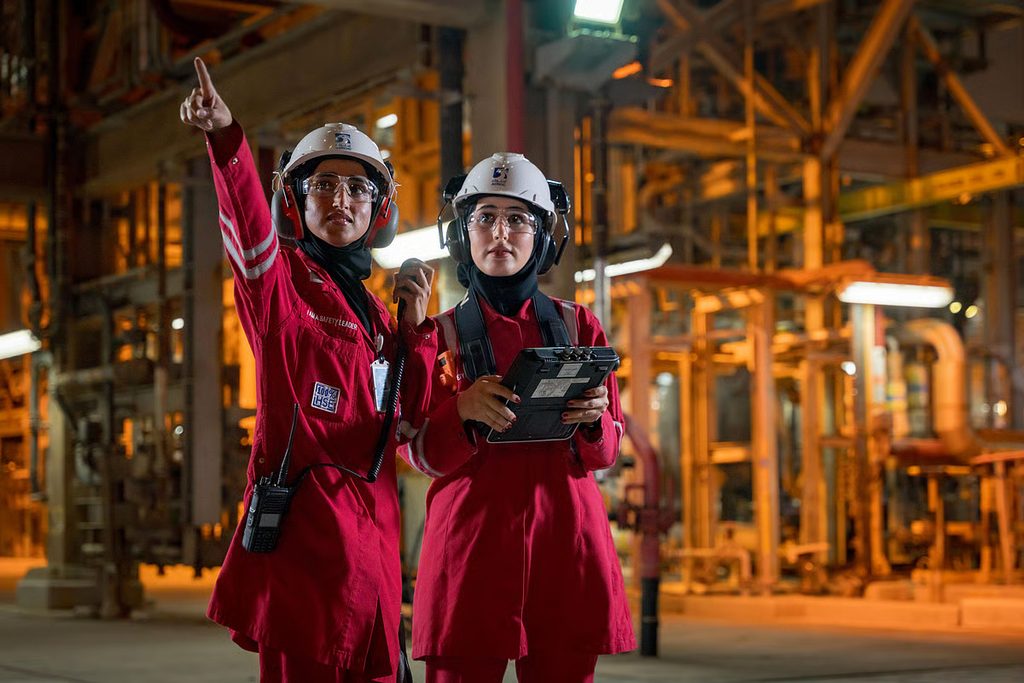
At the centre of this expansion is Ruwais LNG, which will more than double the company’s LNG capacity by adding 9.6 million tonnes per annum. The facility is also being developed as the first LNG project in the Middle East and North Africa powered by clean electricity. ADNOC Gas is targeting 60% EBITDA growth by 2030, compared with 2023 levels.
Al Nuaimi does not see speed and discipline as opposing priorities. Instead, she argues that strong discipline is what allows the company to move faster while managing risk and protecting long-term value.
“Speed and discipline are not competing objectives. In fact, discipline is what enables us to move faster and with greater confidence,” she says. “Growth creates opportunity, but discipline is what turns that opportunity into lasting value.”
Technology and global ambitions
Technology is playing a central role in ADNOC Gas’ approach to improving efficiency and operational discipline. The company is deploying aerial drones, four-legged inspection robots and tank-climbing crawlers across its facilities, with the technology expected to reduce inspection costs by up to 75% and complete some inspections up to 15 times faster. It also allows workers to stay away from potentially hazardous environments, with ADNOC Gas estimating the resulting savings at more than $900 million.
However, Al Nuaimi stresses that technology alone will not determine the company’s future. She believes the real advantage will come from employees who can use emerging technologies effectively to improve decision-making, tackle complex challenges and generate greater value.
ADNOC Gas’ international reach is also expanding, with its LNG, LPG and naphtha products now reaching more than 20 markets across Asia, Europe and the Middle East.
Al Nuaimi describes Ruwais LNG as transformational for both ADNOC Gas and the UAE, saying the project will provide the scale, customer relationships and portfolio flexibility needed to establish the company as a significant player in the global LNG market.
Visibility matters
Al Nuaimi, a chemical engineer by training who moved early into marketing and research, reflects on how access to senior technical positions has evolved for women in the energy sector.
“When I began my career, it was far less common to see women across the full energy value chain, particularly in operational, engineering and technical roles,” she says, speaking on Emirati Women’s Day.
The figures she highlights point to significant progress. Across the ADNOC Group, women now occupy 26.4% of senior management positions and account for around 25% of new UAE National hires. Female representation across the workforce has also doubled since 2016, with particularly strong growth in engineering, operations and artificial intelligence roles.
In 2025, nearly 150 engineers graduated from ADNOC’s AI Accelerators Programme, with Emirati women making up more than 40% of the cohort. At ADNOC Gas, approximately 95% of women working in technical roles are Emirati.
“A young woman cannot aspire to a job she has never seen anyone like her do,” Al Nuaimi says. “When young women see others leading plants, managing complex operations, developing new technologies or running major businesses, they can begin to imagine themselves taking the same path.”
She says the focus should go beyond simply increasing the number of women in the workforce. The priority, she explains, is ensuring women receive the operational experience, challenging assignments and mentorship needed to progress into leadership positions.
Advice for others
Al Nuaimi says her approach to leadership has evolved significantly since the early stages of her career.
“Earlier in my career, I thought leadership was about being the person with the answer. Today, I see it very differently,” she says. “Strong leaders don’t create followers. They create decision-makers.”
Her approach to uncertainty has also evolved, a theme that runs through both the Habshan response and ADNOC Gas’ broader growth strategy.
“Leadership is not about waiting for perfect information,” she says. “It is about understanding what matters most, making the best decision possible with the information available and having the agility to adapt as circumstances change.”
Her advice to Emirati women entering the energy sector and other traditionally male-dominated industries is straightforward: build expertise, remain curious and have the confidence to embrace opportunities even before feeling fully prepared. She believes meaningful growth often happens beyond one’s comfort zone.
Al Nuaimi also credits the UAE’s leadership for creating an environment in which women are empowered to contribute and take on leadership roles. She expressed particular appreciation for Dr Sultan Al Jaber, ADNOC Gas Chairperson, UAE Minister of Industry and Advanced Technology, Managing Director and Group CEO of ADNOC, Executive Chairman of XRG and Chairman of Masdar.
What’s next
For a company overseeing a $28 billion growth programme, navigating a changing domestic energy landscape and expanding its international footprint, the events of April remain more than a footnote. They serve as a continuing reference point for how ADNOC Gas approaches resilience, growth and leadership in an increasingly complex operating environment.
Al Nuaimi’s account of that period — prioritising people, relying on preparation built well before the crisis and keeping the UAE’s industries running — also reflects how ADNOC Gas plans to navigate the years ahead: moving quickly without compromising discipline, expanding globally while keeping its focus firmly rooted in the UAE.

