

From no traditional homework for young pupils to new rules on digital tools, here’s what UAE families need to know before schools reopen.
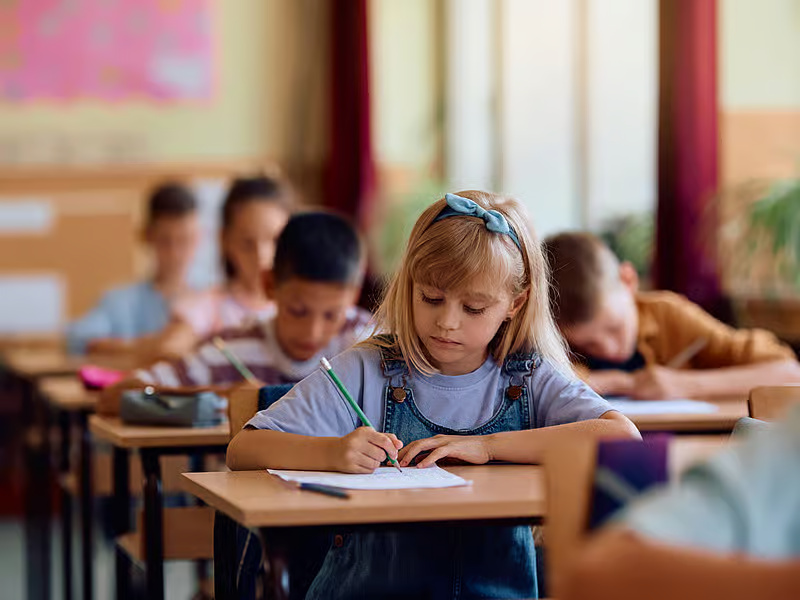
More than 1.277 million students are set to return to over 1,180 public and private schools across the UAE on August 31, as the 2026-27 academic year brings a range of changes to classroom learning, assessment, technology use and school operations.
Ahead of the new term, the Ministry has opened 11 new schools and educational complexes, deployed 5,810 school buses and distributed eight million textbooks. A total of 26,700 new students have also enrolled in public schools.
Education Minister Sarah Al Amiri said preparations went beyond school buildings, buses and textbooks, focusing instead on developing a more flexible and efficient education system rooted in national identity and equipped to keep pace with advances in science and technology.
Here is what is changing for students, teachers and parents in the 2026-27 academic year.
National Education Charter moves into school life
The Ministry is putting the National Education Charter into practice as a unified national vision for education. Launched by President Sheikh Mohamed bin Zayed Al Nahyan and the UAE rulers, the Charter sets out the values, qualities and future-ready competencies the education system aims to develop in students.
For the new academic year, the Ministry will launch a back-to-school campaign under the theme “Guided by the Charter, Building Tomorrow”. The campaign aims to bring the Charter’s principles into everyday school life while strengthening cooperation between schools, families and the wider community.
Implementation will follow six key pathways, including linking the Charter’s principles to educational outcomes, empowering teachers to apply them, incorporating them into daily school practices, reinforcing them through classroom and extracurricular activities, aligning them with student conduct policies and encouraging families to support their application.
No traditional homework for Kindergarten to Grade 2
Traditional homework will be removed for students from Kindergarten through Grade 2. The Ministry said the move reflects the developmental needs of younger children and aims to make more effective use of classroom learning while creating a healthier balance between school and family life.
Instead of routine assignments, families will be encouraged to support daily reading at home. The initiative is intended to strengthen early literacy, language and cognitive development while encouraging curiosity and enjoyment of learning without making homework a burden.
Arabic language assessment expands to all Grade 1 pupils
The Ministry will introduce the second phase of its Arabic language skills assessment following a pilot programme conducted in 100 public and private schools last year.
The next phase will cover all 19,000 Grade 1 students in 162 public schools and 11,000 Grade 1 students in 130 private schools.
The assessment aims to identify students’ Arabic-language abilities at an early stage, establish a clear baseline and provide schools with the information needed to offer appropriate support from the beginning of each child’s educational journey.
The Ministry described Arabic as a key national and educational priority and said efforts will continue to strengthen students’ proficiency in the language.
Digital tools to be regulated for Grade 6 public-school students
The Ministry is extending its Regulating the Use of Digital Tools in Education project to all Grade 6 students in public schools.
The move follows a study conducted during the previous academic year involving 2,500 students across nine public schools. Researchers compared two groups to assess the effects of regulating digital-tool use in education.
Preliminary findings showed that non-digital classrooms recorded improvements in academic performance, particularly in mathematics, science and Arabic. The study also found better student behaviour and stronger classroom concentration.
The Ministry said the policy aims to establish a balance between technology use and the development of fundamental skills.
Digital tools will continue to form part of education, but their use will be guided by educational standards designed to support academic performance, critical thinking, cognitive development, classroom interaction and discipline.
New assessment approach for Cycle 3 students
For Group A subjects in Cycle 3, assessment will shift to a 50:50 split between school-based and central assessments. The Ministry said the revised weighting is intended to provide a more comprehensive picture of students’ performance throughout the academic year while maintaining a unified national framework.
Teachers and school teams will also conduct diagnostic assessments to identify learning gaps at an early stage. Schools will use the findings to improve lesson planning and provide targeted support, including interventions and reading plans tailored to individual student needs.
Project-based learning expands nationwide
The Ministry is expanding its Project-Based Learning and Assessment initiative to more than 129,000 students across 366 schools nationwide.
A new integrated project for Grade 7 students will combine Arabic, English, mathematics and science in a single assignment. The approach aims to help students understand connections between different subjects, apply their knowledge in practical settings and develop skills needed for the future.
The programme will also provide teachers with additional practical and varied methods to assess students’ knowledge and skills.
Public and Ministry-licensed private schools to be evaluated
The Ministry will begin a programme to evaluate all public schools and private schools licensed by the Ministry over the next two academic years, starting in the first semester of 2026-27.
The evaluations will assess institutional and educational performance against approved national standards, identify strengths and areas requiring improvement, and help schools develop and implement sustainable improvement plans aimed at enhancing education quality and learning outcomes.
Teacher and school-leader training expands
More than 24,000 teachers, school leaders and specialists will participate in a Specialised Training Week, featuring more than 80 training programmes and workshops. A separate programme will provide support to more than 1,700 school leaders.
The broader professional-development package includes the National AI Capacity-Building Programme, developed with Hamdan Bin Mohammed Smart University; the Promising School Leaders Project; the Afaq programme with Emirates College for Advanced Education; the Comprehensive Capacity-Building Programme for Educational Leaders; the Professional Fellowship Programme; and the Certified Internal Trainers Programme.
The Ministry said the initiatives reflect its belief that investing in teachers and school leaders is ultimately an investment in the future of the UAE’s education system.

