

UAE reaches 51% of mangrove planting goal, with nearly 23,000 artificial caves supporting marine life.
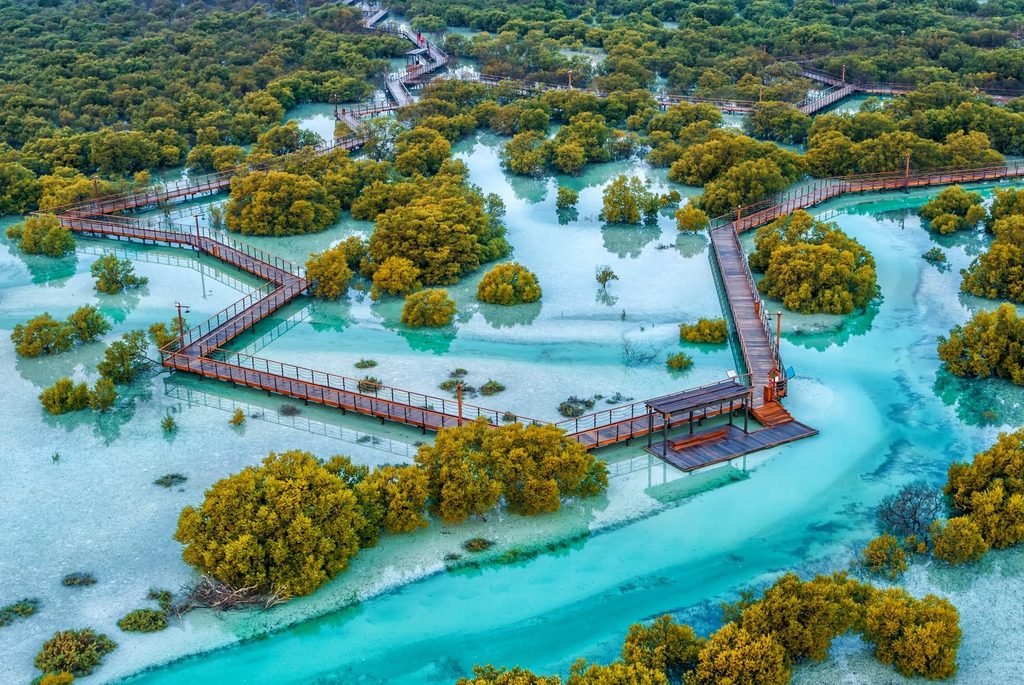
The UAE has crossed the halfway mark in its ambitious plan to plant 100 million mangrove trees by 2030, as the country expands efforts to restore marine ecosystems, protect coastlines and strengthen biodiversity.
The UAE has now achieved 51 per cent of its national mangrove planting target, according to Hiba Obaid Al Shehhi, Assistant Undersecretary for the Biodiversity and Aquatic Life Sector at the Ministry of Climate Change and Environment, as reported by Al Bayan.
Al Shehhi said marine conservation is no longer limited to protecting existing natural resources. Increasingly, it involves restoring degraded ecosystems, improving their resilience to climate change and ensuring that marine habitats remain sustainable for future generations.
The UAE previously increased its 2030 mangrove planting target from 30 million to 100 million trees, a move Al Shehhi said reflects the growing importance of these coastal ecosystems.
Mangrove forests serve as important breeding and nursery grounds for fish and other marine species. Expanding and restoring them can therefore help strengthen coastal protection, support biodiversity and contribute to food security, she said.
UAE aims to increase marine protected areas to 30%
Marine and coastal protected areas currently cover around 12 per cent of the UAE, according to Al Shehhi. Authorities are assessing how effectively existing protected areas are performing while exploring opportunities to expand them.
The UAE currently has 16 protected areas, with national plans aiming to increase the share of marine protected areas to 30 per cent by 2030, in line with the National Biodiversity Strategy 2031.
The Ministry’s artificial cave programme, launched in 2016, is another part of the country’s marine conservation efforts. The environmentally friendly structures create artificial habitats that provide breeding and nursery grounds for fish while helping restore damaged marine ecosystems.
By the end of 2025, around 22,982 artificial caves had been deployed through the programme and related projects. The installations are located in areas including Ras Dhadna Reserve, Sharjah, Umm Al Quwain, Ajman, Ras Al Khaimah and the UAE’s east coast.
Over time, the artificial structures develop into functioning marine habitats and nurseries for juvenile fish and other organisms. This helps support fish populations and contributes to the long-term sustainability of the UAE’s fishing industry.
1.5 million coral colonies planned
Coral reefs are another key focus of the UAE’s marine restoration efforts.
The Ministry has conducted research on 24 coral species along the country’s coastline, including mapping their geographical distribution. The research identified 210 coral sites and recorded more than 55 species of hard coral.
In Fujairah, a coral gardens project launched in partnership with other organisations aims to establish 1.5 million coral colonies over five years, covering an area of more than 300,000 square metres.
Previous coral rehabilitation projects have cultivated around 66,173 coral pieces across approximately 22,827 square metres of UAE coastline since 2018.
Al Shehhi said these initiatives reflect a broader shift from simply protecting existing coral reefs towards actively restoring degraded habitats and strengthening their natural ability to regenerate.
Fishermen as ‘eyes of the environment’
The Ministry is also drawing on fishermen’s experience and observations when developing marine conservation policies.
Al Shehhi described fishermen as the “eyes of the environment at sea”, noting that their daily presence on the water gives them a valuable role in detecting changes in marine conditions and ecosystems.
The Ministry regularly meets with fishermen’s associations and conducts field visits to discuss fishing regulations, breeding seasons and operational challenges.
Al Shehhi said maintaining a balance between protecting fish stocks and preserving fishing as a livelihood remains central to managing the UAE’s living aquatic resources.
Aquaculture supports food security
Aquaculture is also emerging as an important part of the UAE’s food security strategy. The country’s aquaculture sector has a production capacity of 2,572 tonnes, with 18 registered marine aquaculture farms operating across the UAE.
Al Shehhi also stressed the importance of Gulf-wide cooperation, noting that marine ecosystems and fish populations do not stop at national borders. Coordinated approaches are therefore needed to manage conservation efforts and fishing regulations across the region.

