

Weather patterns varied across the emirate, with thunderstorms, rain and dusty winds affecting inland areas while central Abu Dhabi saw little rainfall. More showers and strong, dusty winds are forecast in the coming days.
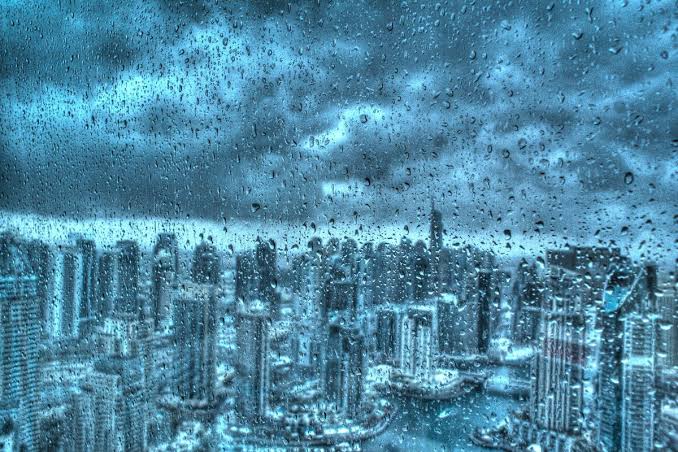
For residents in parts of Abu Dhabi, Friday’s weather warnings may have seemed confusing. While rain, thunderstorms, strong winds and dust affected some parts of the emirate and prompted precautionary closures by authorities, downtown Abu Dhabi — including the Corniche — largely saw little change.
Instead, residents experienced the familiar humid heat, dusty skies and greyish sea that have characterised much of the summer.
According to Maryam Al Shehhi, head of marine meteorology at the National Centre of Meteorology (NCM), the reason was the location of the weather system, which was concentrated mainly over Abu Dhabi’s inland and southern areas rather than the capital.
“During summer, the low-pressure systems that affect us come from the east and southeast,” Al Shehhi explained, pointing to areas around Al Ain and the mountains where convective clouds begin to develop.
The combination of intense surface heat, high humidity and much cooler air at higher altitudes creates atmospheric instability. This allows clouds to develop rapidly and can lead to thunderstorms, rainfall and strong winds.
But the resulting weather can be highly localised, meaning one part of Abu Dhabi can experience thunderstorms and rain while another remains dry.
Why some areas get rain while Abu Dhabi city stays dry
Al Shehhi said low-pressure systems are often present near the surface during summer, but it is less common for the same system to extend into the upper atmosphere. When both conditions occur together, the resulting instability can produce the dramatic clouds, rainfall and strong winds seen across parts of the emirate.
The same process can also trigger sudden bursts of dust. As rain falls through a cloud, powerful downdrafts can develop. These descending air currents hit the ground and spread outward, lifting dust from the surface and creating sudden hazy conditions around rain clouds.
Unlike normal horizontal winds, these currents initially move vertically as air descends from the cloud before spreading across the ground.
The strongest activity is generally concentrated inland, with Al Ain and areas around the Hajar Mountains among the locations that regularly experience summer rainfall.
Within Abu Dhabi emirate, areas such as Mohamed bin Zayed City, Shakhbout City, Al Shamkha and Al Shawamekh, along with other inland locations, can be affected when the weather system extends further west.
The Al Dhafra region, including areas around Liwa, can also receive summer rain as the system moves from the south.
This explains why residents in one part of Abu Dhabi can wake up to thunderstorms and rain while people just a few dozen kilometres away experience little more than humidity and haze.
Rain can arrive later in Abu Dhabi’s inland areas
Al Shehhi said the timing of summer rainfall also varies across the UAE.
The eastern mountains can experience convective activity earlier because elevated terrain heats up quickly, helping air rise and clouds develop.
In Al Ain and Abu Dhabi’s inland areas, the process can take longer. On Friday, for example, rain began in some locations at around 6.30pm, after the land had warmed sufficiently to trigger the rising air needed for convection.
“It takes time for the ground to heat up,” Al Shehhi explained, describing how air continues to rise until conditions become favourable for convective cloud formation.
More rain possible in the coming days
The latest NCM forecast indicates that the unsettled summer pattern is set to continue.
On Saturday, August 22, conditions are expected to be fair to partly cloudy, with convective clouds potentially developing over eastern, southern and western areas during the afternoon and bringing rainfall.
Winds will generally be light to moderate from the southeast to northeast but could become fresh to strong at times, reaching 50km/h and causing blowing dust and sand.
Sunday could bring another chance of afternoon rainfall over eastern areas, with winds reaching 40km/h and potentially causing blowing dust.
On Monday, convective clouds may develop over eastern areas, while Tuesday could bring rain-producing clouds over eastern and southern parts of the country. Winds may reach 40km/h.
By Wednesday, eastern and southern areas could again see afternoon convective clouds associated with rainfall, with winds reaching 45km/h and stirring up dust and sand.
The Arabian Gulf and Oman Sea are expected to remain slight throughout the forecast period. Saturday morning could also bring increased humidity to some coastal areas, with a possibility of fog or mist.
Don’t expect summer rain to turn the desert green
Despite the frequency of some summer showers, Al Shehhi said they are generally not enough to make the UAE’s desert landscape turn green.
Summer rainfall tends to be too brief and localised to provide the sustained moisture vegetation needs.
“For the land to become green, we need light rain that continues,” she explained, describing a pattern in which lighter clouds pass over an area, gradually deliver rain and return again the following day.
A sudden, intense summer shower does not provide the same sustained moisture.
Rain has been frequent in some areas since mid-July
Al Shehhi said the recent rainfall is not an isolated spell, with some inland and eastern parts of the UAE experiencing rain almost daily since mid-July.
“From mid-July until now, there have been areas where it rains almost every day,” she said, pointing to Al Ain and other inland locations, as well as areas towards the east and north including Al Shawieb, Al Hayer, Al Madam, Al Dhaid, Falaj Al Mualla and parts of Al Dhafra.
However, the showers have remained highly localised. As a result, Abu Dhabi city residents may see little or no sign of rainfall even when thunderstorms are occurring elsewhere in the emirate.
Humidity may briefly ease after rain
For residents dealing with Abu Dhabi’s familiar summer humidity, there can be some temporary relief after a shower.
Al Shehhi said the air can sometimes feel slightly drier following rainfall. Before a summer shower, the combination of heat and humidity can create an especially oppressive, stuffy sensation. After the rain, that feeling may ease briefly.
“Before it rains, you always get that heat and stuffiness,” she said. “Then, suddenly, the rain comes and the air becomes a little drier.”
The relief is unlikely to last for long, however. Temperatures are expected to rise again after the current dip, with conditions fluctuating through August and September before a more noticeable seasonal decline.
The latest NCM bulletin puts Saturday’s maximum temperatures at 38–43°C along the coast and islands, 44–48°C in inland areas and 33–37°C in the mountains.
No more 50°C days expected
While the heat is far from over, Al Shehhi said residents should not expect temperatures to return to the 50°C mark for the rest of the summer.
Temperatures could climb back to around 48–49°C after the recent dip before fluctuating again.
“By the end of August, hopefully, it will be around 46–47°C,” she said, adding that September could remain around 46–47°C before temperatures begin falling more noticeably in October.
By October, temperatures are expected to ease towards 41–43°C, while November should bring another significant decline, with highs around 39°C.
Temperatures will continue to fall through the cooler winter months, eventually dropping below 30°C.
Al Shehhi also noted that the UAE’s extreme 50°C temperatures arrived later than usual this year.
“Usually, we start reaching 50°C around the end of May,” she said. “But this year, May, June and July passed without reaching 50°C. We reached 50°C in August.”

