

US-Iran tensions escalate as global shipping reroutes amid the widening Hormuz crisis.
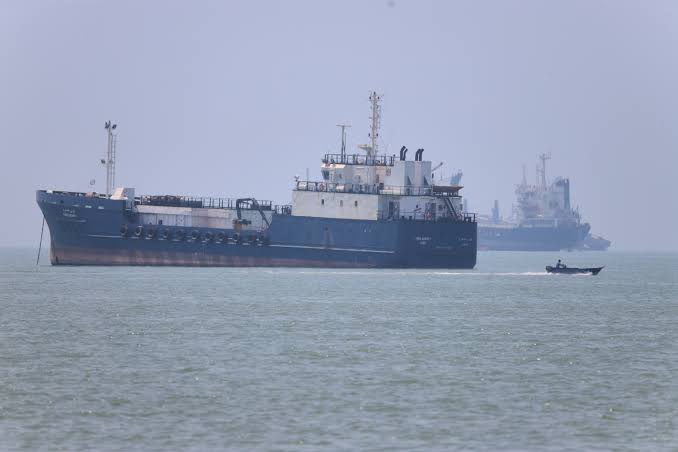
The security situation in the Strait of Hormuz remains highly dangerous, with maritime authorities warning that a deliberate hostile attack is “highly likely” in the coming days. The warning comes shortly after another tanker was targeted in the strategic waterway.
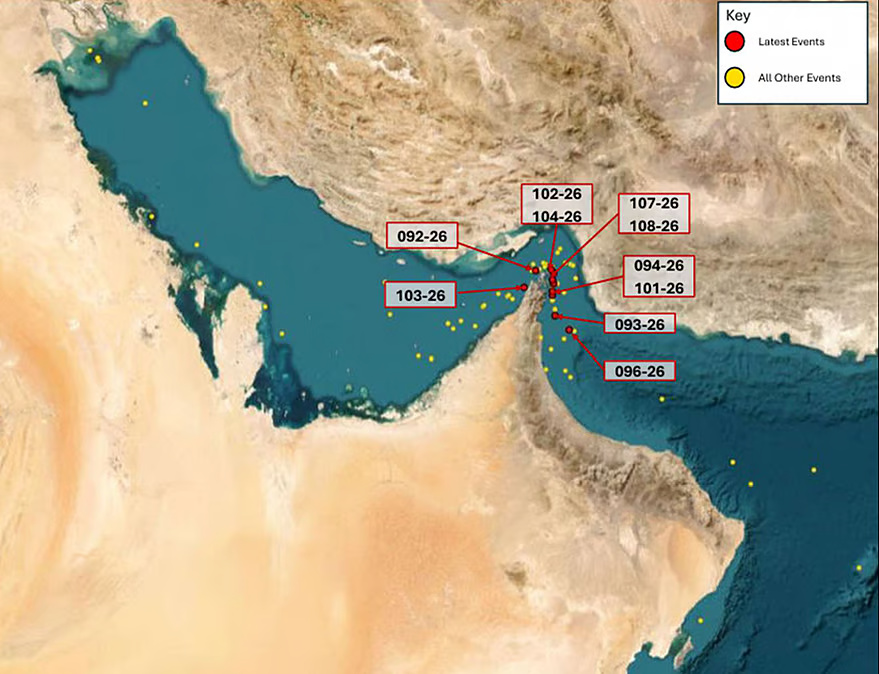
The latest assessment from the Joint Maritime Information Center (JMIC) follows a tanker attack on August 8, which was recorded by UK Maritime Trade Operations (UKMTO) as incident 108-26. The attack is the latest in a series of confirmed incidents, bringing the total to 84 since March 1.
Ship traffic has nearly come to a standstill
One of the clearest indicators of the escalating security situation is the sharp decline in tanker traffic through the Strait of Hormuz.
Independent vessel-tracking data cited by the JMIC shows that tanker movements in both directions have fallen to single-digit levels, highlighting the extent to which the crisis is disrupting maritime traffic.
Between August 6 and 8, only 40 US-facilitated transits were recorded through the Strait of Hormuz—a sharp decline from the roughly 138 vessels that typically passed through the waterway each day in 2025. On August 8 alone, just eight cargo vessels crossed the strait: six eastbound and two westbound, along with two tankers.
Traffic trends
Strait of Hormuz
- Historical average: About 138 vessels per day, based on 2025 figures.
- August 6–8: 40 US-facilitated transits were recorded.
Bab El Mandeb
- Historical average: About 61 vessels per day, based on 2023 figures.
- August 6–8: 82 vessel transits were recorded.
Iran’s military presence and the threat of mines
Iran’s Islamic Revolutionary Guard Corps (IRGC) continues to monitor and hail merchant vessels transiting the area, while also conducting drone overflights and targeted surveillance, according to the JMIC.
The security threat extends to the southern Omani approaches, particularly around Limah, Khasab and Kumzar, where projectile strikes and near-miss explosions have continued to be reported.
Adding to the risks, the JMIC warns that drifting or uncharted mines remain a potential threat in and around the Strait’s shipping lanes. Persistent GPS and navigation signal interference (GNSS disruption) is also being reported across the Strait of Hormuz, the Gulf of Oman and the Arabian Gulf, further complicating safe maritime passage.
An ADNOC tanker comes under attack
The threat is no longer theoretical. One of ADNOC’s vessels was attacked in the Strait of Hormuz early on August 8.
No injuries were reported among those on board, and a fire that broke out during the incident was quickly extinguished. The vessel was able to continue its voyage and later returned safely to Fujairah. UKMTO recorded the incident as an attack involving an unidentified tanker.
US Navy steps up enforcement
As tensions continue to escalate, the US military has increased its presence in the Gulf of Oman as part of ongoing efforts to enforce the blockade.
According to US Central Command, as of August 9:
- 53 commercial vessels have been redirected.
- 2 vessels have been disabled.
- 2 vessels have been boarded for compliance checks.
Vessels operating in the area are being instructed to respond promptly to military radio calls and keep their AIS tracking systems switched on, unless there is a legitimate security reason to turn them off.
The threat extends beyond Hormuz
The Strait of Hormuz is not the only maritime chokepoint facing heightened risks. JMIC’s broader assessment identifies several other key waterways where security threats remain elevated.
Regional maritime threat levels
- Strait of Hormuz — Severe: Recent Iranian attacks and a high likelihood of further hostile action. Mine and navigation risks also remain.
- Gulf of Oman — Substantial: A significant possibility of attack, with US naval enforcement and electronic interference continuing.
- Gulf of Aden — Substantial: Piracy and ongoing Houthi activity remain key concerns.
- Bab el-Mandeb/Southern Red Sea — Substantial: Continued Houthi attacks on commercial shipping are keeping the threat level elevated.
- Arabian Gulf — Moderate: Navigation interference and residual attack risks persist.
- Arabian Sea — Moderate: Conflict-related risks remain, although no recent attacks have been reported.
- Northern Red Sea/Suez Canal — Moderate: Maritime operations remain broadly normal, but GNSS and other forms of electronic interference are possible.
- Somali Coast/Somali Basin — Moderate: Piracy remains a potential threat despite seasonal monsoon conditions.
- Eastern Mediterranean — Low: No sustained targeting has been reported, although localized navigation interference continues.
What to expect in the coming days
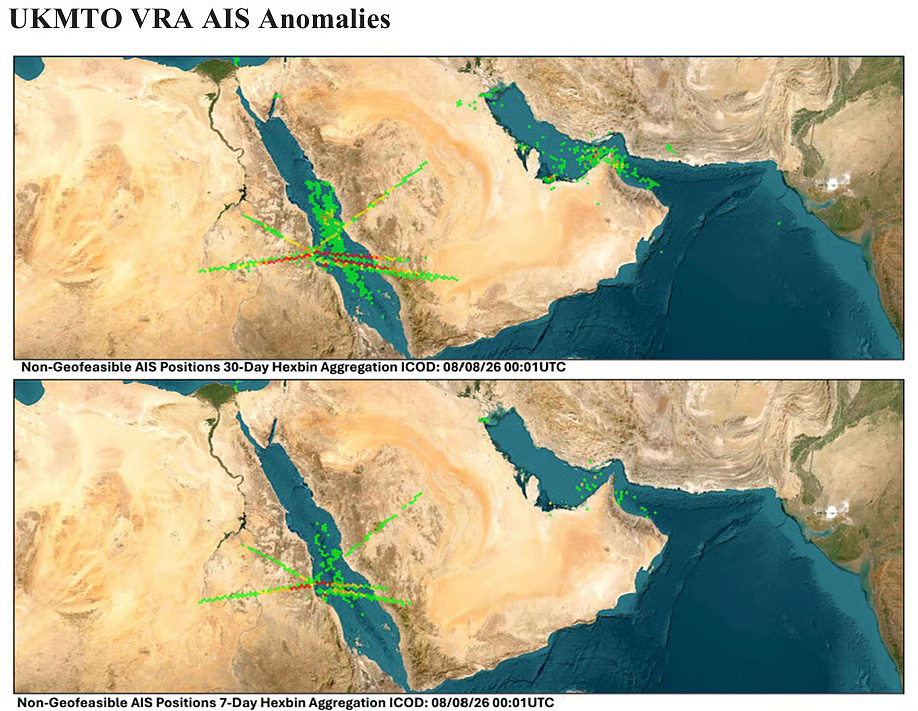
JMIC expects commercial traffic through the Strait of Hormuz to remain significantly reduced over the next 24 to 48 hours.
Vessels operating with AIS switched on may receive radio instructions directing them to divert toward the northern route controlled by Iran.
Vessels should also expect a heightened US naval presence, continued monitoring by Iran’s Islamic Revolutionary Guard Corps (IRGC), more frequent radio hails and the possibility of visit-and-search inspections.
JMIC warned that persistent navigation interference and the risk of drifting or uncharted mines will require vessels operating in and around the Strait of Hormuz to remain on heightened alert.

