

From Boxing to the Kitchen: A Chef’s Mission to Document and Elevate the UAE’s Culinary Heritage.
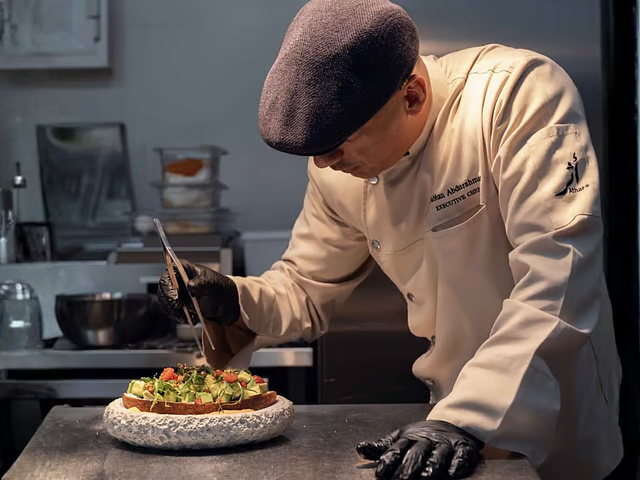
Dubai: The warmth of a mother’s hands kneading dough. The aroma of freshly baked bread drifting through the house before sunrise. The crackle of spices blooming in hot Emirati ghee. Long before recipes are written down or traditions are put into words, this is where a cuisine truly begins.
For Chef Nabhan Al Ali, Executive Chef of ATHAR by Qlab, these are more than childhood memories. They are the foundation of his culinary philosophy and continue to shape everything he creates today.
The all-day Emirati dining and specialty coffee destination recently opened at City Centre Mirdif as part of the Chef’s Society section. Its philosophy is centred on leaving a lasting imprint on every diner through its food, beverages, ambience and heartfelt hospitality — all rooted in the instinctive generosity that defines Emirati culture.
“My mum always had an answer for everyone,” he says. “I still remember waking up early in the morning and smelling the bread my grandmother was baking. That aroma made me love the kitchen.”
It is a memory that has stayed with him for more than four decades, quietly shaping a career devoted not only to creating dishes, but also to preserving something far more delicate: the identity, stories and soul of a nation’s cuisine.
How It All Began…
Ironically, his culinary journey began with failure.
“If you don’t understand the kitchen,” he says, “you don’t understand the business.”
Long before Chef Nabhan learned to navigate the language of a professional kitchen, he learned what it meant to lose one.
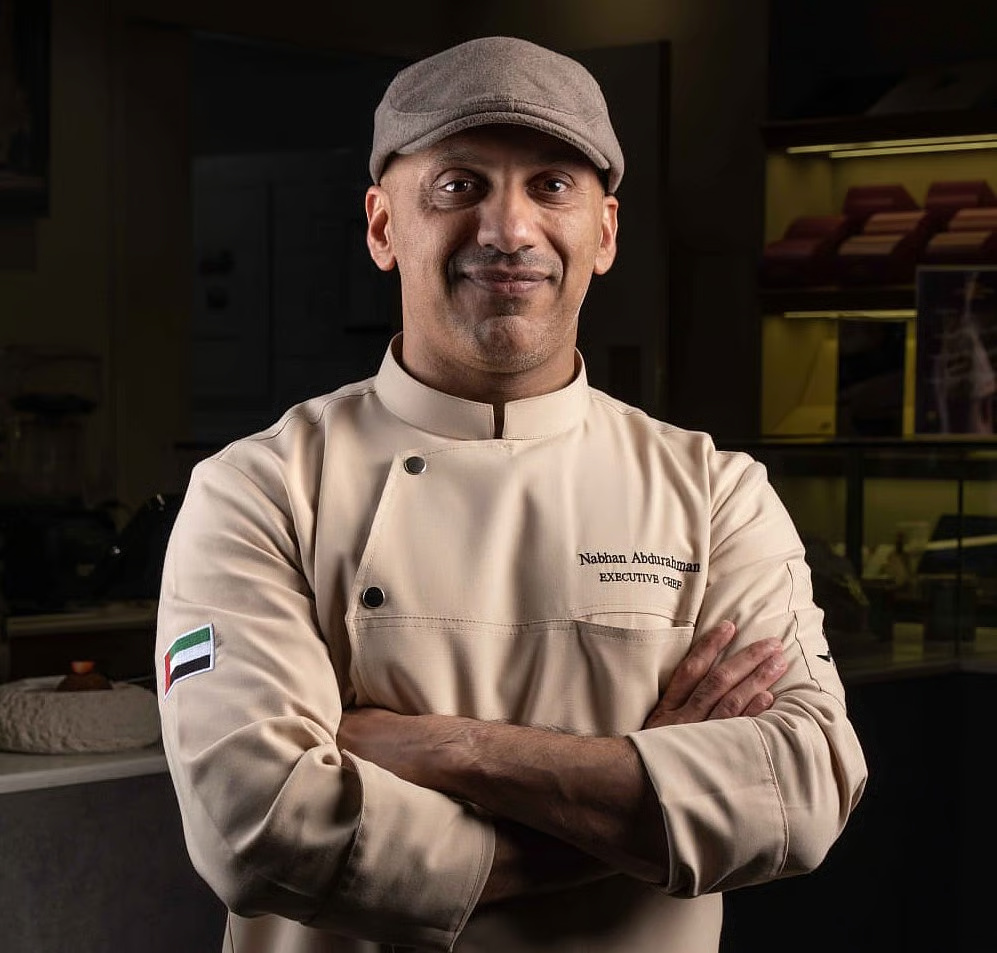
In 2009, still in his twenties, Chef Nabhan took the leap and invested in opening his first restaurant. He loved food, enjoyed discovering new restaurants and had a keen sense of what made a meal memorable. What he didn’t yet understand was what happened behind the scenes — how a professional kitchen actually worked.
“I couldn’t ask the right questions.”
When the business failed, it took more than his investment with it. It left him with a lesson that would go on to define the rest of his career. Many entrepreneurs might have walked away. Instead, Chef Nabhan decided to become the person he wished he had hired.
“I had to understand the kitchen myself. I never wanted to lose like that again. I’m a very competitive sportsman at heart,” explains the former boxer.
In 2014, he enrolled at the SCAFA Culinary Institute in Dubai, where he met Chilean chef Francisco, a mentor who introduced him to the discipline, precision and exacting standards of a professional kitchen.
For the first time, he wasn’t simply learning recipes. He was learning how a kitchen thinks.
More importantly, he discovered that running a successful kitchen demanded as much leadership as it did culinary skill.
“I understand the personality needed to work in a kitchen,” he says. “I’m a boxer. I have that mindset. When something is wrong, you have to address it immediately. You have to be firm. Not every businessman understands that.”
The training transformed him.
“I understand the kitchen now,” he says. “I can ask my staff the right questions because I’ve done the work myself.”
That knowledge would soon prove invaluable.
By 2016, he had launched a healthy food concept inspired by his passion for fitness and nutrition. What began as a single restaurant grew into a successful chain of health-focused outlets spanning Dubai, Abu Dhabi, Sharjah and Ajman.
Eventually, he sold parts of the business. For many entrepreneurs, that might have marked the culmination of their journey. For Chef Nabhan, it was the beginning of something far more meaningful.
As he travelled across the Emirates, another question began to occupy his thoughts: Where was Emirati food?
The Quest for Emirati Cuisine
Every Friday became an opportunity to search for an answer. He visited hotels and restaurants across the country, expecting to find the dishes that had shaped his childhood — food that reflected the UAE’s history, culture and culinary identity.
Instead, he encountered international buffets where Emirati cuisine was often little more than a faint nod to the local table.
“There was a gap,” he says simply. “You would find every cuisine, but very little Emirati food.”
For a country celebrated for its hospitality, global outlook and extraordinary culinary diversity, he found remarkably few places showcasing Emirati cuisine with the same confidence and prominence afforded to other cuisines from around the world.
To him, food is inseparable from memory. It tells the story of families gathered around a shared table, of generations passing recipes from one hand to another, and of centuries of trade that carried spices across the Indian Ocean, connecting the Emirates with India, East Africa and the wider Arab world. It is history preserved through flavour.
But the absence of Emirati cuisine represented something far greater than a gap on a menu. To Chef Nabhan, it pointed to the quiet disappearance of recipes, techniques and traditions that had once been at the heart of every Emirati home.
“If people stop cooking the food,” he says quietly, “history disappears with it.”
Rather than accept that reality, Chef Nabhan decided to document it.
He travelled across the Emirates, from Abu Dhabi to Fujairah, meeting elderly Emirati women who had spent decades preserving recipes passed down through their families. He sat beside them in their kitchens, observing every movement and listening to the stories behind each dish. He asked why one spice was added before another, why certain ingredients could never be substituted, and why the same recipe could taste different from one family to the next.
Eventually, many of these women came to cook alongside him in his own kitchen.
“They weren’t just teaching me recipes,” he says. “They were teaching me our history.”
Every conversation became part of a much larger archive. Every recipe revealed something about the country’s past — its people, its traditions and the generations who shaped its identity long before those recipes were ever written down.
His ambition was never simply to recreate traditional dishes. It was to preserve them for those who would come next.
“I wanted it to be there for the UAE,” he says. “For our children. For the next generation.”
What began as a search for forgotten dishes grew into a deeply personal mission: to document Emirati cuisine in its truest form, recording recipes before they disappeared and preserving techniques that had been passed down through generations by memory and instinct rather than measurements.
For centuries, the Emirates stood at the crossroads of global trade. Long before Dubai’s skyline was defined by skyscrapers, merchants travelled along the Spice Route, carrying spices, textiles, coffee and ideas between India, East Africa, the Arabian Peninsula and beyond. Those journeys shaped far more than commerce; they left an enduring imprint on the Emirati table.
“We have richness in our spices,” he explains. “You can see the connection through the Spice Route. We traded together for centuries, and that influenced our food.”
That influence remains evident today in the layers of flavour woven into Emirati cooking — a cuisine shaped by movement, exchange and generations of adaptation.
“There is something about Emirati food,” he says. “People experience new flavours, but they also recognise something comforting.”
That understanding, shaped by years of research and discovery, became the foundation of the restaurant’s menu.
En Route to Culinary Excellence
Rather than reinvent Emirati cuisine, Chef Nabhan wanted to present it in a way that felt contemporary while remaining faithful to its origins.
“The recipes don’t change,” he says firmly.
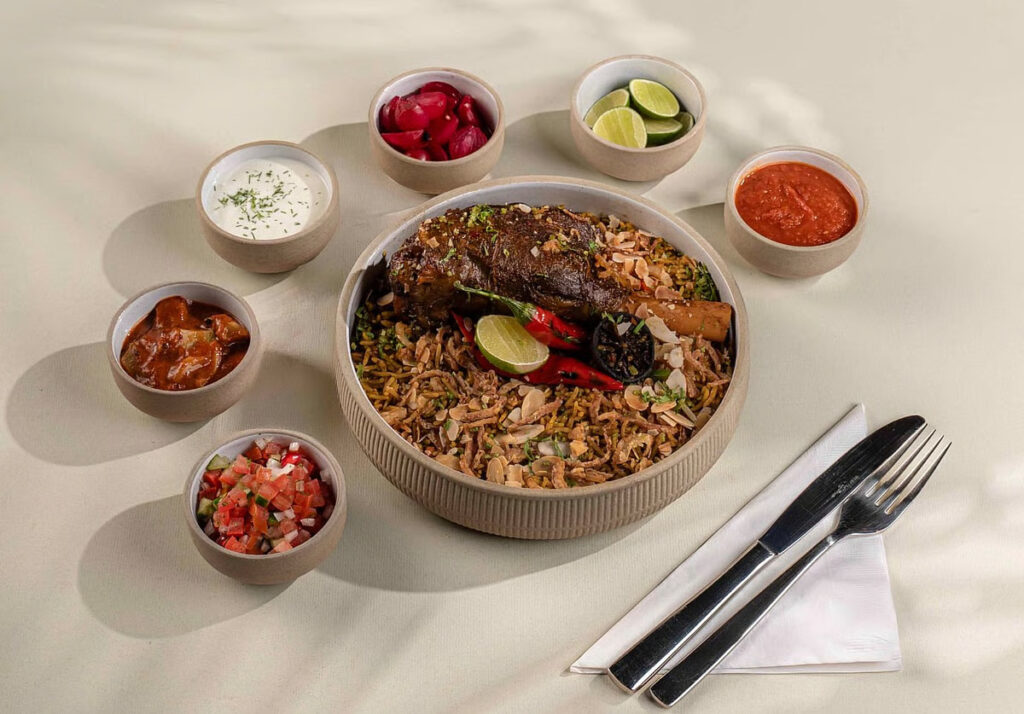
The Emirati ghee remains. So does the dried, fragrant lumi, or black lime, and the traditional Emirati bezaar, a blend of spices at the heart of many local dishes.
“The ingredients stay the same,” he adds. What changes is the presentation.
His ambition is not to modernise Emirati food by altering its identity, but to give it the confidence to stand alongside the world’s great cuisines while remaining unmistakably Emirati.
For him, evolution should never come at the expense of authenticity.
“We stay with our flavours,” he says. “We make it relevant today, but we don’t lose who we are.”
Every plate reflects that philosophy — honouring the past while inviting a new generation to discover it for themselves.
Traditional Emirati food was never meant to be eaten in isolation. It was built around generosity, conversation and community. Meals were placed at the centre of the table and shared among family, neighbours and guests, with every dish carrying meaning beyond its flavour.
Modern dining has changed that ritual. Individual plates have replaced communal platters; meals have become faster, quieter and, at times, more solitary.
Chef Nabhan wanted to reclaim something he felt had quietly slipped away. That desire inspired the restaurant’s sharing plates.
“We want people to come here and think about their grandmother’s kitchen,” he says. “To remember home. To sit together with family, neighbours and friends, sharing food, conversation and joy.”
For him, the experience is as important as the dishes themselves. Every plate is designed to draw people back to the same table, much as generations of Emirati families have done before them.
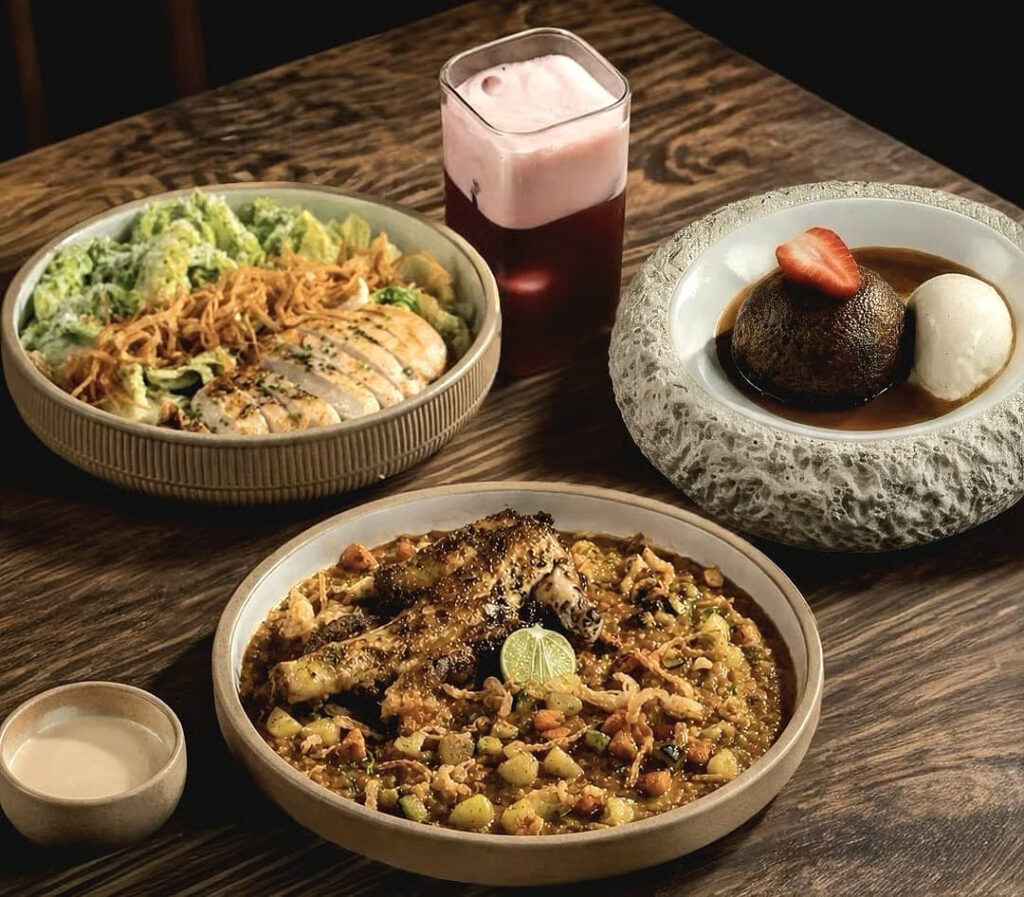
But some dishes demand more than a shared table. They demand reverence.
Ask him what every guest should try, and the answer comes without hesitation.
“Majboos — chicken or meat cooked with aromatic rice,” he says. “Or Madrooba — a meat and vegetable dish with a porridge-like consistency.”
They are not simply signature dishes. To him, they are a journey through time.
He smiles before adding, “When people eat them, I want them to taste history.”
For Chef Nabhan, authenticity has never meant keeping tradition frozen in time. It means allowing it to evolve without losing sight of where it came from.
He believes Emirati cuisine deserves the same international recognition afforded to the world’s most celebrated culinary traditions.
“The UAE has so many wonderful restaurants,” he says. “But I don’t think there is another place like ATHAR.”
He envisions ATHAR as a destination where visitors experience not only Emirati food, but Emirati culture — a restaurant capable of bringing the country’s cuisine to the world of fine dining while remaining deeply rooted in the traditions that shaped it.
“I think it will become something different,” he says. “In three or four years, I want people to see Emirati cuisine at another level.”
Today, at 45, after building businesses, studying professional cooking, documenting recipes across the Emirates and introducing Emirati cuisine to audiences overseas, Chef Nabhan finds himself pursuing the same feeling that first drew him into his mother’s kitchen decades ago.
A sense of belonging.
Because, for him, food has never been simply about nourishment. It is how a nation remembers.
And every dish that leaves his kitchen is another small promise that those memories will endure — shared around a table, carried through conversation and passed from one generation to the next.

