

He said radar reveals where rain has fallen, while cloud formations help predict where rainfall may begin.
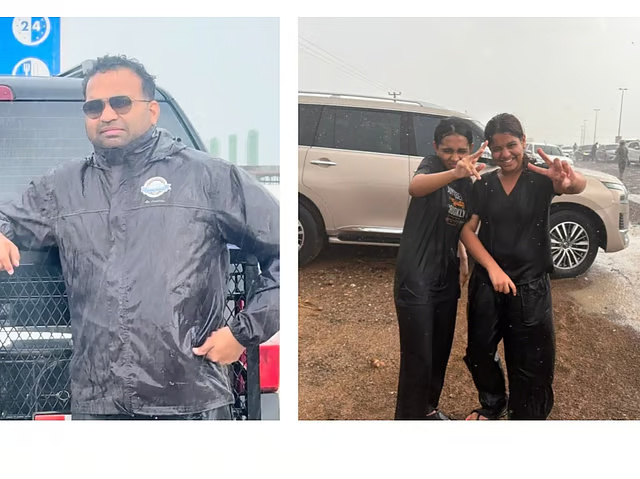
Dubai: The most important advice Muhammed Sajjad KP, popularly known as the UAE weatherman, gives to rain chasers is that weather radar images do not provide live updates.
“If you see rain appearing on the radar application and then drive towards that location, you may not find the rain you are expecting,” he said, explaining that radar systems typically update every five to 15 minutes.
The challenge is the time gap between rainfall occurring, radar detection, system processing and app updates. By the time users reach the location shown on the radar, around 20 minutes may have passed, meaning the shower could have already ended and the roads may be dry.
“You can’t actually see the rain on the radar,” he said. “That’s why we always chase the clouds, not the rain.”
That difference forms the foundation of his rain-chasing approach. I spent Tuesday with Muhammed Sajjad KP as he tracked rainfall across the UAE, discovering how he puts this method into practice.
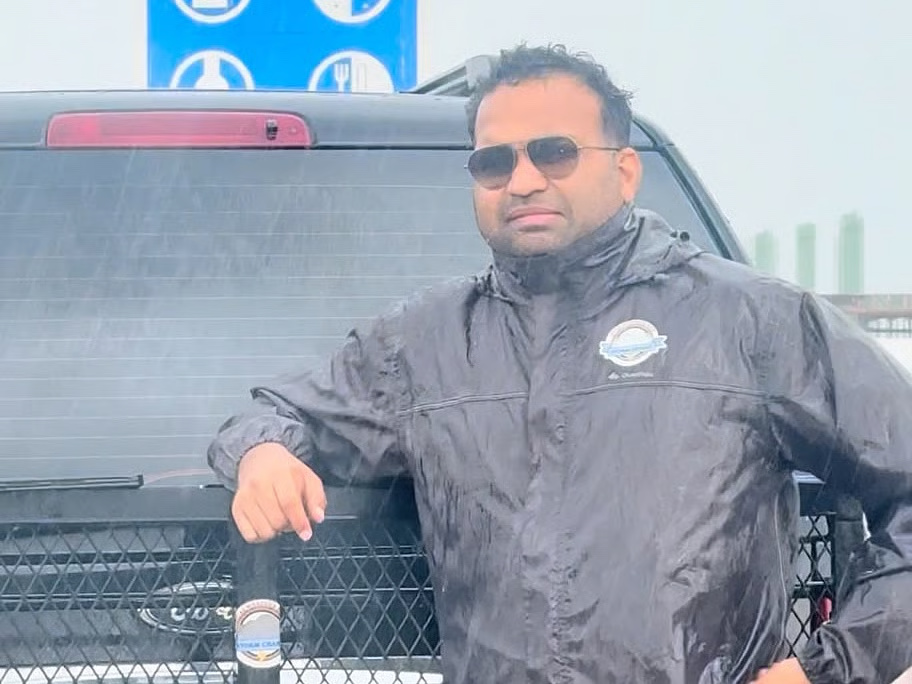
Monitoring the weather
His approach relies on two systems working in parallel.
The first is satellite imagery from the European Centre for Medium-Range Weather Forecasts, which tracks the past three hours of atmospheric changes. Rather than showing where rain is already falling, the imagery helps identify where the atmosphere is developing conditions that could lead to rainfall.
Using this information, he identifies areas where clouds are likely to form and follows the cloud development instead of chasing existing rain.
The second source of information is data from the National Centre of Meteorology (NCM) and the rain.ae feed, which he uses while driving as a way to confirm his observations rather than decide where to go.
“So we always chase the clouds,” he says. “We wait for the clouds to develop, and then we follow them.”
He explains that government radar is mainly designed to show rainfall intensity and areas where rain is occurring, helping drivers and residents understand conditions such as the possibility of flash flooding, particularly in mountainous areas. It is not the same tool used by rain chasers who track developing cloud systems.
How it rains in the UAE
The process begins with the interaction of two types of wind.
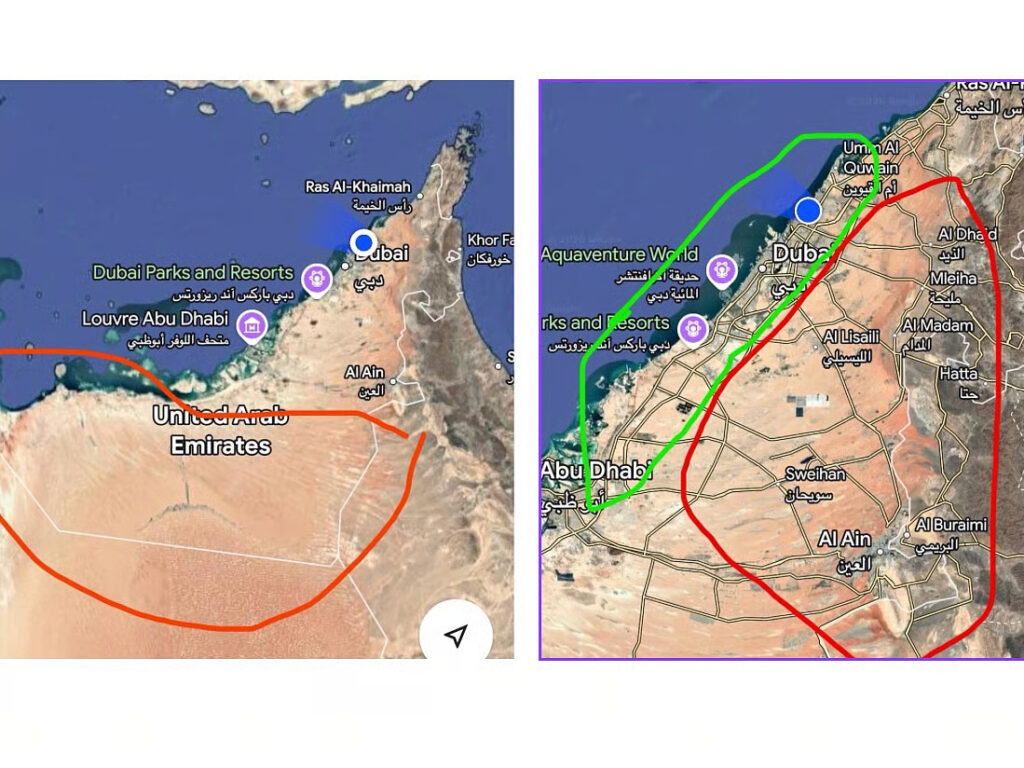
“There is wind coming from the Arabian Gulf, from Abu Dhabi towards Ras Al Khaimah,” he explains. “Then there is wind coming from the Oman Sea, around Fujairah and Dibba. In the afternoon, these sea breezes move inland. In Arabic, it is called naseem al bahar. The sea breeze carries a lot of humidity.”
Both winds bring moisture with them, and when they meet over the UAE’s interior, conditions become favourable for cloud formation.
“These two winds carry humidity from the sea and collide — one from the Arabian Gulf and the other from the Oman Sea. Wherever they meet, clouds start to develop,” he says.
That meeting point is what he looks for. He is not chasing a rain cell already visible on a radar map; he is tracking the boundary where two sea breezes are likely to collide and create new clouds.
The collision of winds alone is not enough to create rain. This is where his forecasting approach becomes more technical. Atmospheric pressure must be low, as high-pressure conditions can prevent cloud development. Temperature also needs to be favourable across different layers of the atmosphere, not just at ground level, because cumulonimbus clouds grow vertically and require sufficient moisture in the upper atmosphere to continue developing.
“When forecasting the weather, we have to check everything,” he says. “Only then can the forecast be successful.”
How far ahead he can predict
The accuracy of his forecasts depends on the strength of the weather system.
“This is up to Sunday,” he said while showing a forecast extending seven days ahead. “Because the system is very powerful, we can forecast like this. If the system becomes weaker, we may not even be able to forecast the next day.”
This variability explains why his followers may sometimes receive a forecast a week in advance, while in other situations they may only get a few hours’ notice.
How we chased rain on Tuesday
He had asked me to meet him near Sharjah Mosque, at the meeting point along Maliha Road. When I arrived and saw clear skies, I began to wonder whether we would actually find any rain that day.
He then explained that we would first head towards Manama, near Fujairah, before moving on to Mleiha in Sharjah. I had not expected the journey to take us that far, but with his impressive track record of successful rain-chasing trips, I decided to trust his judgement and follow the expert.
Our convoy travelled from Sharjah towards Fujairah and Manama, with Sajjad keeping a close watch on cloud formations while monitoring radar updates and the rain.ae feed to make sure we were moving in the right direction.
As we approached the area and the sky began to darken, the excitement grew. The wind picked up, and moments later, the first raindrops started falling on the car as we continued towards our destination.
When the rain began, I asked him, “Are we not going to stop for this rain?”
“This rain? This is nothing for us. We are heading to the heavy storm spot right ahead,” Sajjad said with a laugh.
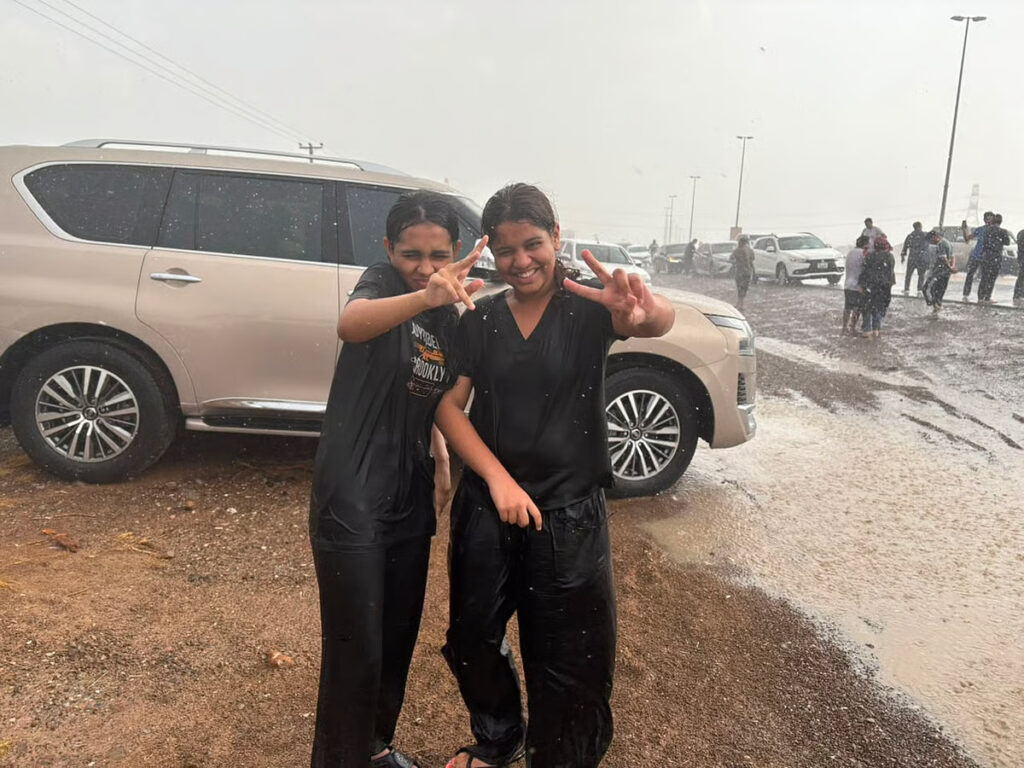
Soon, we reached the location he had been tracking — and just as he had predicted, the storm was powerful enough to feel as though it could almost knock me off my feet.
After the storm passed, we got back into our cars and moved towards the next location, with Sajjad once again looking up at the clouds and assessing their movement.
The next spot was not far away. We stopped near Manama, where we were treated to the sight of a sun shower — rain falling while sunlight continued to shine through the clouds.
Shawka, another location experiencing storms, was the next target, but we were unable to reach it because of traffic. The congestion meant the area was no longer within our reach.
“This always happens,” Sajjad said. “Sometimes we miss the showers because of traffic. These areas often have one-way roads, and when we try to reach the wadis, we can get stuck. So we have to choose the next best location.”
Despite the use of satellite models and detailed atmospheric analysis, the success of a rain chase can sometimes come down to something much simpler — a single-lane road slowed by traffic.
Known as the cloud-whisperer
There is a reason Sajjad no longer shares his live location publicly.
He tried it once, but more than 400 people turned up, making the gathering difficult to manage safely.
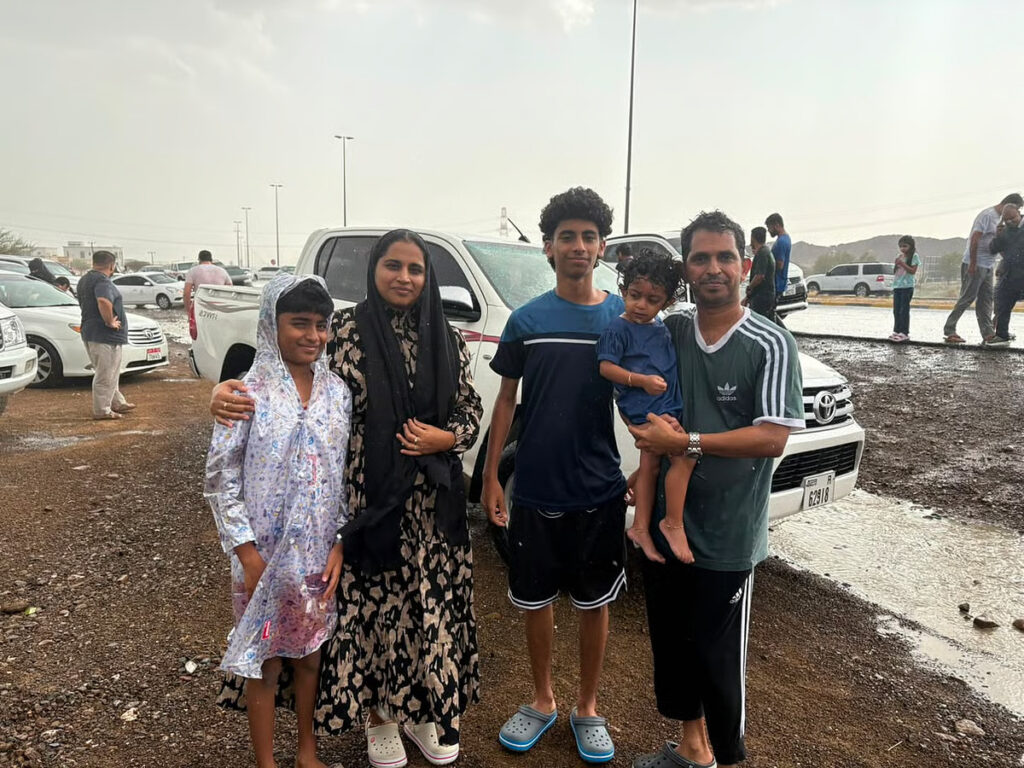
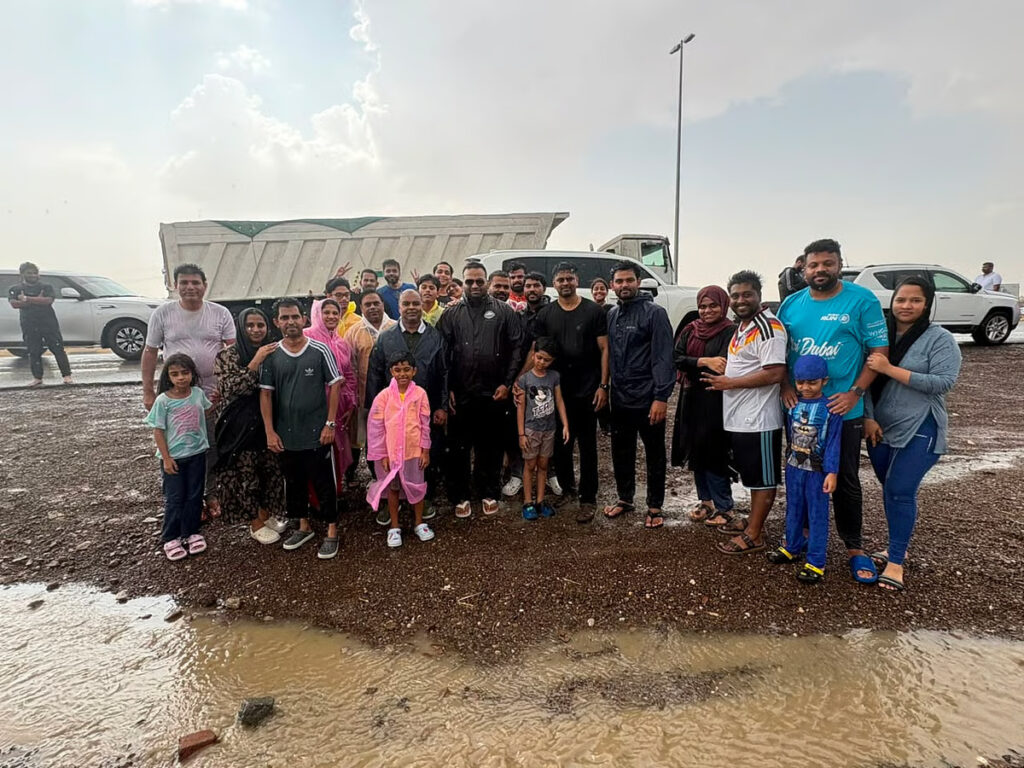
Even with a more selective approach and only a day’s notice, Tuesday’s rain chase attracted more than 100 people. Families travelled from across the Emirates, following coordinates shared just hours earlier. Among rain enthusiasts, Sajjad has become something of a celebrity, with people lining up to take photographs with him.
Where the moisture comes from
The rain that falls in the UAE does not originate locally. Its moisture source begins much farther away than many people realise.
“These clouds develop because of the monsoon, which originally starts from Madagascar,” Sajjad explains. “The southwest monsoon forms there, travels through Somalia and reaches Salalah. Salalah also receives rain — the weather there is similar to Kerala, with frequent rainfall and lush green landscapes because of this monsoon.”
Part of this moisture flow continues towards Kerala, Lakshadweep and Sri Lanka, while another portion remains over the Arabian Sea. From there, sea breezes transport the moisture inland, helping fuel cloud development across the UAE.
How he became the UAE weatherman
Sajjad arrived in the UAE from Kerala in August 2015, leaving behind three days of continuous monsoon rain and arriving in temperatures close to 50°C.
“I couldn’t adjust,” he says. When he asked people when he could expect rain in the UAE, he was told to wait until November or December — a six-month wait.
Instead, he began searching for answers himself. He explored satellite imagery on the National Centre of Meteorology’s website and used radar applications to track rainfall.
But the radar often left him disappointed.
“When I reached, I could see only a few drops on the road,” he says. “The radar detects the rain and updates after five to 15 minutes. So I was arriving 20 to 25 minutes later.”
That gap between what the radar showed and what was actually happening on the ground pushed him to understand clouds, weather patterns and atmospheric behaviour in a much deeper way.
The frustration eventually became the motivation behind his journey into forecasting.
“Then I started to think about how these clouds are developing,” he says. “I started learning forecasting and how weather prediction works. Everything I learned was from the internet.”
Around 2016, he began sharing forecasts under the name Kerala Rain Forecaster, posting in Malayalam. However, the language barrier meant he lost some followers who did not understand Malayalam. He later launched UAE Weatherman in English in February 2022, building a following of nearly 300,000 people across social media platforms. He was also awarded a Golden Visa in recognition of his work.
“Then I started chasing rain using my own forecasts,” he says. “I forecast the rain, I forecast the clouds, and I drive to the place where the clouds are expected to form. I go to an empty area, the clouds start developing there, and then the rain begins. So I always get the first drop.”

