

A car parked under direct sunlight can heat up to dangerous levels within minutes, exposing occupants to extreme cabin temperatures that may affect health and driving ability.
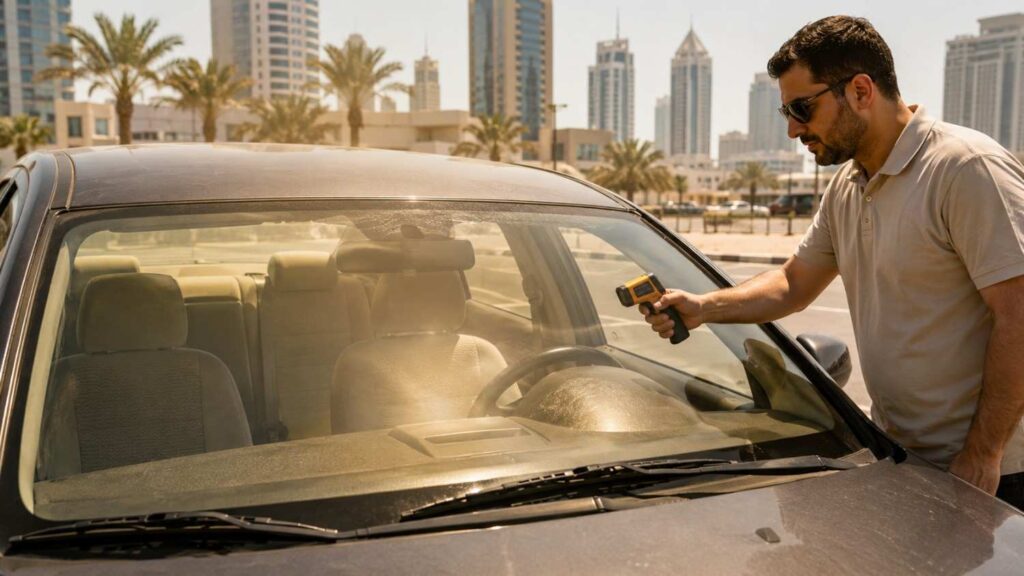
A parked car left under the UAE’s summer sun can quickly heat up to 60°C or more, creating conditions that may cause skin burns, affect concentration, slow reaction times and increase the risk of crashes, road safety experts have warned.
Mustafa Aldah, founder of RoadHeroAcademy, said temperatures inside parked vehicles can reach levels that are not only physically dangerous but may also affect a driver’s ability to operate a vehicle safely.
While the dangers of leaving children or pets inside parked vehicles are widely recognised, experts say extreme heat also presents a less-understood risk to motorists themselves.
Superheated car interiors can affect concentration, contribute to heat exhaustion, place additional strain on vehicles and increase the risk of crashes if drivers are not prepared before starting their journeys.

A vehicle left under direct sunlight can become dangerously hot within minutes, exposing motorists to extreme cabin temperatures that can affect both their health and driving ability.
Aldah said heat exhaustion is a genuine concern that can significantly reduce a driver’s ability to remain alert and focused on the road.
“Heat exhaustion is a real thing. Ensuring you have slept well and are adequately hydrated goes a long way towards your ability to focus enough on driving safely,” he said.
He added that human performance declines as temperatures rise.
“Human beings have performance windows. Cognitive performance drops above 26°C, so you can imagine what happens at 46°C,” he said.
Doctors said entering a parked vehicle that has been exposed to intense sunlight can place the body under immediate stress, overwhelming its natural cooling mechanisms.
Dr Zara Ahmed, a specialist in Emergency Medicine at Rak Hospital, said the body responds by increasing blood flow to the skin and producing more sweat, which can lead to rapid fluid loss.

“Within minutes, individuals may develop dehydration, dizziness, headache, nausea and reduced concentration. Prolonged exposure can lead to heat exhaustion and, in severe cases, heatstroke, a life-threatening condition that can cause organ failure, brain injury or death if not treated urgently,” she said.
Dr Joseph Youssef, a specialist in Internal Medicine at Medcare Royal Speciality Hospital, said even healthy adults can quickly experience symptoms after entering an overheated vehicle.

“Our natural cooling system relies on sweating and increased blood flow to the skin, but when the surrounding air is extremely hot, these mechanisms become much less effective. As the body struggles to release heat, core temperature begins to rise and dehydration can develop quickly,” he said.
He added that people with heart disease, diabetes, respiratory illnesses and those taking certain medications face an even higher risk.
Vehicle faults can become dangerous
Experts said extreme temperatures also place additional stress on vehicles, making regular inspections especially important during the summer months.
Aldah urged motorists to carry out a quick walk-around inspection before every journey rather than focusing only on cooling the cabin.
“I would call for more listening and observation for any signs that the car gives before things start failing,” he said.
He advised drivers to check for underinflated tyres, fluid leaks, loose underbody panels and unusual mechanical noises.
“I see a lot of cars driving with loose pieces flapping around in the wind about to come off. These parts all make noise at speed. Be curious about the sounds your car is making — don’t ignore them,” he said.
He warned that detached vehicle parts or tyre failures could create serious hazards for other road users, particularly motorcyclists.

Thomas Edelmann, founder and managing director of RoadSafetyUAE, said motorists should pay particular attention to tyre maintenance during the summer, as high temperatures increase the risk of tyre damage when inflation pressures or maintenance are neglected.
He also advised drivers to carry drinking water on longer journeys, regularly check coolant levels, engine oil, belts and batteries, ensure air-conditioning systems are working properly and remain alert for tyre debris on roads, which can create additional crash risks.
Never leave anyone inside
Experts reiterated that children, elderly people, vulnerable adults and pets should never be left unattended inside parked vehicles, even for a short period.
Dr Zahra warned that children’s body temperatures rise much faster than adults’, while older adults, pregnant women and people with chronic illnesses may have a reduced ability to regulate body heat.
She said symptoms such as confusion, collapse, seizures or loss of consciousness after heat exposure should be treated as a medical emergency requiring immediate attention.
Aldah also cautioned against leaving family members or pets inside running vehicles while stepping away, warning that unexpected electrical faults could leave occupants trapped.
“Some cars develop electric faults that cause them to lock themselves without a driver inside. What happens to your precious cargo, pet, child or relative if they get locked inside in the middle of summer? It really is not worth the risk,” he said.
He added that motorists should consider where they park, recalling an incident in which a neighbour’s parked vehicle caught fire due to a suspected electrical fault.
“If your car caught fire in that spot, would you want to be responsible for a building or occupants getting damaged because of your actions?” he said.
Warning signs not to ignore
Doctors said motorists should stop driving immediately if they experience dizziness, blurred vision, weakness, confusion or nausea during a journey.
Early signs of heat exhaustion include heavy sweating, headache, intense thirst, fatigue, muscle cramps and reduced urine output.
If symptoms progress to confusion, seizures, collapse or loss of consciousness, heatstroke should be suspected. Emergency medical services should be contacted immediately while cooling measures are started.
To reduce heat exposure, experts recommend parking in shaded areas where possible, using windscreen sunshades, allowing hot air to escape before entering the vehicle, ensuring the cabin has cooled before driving, staying hydrated and never assuming that partially opened windows make a parked vehicle safe.
They also urged motorists to remain alert for pedestrians, cyclists and motorcycle riders, whose behaviour and reactions may also be affected by extreme heat.

