

Gulf governments are increasingly prioritising local production, sustainment capabilities, and workforce development.
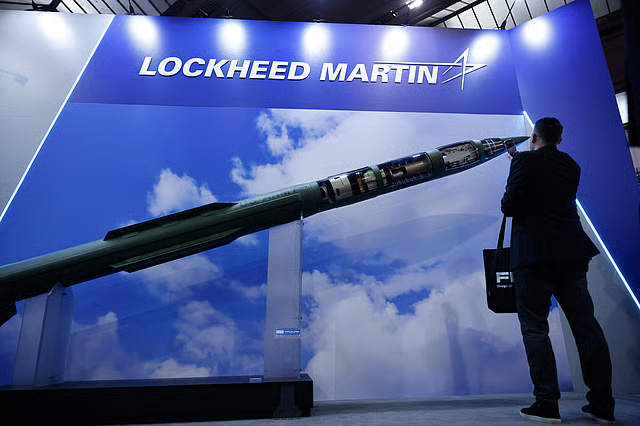
Dubai: Lockheed Martin is looking to expand its defence work in the UAE while continuing to invest in local talent, as Gulf governments increasingly prioritise industrial cooperation, co-development, local production and sustainment capabilities alongside the defence systems they procure.
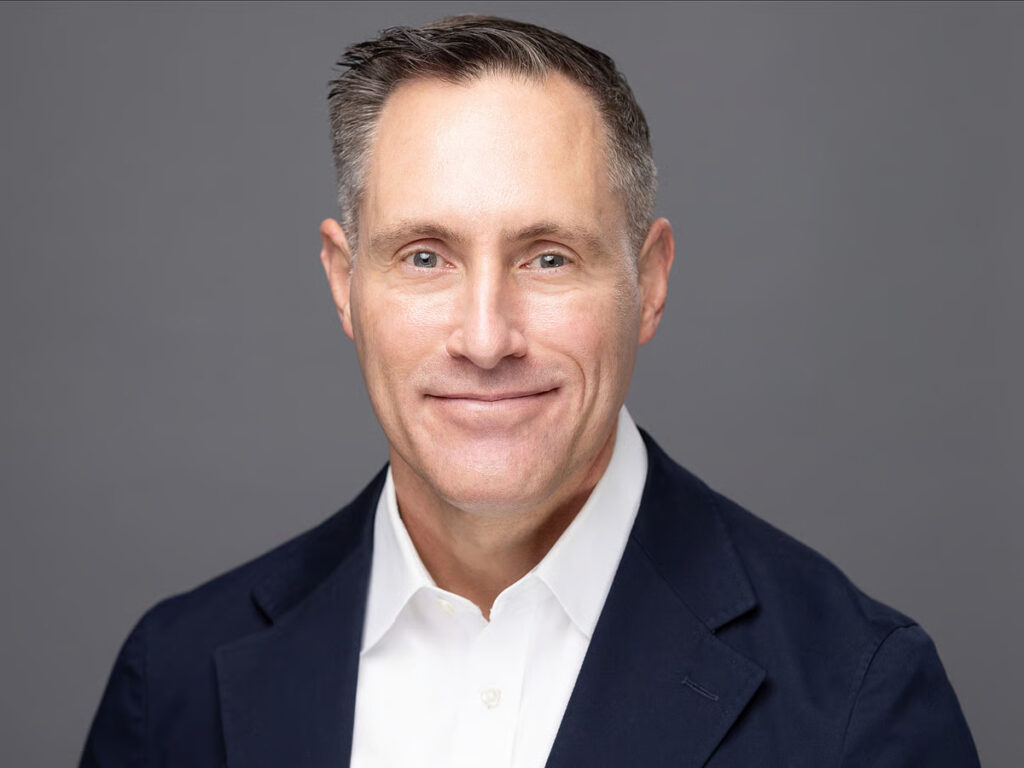
Daniel Mouton, Vice President and Chief Executive for the Middle East at Lockheed Martin, told us in an exclusive interview that the recent regional escalation had reinforced the company’s commitment to the UAE.
“The direction is clear: more work will be conducted in the UAE, alongside continued investment in local talent,” Mouton said.
While Lockheed Martin has not disclosed specific investment figures or timelines, Mouton said details would be announced once plans are finalised with the company’s UAE partners.
“As for specific numbers and timelines, I would rather announce those when they are real and fully agreed with our partners than forecast them in an interview,” he said.
More work conducted in the UAE
Lockheed Martin’s partnership with the UAE dates back to 1975, when the company delivered the country’s first C-130 Hercules aircraft.
The company marked the 50th anniversary of that delivery at the Dubai Airshow in November 2025, alongside milestones for two other major programmes: 20 years of the F-16 Desert Falcon programme and 10 years of THAAD, the UAE’s high-altitude missile defence system.
The UAE also operates Black Hawk helicopters and HIMARS, giving Lockheed Martin’s partnership with the country a footprint across air mobility, combat aviation, missile defence and ground-based precision systems.
Lockheed Martin is now looking to build on that partnership through expanded local collaboration and technology development initiatives.
The company signed agreements with the Tawazun Council for Defence Enablement at Make it in the Emirates to develop national capabilities in chiplet design and assembly, as well as cybersecurity, in collaboration with UAE industrial and academic partners.
Its Center for Innovation and Security Solutions at Masdar City brings together students, universities, industry representatives and Lockheed Martin specialists to address emerging technology challenges.
The centre also runs merit-based internship programmes designed to develop Emirati engineers, scientists and technology specialists.
“Governments still want the most capable systems, but they increasingly want more of the capability surrounding them: industrial cooperation, co-development, local sustainment and workforce development.”
— Daniel Mouton, Vice President and Chief Executive (Middle East) at Lockheed Martin
Gulf governments seek more than defence systems
Mouton said demand for integrated air and missile defence capabilities across the Gulf was increasing, while decisions on the allocation and delivery of US-origin systems remained the responsibility of governments.
“Demand for integrated air and missile defence across the Gulf is real and rising. That is clear to anyone watching the security environment,” he said.
Major defence export, licensing and allocation decisions are typically made at the government level, with companies responsible for delivering systems in line with agreed policies, contracts and operational requirements.
“Our responsibility is to build capacity. That means investing in production, suppliers and workforce, while pursuing co-production and regional industrial partnerships where governments agree that is the right model,” Mouton said.
“The durable answer to rising demand is not simply moving finite inventory around a map. It is widening the industrial base that produces these capabilities.”
Lockheed Martin has no new Middle East market entry to announce and declined to comment on the procurement plans of individual governments.
Mouton said discussions with governments were evolving, with buyers placing greater emphasis on the industrial capabilities, local partnerships and workforce development opportunities linked to defence contracts.
Lower-cost responses to drone attacks
The use of high-cost interceptors against relatively inexpensive drones has increased focus on the economic considerations of air defence, particularly during prolonged conflicts.
Mouton said the cost of an incoming drone should not be viewed in isolation from the potential damage and consequences it could cause.
“Cost asymmetry is a real strategic challenge. But the cost of the incoming drone is only one side of the calculation. The other is the value of what it could destroy and the consequences if it gets through,” he said.
Lockheed Martin is developing systems that enable defence operators to choose from a wider range of responses based on the type and severity of each threat.
The company’s CommandIQ battle-management software integrates data from multiple sensors to create a shared operational picture, helping operators identify and select the most appropriate response.
Available options can include electronic warfare, counter-drone systems, lower-cost interceptors and high-energy laser technologies.
Lockheed Martin’s MORFIUS high-power microwave system is designed to disable multiple drones and can be reloaded for follow-on missions, allowing more advanced interceptors to be reserved for ballistic missiles and other higher-priority threats.
“There will still be occasions when an advanced interceptor is the right choice. If a population centre, critical infrastructure or a command node is at risk, the priority is achieving the highest confidence of defeating the threat,” Mouton said.
“The objective is not to choose the cheapest response every time. It is to select the right response, supported by sufficient depth and enough options to sustain it.”
Defence networks face higher volumes
Recent conflicts have featured threats that are faster, cheaper, more numerous and increasingly deployed in combination, placing greater pressure on defence networks designed to counter lower volumes of attacks.
Mouton declined to assess recent operations or comment on the performance of individual systems, saying such evaluations were the responsibility of the governments and armed forces involved.
“Many existing defence architectures were not originally designed for the sustained volume and simultaneity now being seen,” he said.
“The central lesson is that performance cannot be judged platform by platform. It depends on whether the wider architecture can continue to see, decide and engage as the threat evolves and pressure builds.”
He added that sensors, command-and-control systems and interceptors must operate as part of an integrated network with sufficient capacity to sustain operations over time.
Mouton described the UAE’s earlier decision to add additional layers to its national air defence network as “prescient”, saying recent events had reinforced the value of that approach.
Approximately 77% of Lockheed Martin’s international sales in 2025 were conducted through the US Foreign Military Sales process, under which partner governments acquire equipment through the US government.
Under this system, the US government approves the sale and its terms before procuring the equipment or services from the company on behalf of the partner country.

