

Arriving in Dubai as a child in 1968, he now preserves the UAE’s journey through a private museum in his own home, where thousands of photographs capture the nation’s evolution.
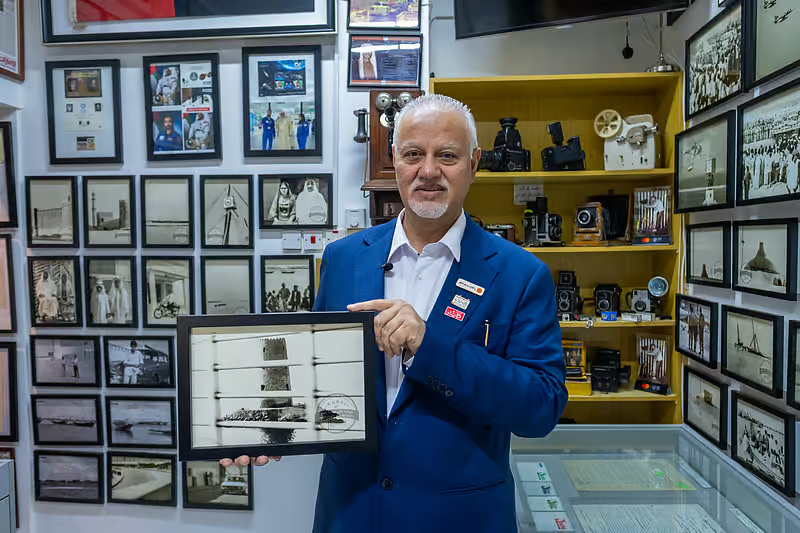
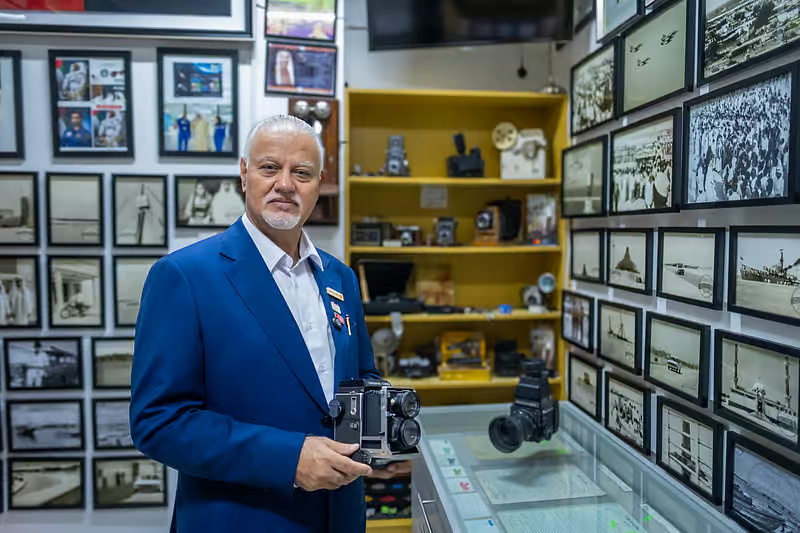
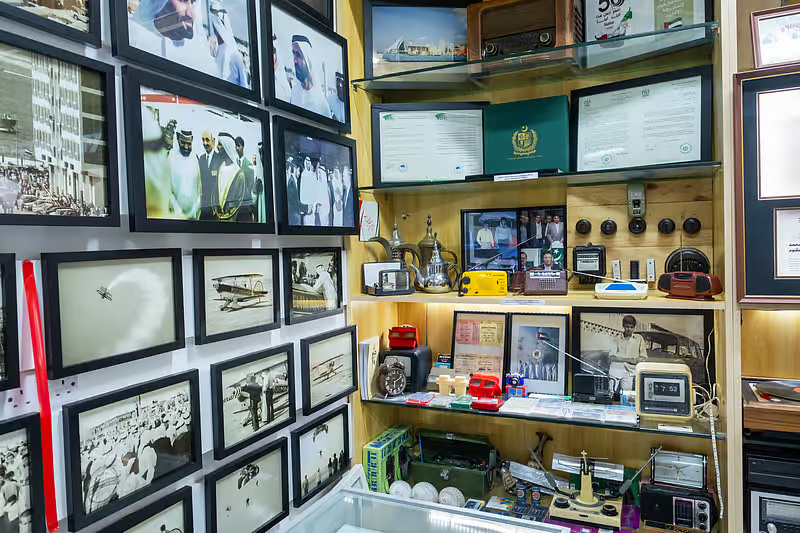
When Shaukat Ali Rana welcomes visitors into his villa in Mirdif, they soon discover that it is far more than a typical residence. The walls are covered with black-and-white photographs, while vintage cameras, film projectors, Polaroid cameras and traditional wooden field cameras fill the rooms.
Glass cabinets showcase a collection of historical items, including aged newspapers, old passports, pre-Union border permits, coins, stamps, driving licences and documents that many might have thrown away years ago.
Despite the extensive collection on display, Rana begins the tour with something else entirely.
Instead, he leads visitors to a framed black-and-white photograph of Al Maqta Fort near Abu Dhabi. Holding up the picture with a smile, Rana says, “This was the first photograph I ever took.”
More than five decades later, the photograph remains one of Rana’s most valued possessions. It marked the start of a lifelong journey that eventually developed into an archive of over 200,000 images, chronicling the UAE’s extraordinary transformation from small desert communities into one of the world’s fastest-growing nations.
“I never thought it would grow this large,” said the 66-year-old. “I simply wanted to preserve history.”
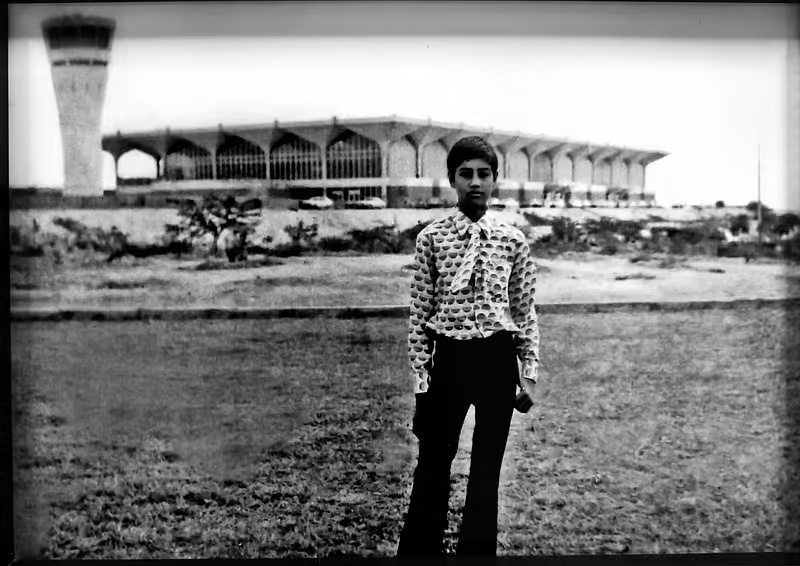
Throughout nearly 60 years of photography, Rana has captured the development of Sheikh Rashid Port, the first Dubai International Airport, the city’s early tunnels, air shows, landmark buildings and countless neighbourhoods as they emerged from the desert landscape.
He also documented the UAE’s first public celebrations following the country’s formation, preserving visual records of historic moments that have since become an important part of the nation’s heritage.
Rana’s collection, however, extends far beyond photographs.
“I first began collecting old stamps. Later, I started preserving coins, currency notes, documents, licences and anything I believed would one day become part of history. I realised that if these items were not saved, future generations would never understand what life was like in the past,” he said.
For Rana, this journey began years before photography became his profession.
He arrived in Dubai in 1968 at the age of eight, following his father, Mohammad Rafi Rana, who had moved to the emirate two years earlier to work at the British Bank of the Middle East and later joined Pakistan International Airlines. At the time, Dubai was a vastly different place from the modern city it is today.
The family initially settled in Satwa before relocating to Karama, an area where vast stretches of sand dunes dominated the landscape.
“There was sand everywhere,” Rana recalled. “We would go outside to collect seashells. Date palm trees surrounded us, and every evening we could hear the horns of ships arriving from Port Rashid. Since there was very little traffic, the sound carried all the way to Karama.”
His daily trip to school was a very different experience from that of children today. Rana attended Pakistan Islamia School in Oud Metha and walked there each morning along sandy paths.
“There were no proper roads where we walked,” he said. “Every day, we crossed piles of sand on our way to school.”
Evenings in those days followed a much slower rhythm. Television broadcasts were limited, and families arranged their routines around the few hours when programmes were available.
“The TV would start at 6pm and shut down around 10pm,” Rana recalled. “Everyone waited for the news before going to bed.”
Weekends came with their own challenges. The family would try to watch Hindi films broadcast from Kuwait, but maintaining a clear signal was often difficult.
“We had an antenna on the roof. One of my brothers would climb up while we shouted from below, ‘Turn it left, now right, no, you’ve lost it again!’ I don’t think we ever managed to watch an entire movie,” he said.
Entertainment was modest, but those simple moments remain among Rana’s most cherished memories.
“Dubai had many roundabouts with green grass and beautiful fountains,” he said. “My father would ask everyone to pack food from home, and we would go there for dinner. Those roundabouts were like parks for us. We children could play freely because there were hardly any cars on the roads.”
Travelling beyond Dubai was also an experience of its own. Roads to places such as Abu Dhabi and Ras Al Khaimah were often little more than sandy tracks, making journeys difficult for ordinary vehicles.
“Family trips were usually made only in a Land Cruiser or other SUVs,” Rana recalled.
A trip to Ras Al Khaimah remains particularly memorable.
“Our driver suddenly stopped. My father asked what had happened, and he pointed ahead, saying seawater had covered the track. We had to wait nearly 40 minutes for the water to go down because he could not see the road,” Rana said.
Today, the drive to Ras Al Khaimah can take just over an hour, but Rana remembers when the same journey could take at least three hours depending on road and weather conditions.
Those lengthy journeys also gave Rana one of the most significant memories of his life. During a trip to Abu Dhabi, his father handed him a simple roll-film camera.
“I was about 10 years old. He gave me the camera and said, ‘This is yours now,’” Rana recalled.
It was a thoughtful gift, but photography was an expensive hobby at the time.
“A roll could hold only 12 photographs. If you wasted a shot, it was gone. Then you had to buy another roll, pay for developing the film and pay again to print the pictures. Each print cost around Dh2, so every photograph had to be carefully considered,” he said.
The first image Rana captured was of Al Maqta Fort near Abu Dhabi, and more than 50 years later, he still preserves that photograph.
“I never imagined it would become so meaningful,” he said. “Today, when I look at it, I remember the journey behind it more than the picture itself.”
His passion for photography continued to grow. After returning to Karama, Rana transformed part of his home into a darkroom where he developed black-and-white films on his own. Later, his father introduced him to Shamshad, a friend who worked with the late Sheikh Zayed, the UAE’s founding father, at Qasr Al Hosn in Abu Dhabi.
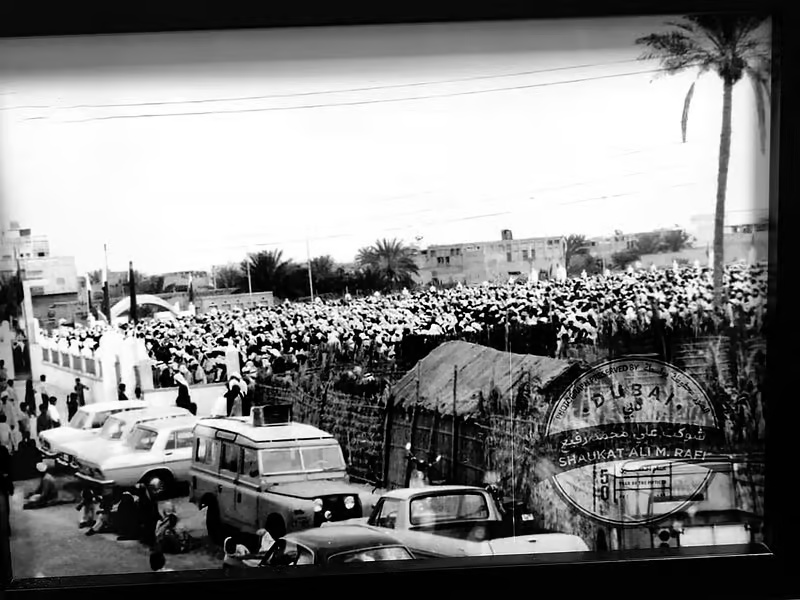
“He taught me everything about developing films and working in a darkroom,” Rana said.
“I would travel to Abu Dhabi to learn from him. Those lessons stayed with me throughout my life.”
Photography soon grew from a personal interest into something more for Rana. He began taking his camera to school, offering to photograph his classmates and teachers.
“I would ask them, ‘Would you like a photograph?’ I charged Dh5,” he recalled.
“I would then develop the pictures at home and deliver them the following day. That money helped me buy film rolls and the chemicals needed for processing.”
Many of those classmates remain in contact with Rana today, and some still have the photographs he captured of them during their school years.
Colour photography presented an even greater challenge.
“In the 1970s, colour films had to be sent to the UK for processing. We would carefully package the film, mail it and wait almost two months for the prints to arrive,” Rana recalled.
Eager to improve his skills, Rana later travelled to Italy for two weeks to learn colour processing from photography equipment manufacturer Durst.
“Photography was completely different back then. Everything was manual. You had to understand light, chemicals and colours. Today, you press a button and the camera handles everything. In those days, photography was a true art,” he said.
His passion for photography eventually developed into a business. In 1976, after taking over a family shop on Yousef Baker Road in Deira, Rana moved away from the textile trade and began focusing on photography supplies. He started importing cameras, films, photographic paper, chemicals and framing materials, creating the foundation for what later became the Rafi Group, now managed by his sons.
Despite building a successful business, Rana continued documenting the UAE’s rapid transformation.
His vast archive includes photographs of the construction of Sheikh Rashid Port, Dubai International Airport, major tunnels, early air shows, traditional communities and buildings that have since vanished from the city’s skyline.
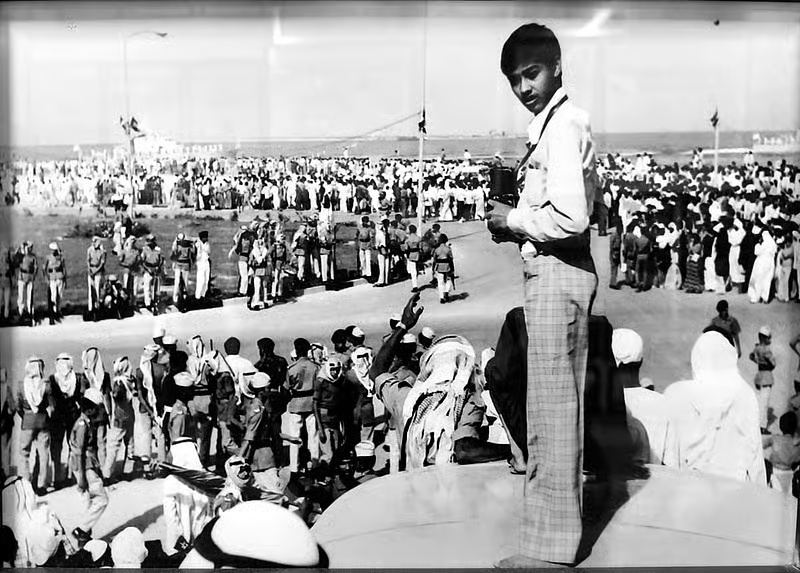
Rana also captured the UAE’s first public celebrations following the Union in 1972.
“My father understood that something significant was taking place. He took us to Abu Dhabi for the celebrations. I was just a young boy with a camera in my hands. At the time, I didn’t realise I was documenting history,” he said.
Among the most valuable items in his collection are the border permits issued before the formation of the UAE.
Before travelling from Dubai to Abu Dhabi, motorists had to pass through checkpoints where they were issued exit documents from Dubai and entry permits for Abu Dhabi.
“I still keep those documents. When people see them today, they are amazed to learn that there was once a border between the emirates,” Rana said.
The museum Rana has built over the years reflects not only the UAE’s remarkable transformation but also the evolution of everyday life.
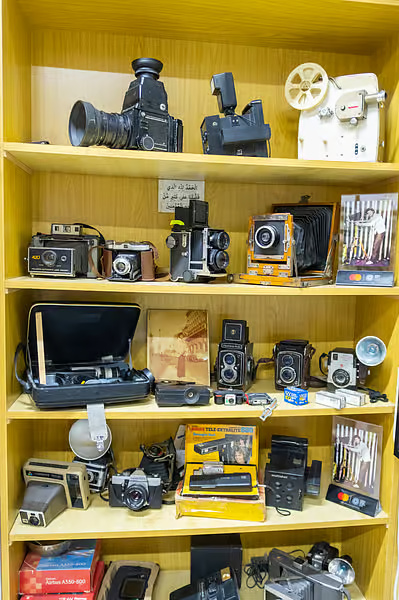
Alongside thousands of photographs, the collection features telegrams that once took weeks to deliver messages internationally, pagers that later connected businesses, early mobile phones, vintage radios, cameras, stamps, newspapers and even letters from foreign embassies that helped him obtain photography equipment before the age of the internet.
“We used to write letters and wait a month for them to reach another country, then another month for the reply to arrive,” Rana recalled. “If something was urgent, we sent a telegram. Since every word cost money, my father taught me how to make sentences shorter.”
Today, visitors often spend hours exploring the collection inside Rana’s Mirdif home, moving from one display cabinet to another as he patiently explains the story behind each artefact.
For Rana, however, the collection has never been about its size or the number of items preserved.
Whether it is the first photograph he captured as a child, an old driving licence, a faded newspaper or a pre-Union border permit, each object represents a small but meaningful part of the UAE’s journey.
“I wanted to preserve history. The UAE has given me everything, and this is my way of giving something back,” he said.

