

Why advanced cloud seeding technology is crucial to the UAE’s future water security.
Dubai: Ever sprayed perfume and watched its scent spread through the air? According to the National Centre of Meteorology (NCM), that everyday experience offers a simple way to understand the science behind the advanced techniques now being used to make rain enhancement more effective.
In a video released to mark the 10-year anniversary of the UAE Research Programme for Rain Enhancement Science (UAEREP), the centre explains that the movement of cloud-seeding particles through a suitable cloud is similar to the way perfume mist disperses through a room.
The process, known as seeding agent dispersion, describes how tiny particles spread after being released into a cloud. Understanding how these particles move, interact and distribute themselves has become a key focus in improving the UAE’s cloud-seeding operations and making rain enhancement efforts more effective.
Why dispersion matters
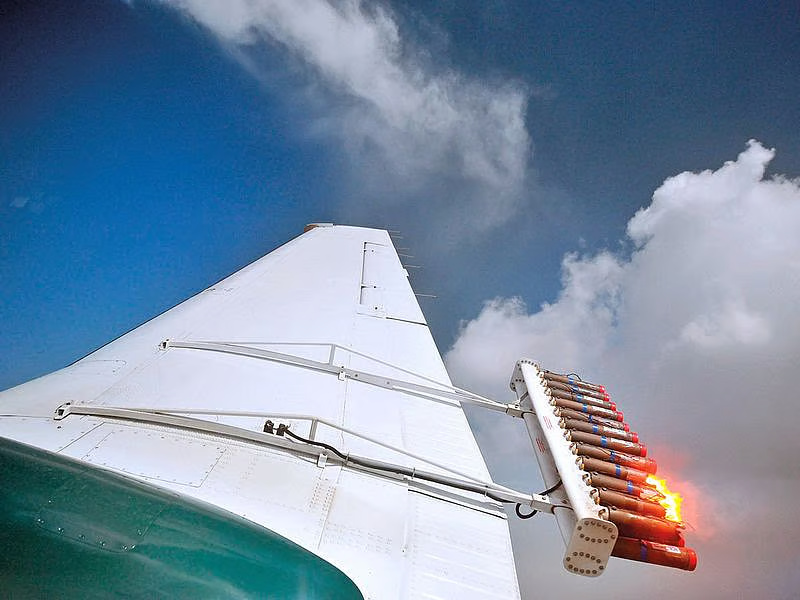
Cloud seeding works by introducing particles into clouds that serve as condensation nuclei — surfaces where water vapour can condense or freeze. These particles help tiny droplets combine and grow into larger drops that are heavy enough to fall as rain, giving clouds that may not naturally produce rainfall an additional boost.
However, releasing seeding materials alone does not guarantee success. Their movement inside the cloud and their interaction with existing droplets and ice crystals play a crucial role in determining the outcome of a mission.
By analysing how seeding particles spread and interact within clouds, scientists can refine when, where and how these materials are released. This helps create more favourable conditions for rainfall formation and improves the efficiency of cloud-seeding operations.
The research is conducted in laboratories using specialised equipment that monitors these interactions at a highly detailed level. Beyond improving individual cloud-seeding missions, the work is also expanding scientific understanding of the processes behind rainfall formation — insights that help inform every flight operation carried out by the NCM.
From the lab to the sky
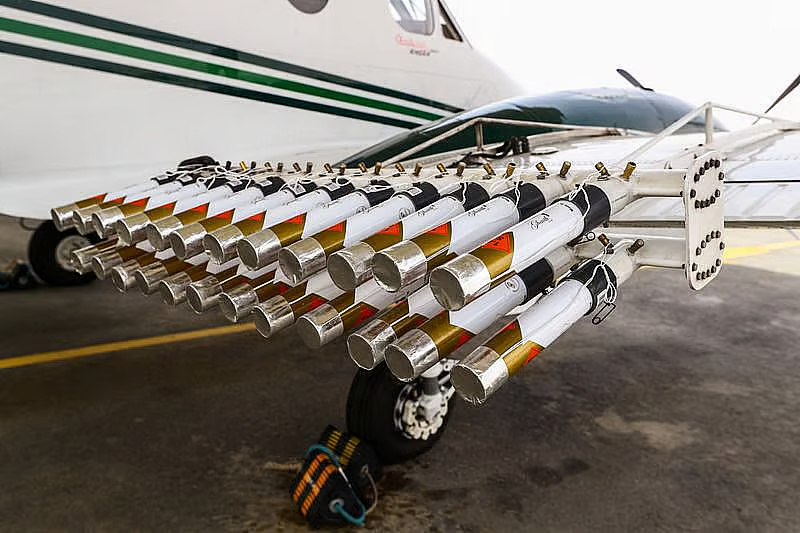
This research has already transformed the technologies used in the UAE’s cloud-seeding programme. Today, seeding agents are produced locally and are developed in two primary forms.
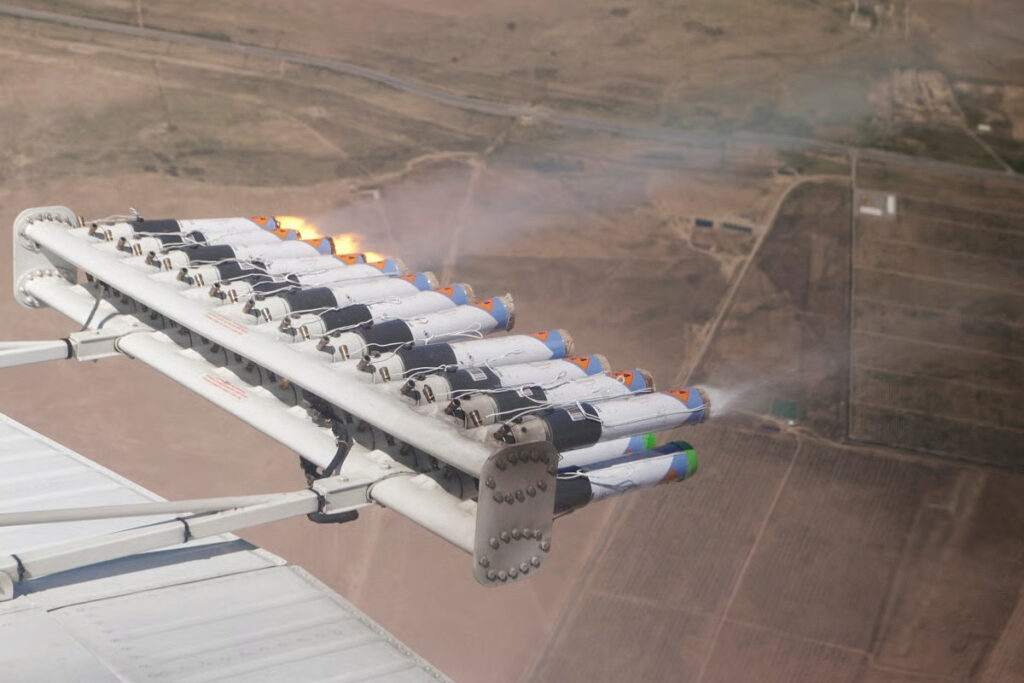
The traditional method uses hygroscopic flares, which are produced in two sizes — one designed for aircraft deployment and another for ground-based generators. When released from an aircraft, the flare burns for several minutes, dispersing salt crystals containing materials such as magnesium, sodium chloride and potassium chloride into a cloud’s updrafts.
These hygroscopic materials attract moisture, helping small water droplets combine and grow into larger particles capable of falling as rain.
The latest advancement comes from nanomaterials developed through the UAE Research Programme for Rain Enhancement Science (UAEREP). This fine powder can be up to three times more effective than traditional hygroscopic flares and disperses immediately when an ignitor releases it, eliminating the need for a prolonged burn process. The technology is a direct outcome of the dispersion research shaping the UAE’s rain enhancement programme.
These findings are also helping improve the use of ground-based generators. Installed in mountainous regions, the towers use local terrain and airflow patterns to release seeding materials into low-level clouds, accelerating the collision and merging of water droplets needed for rainfall formation.
Inside a cloud-seeding mission
The science behind cloud seeding only delivers results when combined with precise operational planning. Each mission begins with data collected from weather radars, satellites and ground stations, which meteorologists analyse to identify suitable cloud formations. Weather surveillance radar operates continuously, supported by live camera feeds from 26 locations across the UAE.
When a promising cloud begins to develop, an aircraft first circles the formation to assess its structure and determine the best time and location for seeding. The aircraft then enters the cloud and releases its payload, usually carrying 48 flares during a single three-hour flight.
The next frontier
Efforts to improve cloud-seeding efficiency are continuing. The NCM is exploring technologies such as electric charging, where electrical charges are introduced directly into clouds to encourage precipitation, while also developing advanced numerical models that simulate the chemical, physical and electrical processes occurring inside clouds.
Artificial intelligence tools are being developed to analyse cloud conditions in real time and identify the most effective moment for seeding. Other approaches, including using vertical air currents generated by jet engines and lasers designed to stimulate cloud formation, have also been studied, although these remain in the experimental phase.
Why the science matters
The goal is closely linked to the UAE’s long-term water security needs. Since the beginning of 2026, the UAE has conducted around 80 cloud-seeding missions, targeting convective clouds with strong upward air movement and vertical development, with the aim of increasing rainfall by 10 to 25 per cent.
Because the movement and behaviour of clouds cannot be fully controlled, rainfall outcomes can vary significantly between locations. This makes precision — choosing the right cloud, the right timing and the right area within the cloud — a critical factor in improving the effectiveness of rain enhancement efforts.
The research forms a key part of the UAE’s broader strategy to enhance groundwater reserves and strengthen long-term water security. The National Centre of Meteorology (NCM) says cloud-seeding operations will continue throughout 2026 and beyond, whenever suitable cloud formations develop.

