

New Dubai station to link Etihad Rail with the city’s transport network.
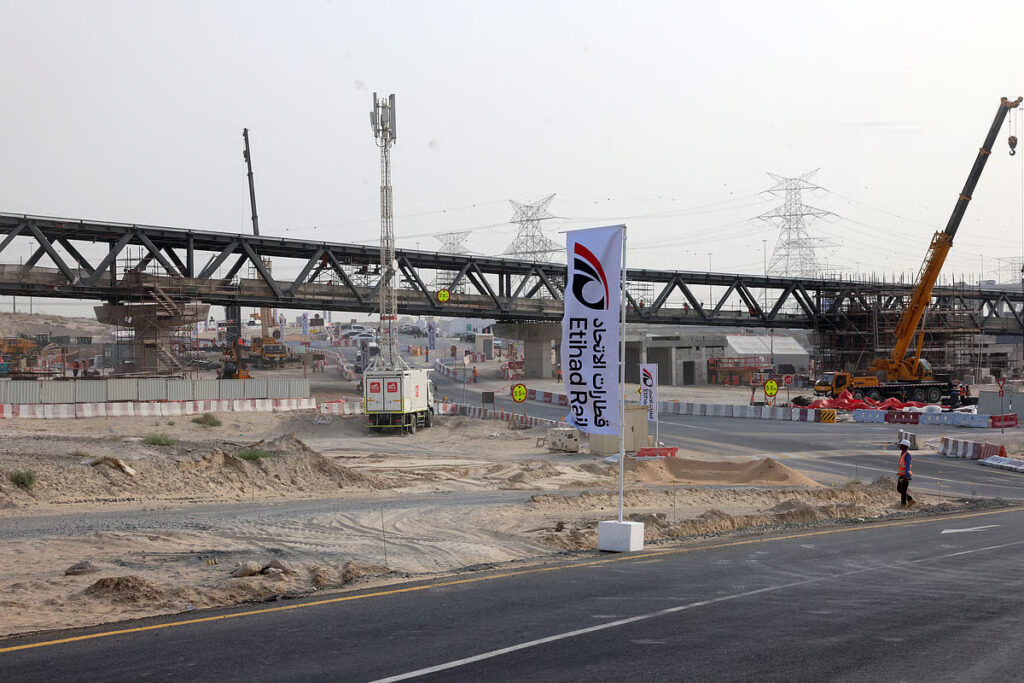
Dubai: Following the strong public response to Etihad Rail’s inaugural passenger service between Abu Dhabi and Fujairah, attention is now shifting to the next milestone: Dubai’s passenger station and how seamlessly travellers will be able to access it.
With just over 75 days remaining before services begin, Dubai’s station is in the final stages of preparation. Scheduled to open on September 30, the station is located within Jumeirah Golf Estates, the gated residential community in southern Dubai, with direct access from Sheikh Mohammed Bin Zayed Road.
The station will launch alongside Al Dhaid station in Sharjah, marking the second phase of the passenger rail network following the debut Abu Dhabi–Fujairah route. Beyond the train service itself, much of the interest has centred on what happens after passengers arrive, particularly how the station will connect with Dubai’s wider transport network.
A four-minute walk, connected by a new footbridge
Dubai’s Etihad Rail station is located just a four-minute walk from the existing Jumeirah Golf Estates Metro Station, creating a natural link between the two transport systems. Rather than operating independently, the close proximity is being leveraged to provide passengers with a seamless end-to-end journey.
To strengthen that connection, a dedicated pedestrian footbridge is currently under construction, directly linking the Etihad Rail and Metro stations. Once completed, the integrated hub is expected to become one of Dubai’s key public transport interchanges, making transfers between intercity rail and the Metro quick and convenient.
According to Adhraa Almansoori, Executive Director of Commercial and Support at Etihad Rail Mobility, the same last-mile connectivity model introduced at the Abu Dhabi and Fujairah stations will be extended to the upcoming Dubai and Al Dhaid stations.
In Dubai, this is expected to include direct links with the nearby Metro station, as well as connections to existing public bus and taxi services. Almansoori said the goal is to ensure passengers enjoy a seamless door-to-door travel experience, with smooth transfers between Etihad Rail and Dubai’s wider public transport network.
This approach reflects Etihad Rail’s broader vision that the passenger journey extends beyond the train itself, encompassing every stage of travelling to and from the station.
In Abu Dhabi, that strategy led to the introduction of a Dh10 shuttle service linking Mohamed Bin Zayed City Station with key destinations, including ADNOC Headquarters, ADNEC Centre and Reem Mall. The station is also integrated with public buses and taxis, while passengers can access Hafilat transport card top-up facilities.
Etihad Rail’s passenger charter also states that Metro and bus services will connect with its stations, reinforcing the role of Dubai’s new station as an integrated transport hub rather than a standalone rail terminus.
Getting there: More than just the Metro
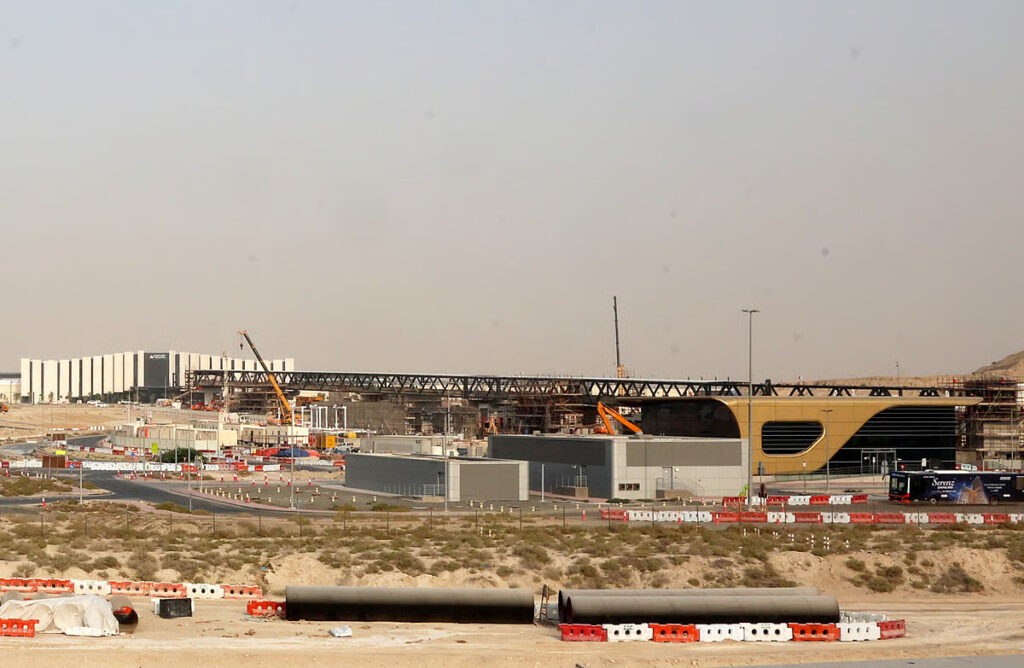
Beyond the planned footbridge, the station’s location offers wider transport advantages. Its direct connection to the Metro will provide easy access to Dubai’s broader public transport network, while nearby communities such as Green Community, Al Furjan, Dubai Investment Park, Dubai Production City and Expo City Dubai will be within convenient reach, giving many residents in southern Dubai a practical alternative to driving.
The station will also benefit air travellers, with Al Maktoum International Airport (DWC) in Dubai South located around 30 minutes away, positioning it as a convenient rail gateway to the airport, which is being developed into the world’s largest aviation hub.
Part of a nationwide rail network
Dubai’s passenger station forms part of Etihad Rail’s 900km national railway network, which will connect 11 cities and regions across the UAE, stretching from Al Sila in the west to Fujairah in the east, with stops including Ruwais, Al Mirfa, Abu Dhabi, Dubai, Sharjah and Al Dhaid. Each train will accommodate up to 400 passengers, with multiple daily services planned for commuters, families and leisure travellers.
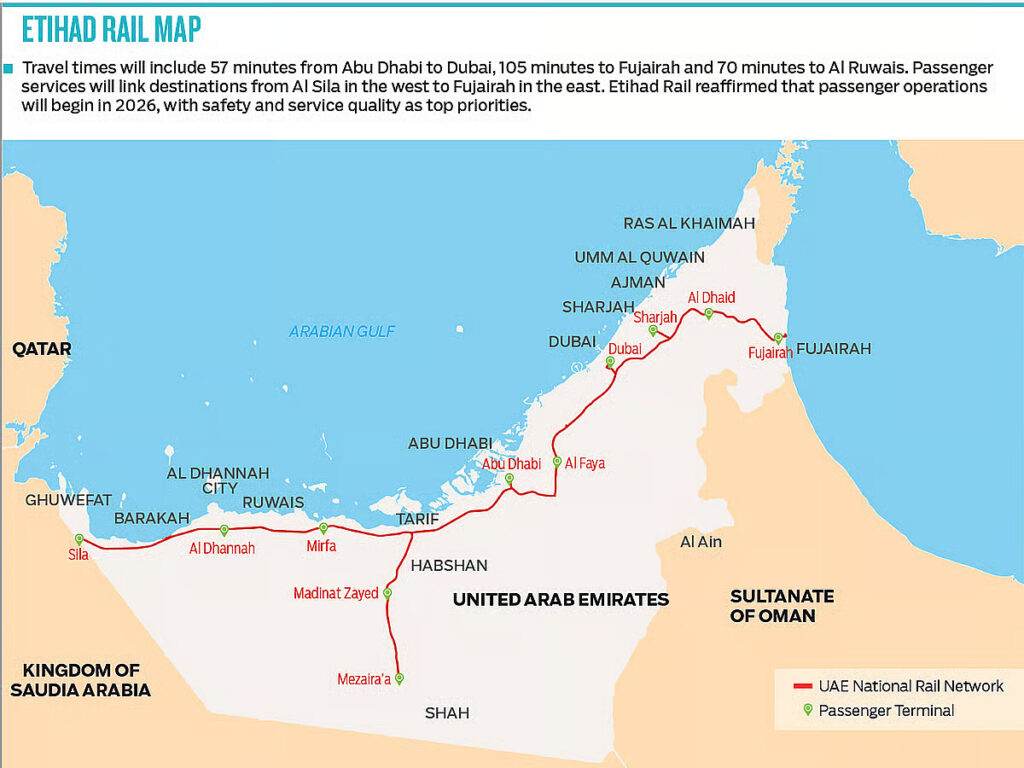
The station’s long-term importance is also expected to grow, with Jumeirah Golf Estates set to become a stop on Dubai’s future Metro Gold Line, further strengthening its role as a key transport interchange.
When services begin on September 30, the biggest test may not be the train journey itself, but how seamlessly passengers can continue their trip after arrival—whether by transferring to the Metro, catching a taxi or boarding a connecting bus to destinations across the city.

