

It’s peak Milky Way season at Al Quaa desert, where visitors can enjoy free stargazing or book premium experiences costing up to Dh2,000. Here’s what each option offers.
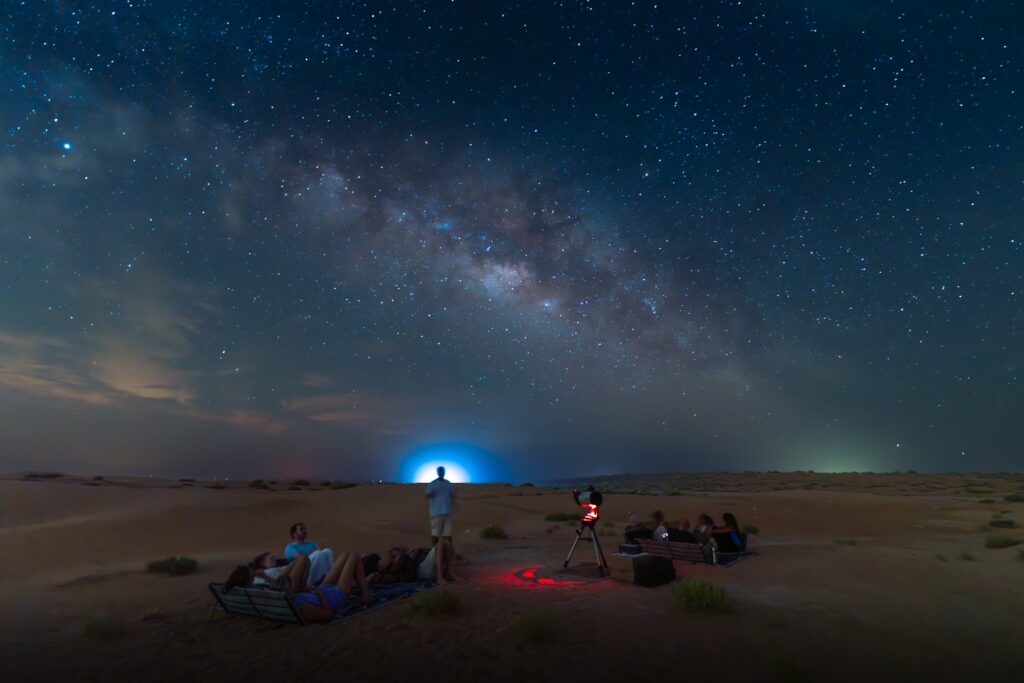
July is considered the clearest month to view the Milky Way from the UAE, and many stargazers head to the same destination: Al Quaa, located about 100km southeast of Abu Dhabi. Known as the country’s darkest spot, the location is even marked with its own pin on Google Maps.
The same night sky can be experienced at two very different price points — free if you drive yourself, or between Dh400 and Dh2,000 for an organised stargazing package. The stars remain the same; the difference lies in the experience surrounding them.
The free option
A regular car can reach the parking area beside the track, located about 90 minutes from Abu Dhabi and nearly three hours from Dubai.
The Milky Way’s bright core is best viewed between 9pm and 3am, and no telescope is required to enjoy the view.
The free route
The free option requires some preparation. Download offline maps before heading out, as mobile connectivity can be unreliable. Travellers should also fill up their fuel tank and carry enough water and food, as there are no toilets, shops or electricity facilities in the area.
Plan your visit around the new moon, as bright moonlight can reduce visibility of the Milky Way. Moving away from vehicle headlights and into the sand will provide a clearer view of the night sky. A sky map app pointing towards Scorpius in the southeast can help identify the galaxy’s core.
The paid option
Organised stargazing trips have turned Al Quaa into a popular summer destination for night-sky enthusiasts. Overnight camping packages typically cost between Dh400 and Dh450 per person and include tents, BBQ dinner, breakfast and portable toilets.
Some group experiences include guided stargazing through professional telescopes, with transport available for an additional cost of around Dh200. Private packages can reach Dh2,000 per vehicle, including hotel pick-up.
The main difference is not the food or camping setup — it is the access to equipment, expert guidance that transforms the view into an educational experience, and the comfort of being part of a group in the desert at night.
Three stargazers, three budgets
For Nadia Ahmed, paying for an organised trip is worth it.
“I always prefer going with a group and paying so I can live the experience fully without the exhaustion,” she said. “The more you pay, the better the service, especially in a remote area where the setup alone takes real effort. You are buying your comfort with your money.”
Ahmed Nasser takes the opposite approach. With years of experience navigating desert routes, camping and handling remote-area challenges, he prefers preparing everything himself. For him, the process adds to the adventure of travelling solo.
Lulu Salem chooses a middle ground: group trips when safety is a priority and budget options for other stargazing plans.
“I would rather not pay large amounts to feel like I am sitting in my own living room. The whole point is stepping out of the comfort zone,” she said.
Before you go
Regardless of which option you choose, avoid travelling alone. Hasan Al Hariri, CEO of the Dubai Astronomy Group, has previously warned that deserts remain active environments at night, with animals such as scorpions, snakes, foxes and wolves present.
Visitors should share their route and expected return time with someone, travel in groups, choose licensed operators and check the lunar calendar before setting out.
No paid package can replace the clarity of a dark sky — and a full moon can make even the best locations less ideal for stargazing.

