

Government-backed tankers revive Saudi oil flows while private fleets steer clear.
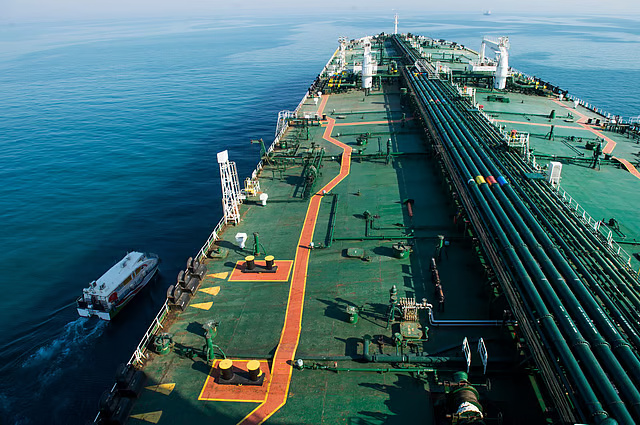
Saudi Arabia’s crude exports through the Strait of Hormuz have recovered faster than expected, with an estimated 34 million barrels shipped since the June 17 ceasefire. The rebound highlights the resilience of Gulf oil flows despite commercial tanker traffic through the strategic chokepoint remaining well below normal levels.
Data from cargo-tracking firm Kpler shows Saudi shipments have picked up significantly, even as broader maritime activity continues to face disruptions and elevated risks.
Data from the IMF’s PortWatch platform indicates that commercial traffic through the Strait of Hormuz remains heavily constrained, with only around 27 vessels per day crossing the waterway while broadcasting active Automatic Identification System (AIS) signals since the ceasefire.
The figure represents roughly one-third of the pre-conflict average, when about 84 commercial vessels passed through the strategic chokepoint each day.
Uneven recovery
The recovery has been uneven, revealing a growing divide between energy exports and wider commercial shipping activity. While Gulf producers have moved quickly to restore crude shipments, many private shipowners continue to avoid the region due to lingering security concerns.
On July 4, data from PortWatch showed only 25 vessel crossings through the Strait of Hormuz with active AIS signals, highlighting the continued weakness in commercial traffic.
Security concerns continue to shape tanker movements through the Strait of Hormuz despite the ceasefire. Bloomberg reported that four outbound oil tankers turned back after receiving radio warnings from Iran’s Islamic Revolutionary Guard Corps (IRGC), highlighting ongoing risks for vessels operating in the region.
Industry analysts say a large share of current crude flows through Hormuz is being carried by state-backed tanker fleets, vessels covered by sovereign insurance arrangements, or ships that restrict or temporarily switch off AIS transmissions to reduce security exposure.
Many independent tanker operators remain reluctant to return to the route, with war-risk insurance premiums still around eight times higher than pre-conflict levels, sharply raising costs for commercial carriers.
The uneven recovery has primarily benefited major Gulf oil exporters, which have been better positioned to maintain crude shipments despite continued uncertainty in regional shipping.
Saudi Arabia has gradually ramped up crude exports as regional tensions eased, while the United Arab Emirates has boosted production and increased shipments to Asian buyers after leaving OPEC, allowing more Gulf oil supplies to reach international markets.
The UAE has moved to restore crude exports close to record levels following disruptions from the recent regional conflict, with alternative export routes and expanded infrastructure helping sustain deliveries to global customers.
The Strait of Hormuz, a narrow waterway between Iran and Oman, remains the world’s most critical oil shipping chokepoint, typically handling around one-fifth of global petroleum consumption.
The route became a flashpoint in regional tensions earlier this year after conflict involving Iran disrupted commercial maritime traffic and briefly sent global oil prices sharply higher.
While the ceasefire has reduced concerns over a prolonged disruption to oil supplies, maritime security experts caution that commercial shipping activity is likely to recover more gradually than crude exports. Insurers, shipowners, and operators are expected to wait for greater confidence in the safety of navigating the strategic waterway before fully resuming normal operations.

