

India’s passport falls to 80th place as fees increase and citizenship debate intensifies.
India’s passport has slipped to 80th place in the latest Henley Passport Index for July, despite offering visa-free or visa-on-arrival access to 56 destinations.
The ranking is down from 78th in May, although India had previously climbed to 75th in the Henley Passport Index 2026 released in February, after improving from 85th in 2025.
The latest ranking comes amid renewed attention on the Indian passport across several fronts. The Ministry of External Affairs’ clarification that a passport is primarily a travel document and not conclusive proof of citizenship has sparked political debate, while the government has also implemented its first passport fee revision in 14 years.
Together, these developments have drawn focus to the passport’s role, cost, and the level of global mobility it provides Indian travellers.
What the ranking means for Indian travellers
The Henley Passport Index assesses the travel freedom of 199 passports using data from the International Air Transport Association (IATA).
India’s mobility score of 56 indicates that Indian passport holders can access 56 destinations without needing to obtain a visa in advance. This includes countries offering visa-free entry, visa on arrival, visitor permits, or Electronic Travel Authorisation (ETA).
Most of these destinations are located in Asia, Africa, and island nations, while travellers still require pre-approved visas for major regions including the US, UK, and much of Europe.
Why the ranking changed
Passport rankings are relative and can shift even if a country’s visa-free access remains unchanged, depending on how other nations expand their travel agreements.
Experts cited in media reports say passport strength is influenced by diplomatic relations, reciprocal visa arrangements, border security standards, and global trust in travel documents, rather than being determined solely by economic size or geopolitical influence.
Citizenship debate over passports
The latest rankings come amid increased scrutiny after the Ministry of External Affairs reiterated during Passport Seva Divas on June 24 that a passport is primarily a travel document and not conclusive proof of citizenship.
The clarification sparked widespread political debate and online discussion. While passports are issued only after government verification and are widely regarded as strong evidence of nationality, the Indian government has maintained that, under the Passports Act, they are based on underlying citizenship records and have never been treated as definitive legal proof of citizenship.
Passport fees revised after 14 years
India has increased passport fees for the first time in 14 years, with the new rates coming into effect from July 1.
A standard 36-page passport now costs ₹2,500, up from ₹1,500, while fees for Tatkal services, 60-page passports, and Police Clearance Certificates have also been raised.
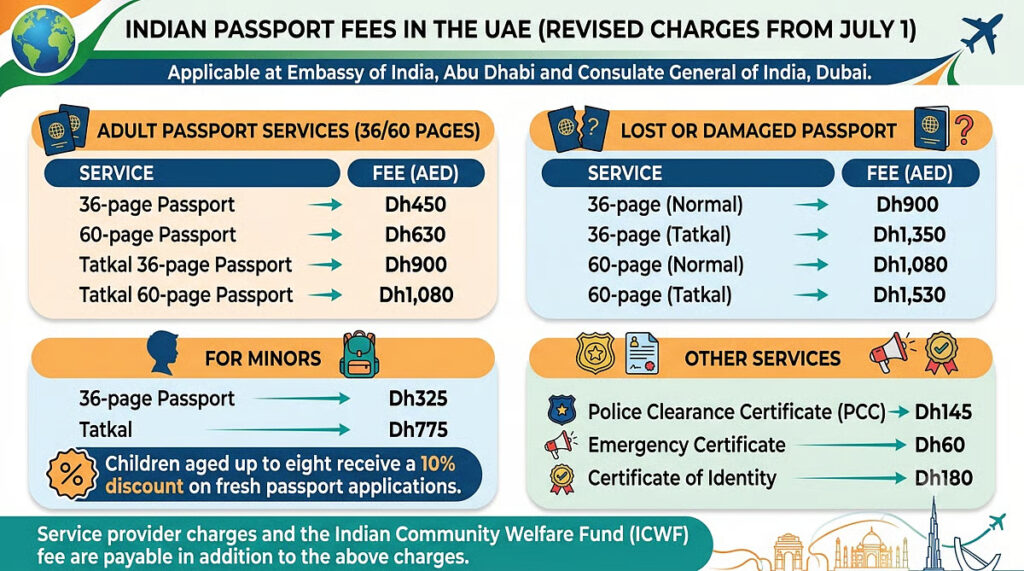
The revised fee structure also applies overseas. In the UAE, the Embassy of India in Abu Dhabi and the Consulate General of India in Dubai have increased passport charges from July 1.
A standard 36-page adult passport now costs Dh450, while Tatkal processing is priced at Dh900. Additional service provider fees and the Indian Community Welfare Fund (ICWF) charges are applicable separately.
India’s mobility challenge
Despite gradual gains in visa-free access in recent years, global mobility remains one of the weaker aspects of the Indian passport compared with many higher-ranked countries.
According to the Global Passport Index 2026, India’s mobility ranking stands at around 136th globally, reflecting that other countries have expanded travel access at a faster pace.
Experts suggest India could improve its passport strength through more bilateral visa-waiver agreements, enhanced passport security features, stronger digital identity systems, and sustained diplomatic engagement to widen international travel opportunities for its citizens.
Global leaders in passport strength
Singapore continues to hold the world’s most powerful passport, offering visa-free or visa-on-arrival access to 192 destinations. Japan, South Korea, and the UAE share second place, with access to 188 destinations.
European countries such as Germany, France, and Spain remain among the strongest globally, each providing access to more than 185 destinations.
The United States and the United Kingdom also continue to rank among the world’s most powerful passports.
Where can Indians travel without a visa? Here’s the full list
Despite India’s drop in the latest passport rankings, Indian passport holders can still access 56 destinations without a traditional visa in advance, making short trips and business travel more convenient.
Types of entry access for Indian travellers
Indian passport holders currently benefit from three categories of entry:
- Visa-free: 30 destinations
- Visa on arrival (VOA): 23 destinations
- Electronic Travel Authorisation (ETA): 3 destinations
Visa-free destinations
Visa-free entry allows Indian travellers to enter without applying for a visa before departure, subject to immigration checks on arrival.
Destinations include: Angola, Barbados, Bhutan, British Virgin Islands, Cook Islands, Dominica, Fiji, Grenada, Haiti, Jamaica, Kazakhstan, Kiribati, Macao (SAR China), Malaysia, Mauritius, Micronesia, Montserrat, Nepal, Niue, Philippines, Rwanda, Senegal, St. Vincent and the Grenadines, Thailand, The Gambia, Trinidad and Tobago, and Vanuatu.
Visa on arrival destinations
These countries issue visas upon arrival at the airport or border, removing the need for prior application.
Destinations: Burundi, Cambodia, Cape Verde Islands, Comoros, Djibouti, Ethiopia, Guinea-Bissau, Indonesia, Jordan, Laos, Madagascar, Maldives, Marshall Islands, Mongolia, Mozambique, Myanmar, Palau, Qatar, Sierra Leone, Sri Lanka, St. Lucia, Tanzania, Timor-Leste, Tuvalu, and Zimbabwe.
ETA destinations
An Electronic Travel Authorisation (ETA) must be obtained online before departure, but it is not a traditional visa.
Destinations: Kenya, Seychelles, and St. Kitts and Nevis.
Visa-friendly destinations for Indian travellers
The list continues to offer Indian passport holders a wide range of travel options for holidays, business trips, and last-minute getaways across Asia, Africa, the Caribbean, and the Pacific.
56 visa-friendly destinations for Indian citizens
Angola – Visa-free
Barbados – Visa-free
Bhutan – Visa-free
British Virgin Islands – Visa-free
Burundi – Visa on arrival (VOA)
Cambodia – VOA
Cape Verde Islands – VOA
Comoro Islands – VOA
Cook Islands – Visa-free
Djibouti – VOA
Dominica – Visa-free
Ethiopia – VOA
Fiji – Visa-free
Grenada – Visa-free
Guinea-Bissau – VOA
Haiti – Visa-free
Indonesia – VOA
Jamaica – Visa-free
Jordan – VOA
Kazakhstan – Visa-free
Kenya – ETA
Kiribati – Visa-free
Laos – VOA
Macao (SAR China) – Visa-free
Madagascar – VOA
Malaysia – Visa-free
Maldives – VOA
Marshall Islands – VOA
Mauritius – Visa-free
Micronesia – Visa-free
Mongolia – VOA
Montserrat – Visa-free
Mozambique – VOA
Myanmar – VOA
Nepal – Visa-free
Niue – Visa-free
Palau Islands – VOA
Philippines – Visa-free
Qatar – VOA
Rwanda – Visa-free
Samoa – VOA
Senegal – Visa-free
Seychelles – Visa-free (ETA)
Sierra Leone – VOA
Sri Lanka – VOA
St. Kitts and Nevis – Visa-free (ETA)
St. Lucia – VOA
St. Vincent and the Grenadines – Visa-free
Tanzania – VOA
Thailand – Visa-free
The Gambia – Visa-free
Timor-Leste – VOA
Trinidad and Tobago – Visa-free
Tuvalu – VOA
Vanuatu – Visa-free
Zimbabwe – VOA
Why rankings move
The Henley Passport Index covers 227 destinations across 199 passports using data from the International Air Transport Association (IATA). Rankings shift as countries update visa policies, making the system highly dynamic and subject to frequent change.

